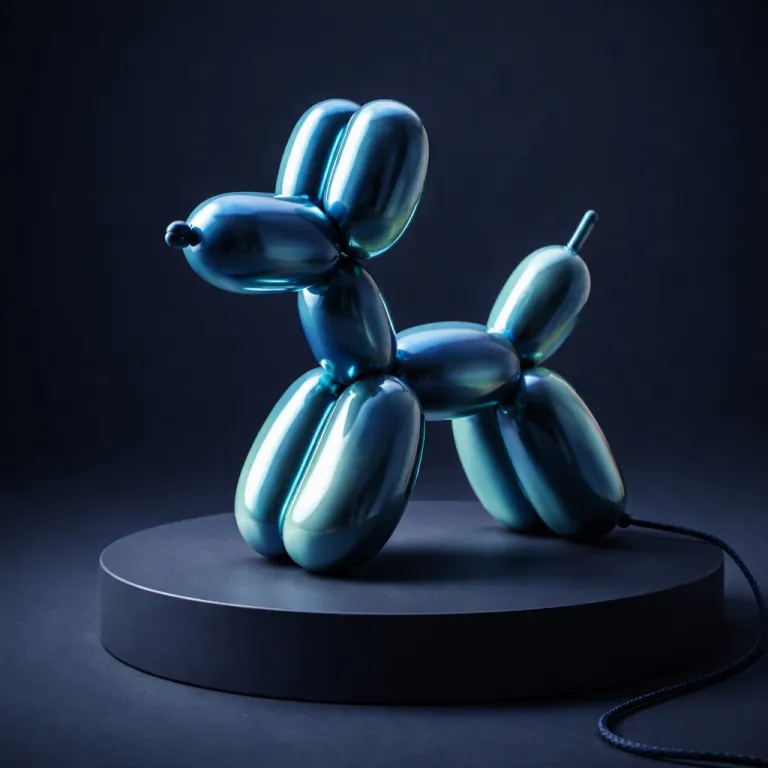
Jeff Koons balloon dog for Lexon enters the nursery, but as art
Jeff Koons turned a simple balloon into one of the most iconic sculptures in contemporary art. His Balloon Dog series translated a party trick into monumental pieces that now anchor museum atriums and blue chip collections, and the new Jeff Koons Balloon Dog for Lexon collaboration pulls that same silhouette back down to domestic scale. For design led parents, the question is whether this Lexon x Jeff Koons project is a child friendly object or an adult collectible that just happens to land in a kid’s space.
The Chromatic Collection from Lexon introduces a balloon dog lamp and a matching balloon dog speaker that look like toys but are positioned as design objects. According to Lexon’s product description for the Balloon Dog Chromatic Lamp and Balloon Dog Chromatic Speaker, the lamp stands roughly 20 cm high and the Bluetooth speaker version is slightly smaller, both finished in a high gloss chromatic coating and priced in the premium gift range rather than typical nursery lighting. At launch, retailer listings placed the lamp around the €150–€170 bracket and the speaker slightly below that, with both described as limited runs rather than open editions. Lexon presents the Lexon Jeff Koons range as lighting and audio pieces for the home, with no stated age guidance, no EN71 toy certification in the technical specs, and a finish closer to gallery merchandise than nursery gear. That framing matters for parents who might place these dog lamps on a shelf above a cot and then watch them migrate, inevitably, into small hands.
Each lamp uses optical grade polycarbonate rather than the softer plastics common in kids’ night lights, which gives the dog lamp a glass like sheen but also a harder, less forgiving surface. The same optical grade material appears in the dog speaker housing, where the balloon dog form wraps around the grille and touch controls in a way that prioritizes silhouette over grip. Lexon’s own press copy highlights the “mirror polished balloon dog shape designed with Jeff Koons,” underscoring that the sculptural outline comes first. You feel the intent immediately; this is a Jeff Koons object before anything else, a piece of lighting or a speaker second, and only accidentally something that might share a room with wooden blocks.
For quick reference, Lexon’s published specifications for the Jeff Koons Balloon Dog Chromatic Collection typically include: height around 20 cm for the lamp and 18–19 cm for the speaker; optical grade polycarbonate shell; integrated LED module with multiple brightness levels; Bluetooth 5.0 wireless connectivity; USB-C charging; quoted battery life in the 6–8 hour range for the speaker at moderate volume; and a chromatic mirror finish available in chrome blue, chrome orange, chrome pink, and other saturated tones. Retailers also note the inclusion of a certificate of authenticity and an engraved “Jeff” marking on the base or rear of each piece.
Design object, not toy: what parents are really buying
Seen against the wider art toy landscape, Jeff Koons sits firmly in the adult collectible camp, unlike KAWS whose figures now populate nursery photography and mainstream kids’ rooms. The Jeff Koons Balloon Dog Lexon Chromatic Collection leans into that lineage with a limited edition positioning, a certificate of authenticity, and an engraved “Jeff” mark that echoes the Koons signature on larger works. Retail listings describe numbered editions with a small production run and note finishes in chrome blue, chrome orange, and other saturated tones, often specifying edition sizes in the low thousands per colorway. This is closer to a small sculpture with integrated lighting and audio than to a child safe night light or Bluetooth cube.
Parents considering these objects are effectively buying contemporary art that happens to plug in, not a developmental tool or robust plaything. The dog speaker offers easy sync pairing, Bluetooth 5.0 connectivity, and around 6 to 8 hours of playback on a full charge in Lexon’s own battery life estimates, but its weight distribution and glossy finish make it more stable on a credenza than on a play table, and the touch controls are tuned for adult fingertips rather than sticky toddler hands. The balloon dog lamp casts a soft, modern glow with multiple brightness levels that can elevate space in a hallway or office, yet in a nursery it reads as luxury cosplay for bedtime rather than a practical, wipe friendly night light with drop tested durability.
Lexon’s own history in compact lighting and portable speaker design shows through in the engineering, but the collaboration project with Jeff Koons shifts the emphasis from function to symbolism. You are paying for the Koons balloon silhouette, the association with Los Angeles studio culture, and the promise that these pieces might hold value in a secondary market, not for indestructible kid proof construction. In interviews and launch materials, Lexon frames the collection as “artful objects for the home” and Koons describes the balloon dog as a form that “communicates joy and celebration,” language that reinforces the idea of collectible design rather than nursery hardware. For many design conscious parents, that trade off is acceptable, as long as they treat the balloon dog objects as shared family art pieces rather than toys that can be dragged into the garden or tossed into a toy box. As Lexon notes in its launch materials, the collection is intended as “artful objects for the home,” a phrase that quietly signals where the brand expects them to live.
From living room pedestal to child’s shelf: long term value and use
The earlier Lexon balloon dog editions already show how quickly these objects migrate from adult spaces into children’s rooms once the novelty settles. Secondary market listings for the previous balloon dog lamp and balloon dog speaker often mention “displayed in nursery” or “used as kids’ night light”, even though the Jeff Koons Balloon Dog Lexon collaboration was never marketed as a toy and does not carry toy safety icons on its packaging. That gap between intended use and real world experience is where design led parents need to be especially clear eyed.
From a longevity perspective, the optical grade polycarbonate shell resists yellowing and hairline scratches better than cheaper plastics, which supports the idea of timeless design and a more durable collection of dog lamps and dog speakers. Yet the same hard shell can chip if dropped from a child’s height onto stone, and the internal lighting and speaker components are not rated for the kind of shock loads that wooden blocks or ride on cars routinely survive. Product specs typically quote a few watts of LED power and a modest wattage speaker driver, sufficient for ambient light and room filling sound but not for rough handling. In practice, these modern pieces work best when they elevate space on a stable surface, with children invited to interact under supervision rather than free play.
For families who already collect contemporary art, placing a Lexon Jeff Balloon Dog next to picture books can be a deliberate way to normalize art as part of everyday life. The collaboration project then becomes a bridge between adult collecting and childhood curiosity, with the Koons balloon form acting as a familiar, almost cartoon like dog that still carries the weight of iconic art history. In that context, the limited edition status, the certificate of authenticity, the engraved Jeff detail, and the subtle Koons signature are less about bragging rights and more about teaching that some objects are both to be loved and to be looked after, with value tied to condition over years of careful use.
Key figures on designer art toys and luxury kids’ objects
- No specific quantitative statistics were provided in the available dataset for designer collaborations, luxury kids’ toys, or the Jeff Koons Balloon Dog Lexon project, and Lexon’s own materials focus on design narrative and technical specs rather than market size or sales volumes.
Questions parents also ask about art toys in children’s spaces
Are art toy collaborations like the Jeff Koons balloon dog for Lexon safe for children to handle ?
Most art toy collaborations, including the Jeff Koons Balloon Dog Lexon pieces, are designed as decorative objects rather than certified toys, which means they typically lack formal play safety testing and age grading. Product pages usually list electrical and battery compliance (such as CE or RoHS for electronics) but do not mention toy standards like EN71 or ASTM F963. Parents should treat them like small sculptures with integrated lighting or audio, placing them out of reach for unsupervised play and checking manufacturer materials for any small parts or sharp edges. If a child does interact with these objects, supervised handling and clear family rules about “look but gently touch” can balance safety with exposure to design.
How should parents think about value when buying limited edition design objects for a child’s room ?
Value in limited edition collaborations such as the Jeff Koons Balloon Dog Lexon range comes from a mix of artist reputation, production quality, and scarcity, not from play features or educational content. Retailers often highlight edition numbers, finish options, and original launch dates to justify higher pricing, signalling that these pieces sit closer to affordable art than to mass market toys. Parents should assume they are buying a piece of contemporary art or design first and only secondarily a functional lamp or speaker, which means resale potential and long term condition matter more than short term entertainment. If a child’s room is the chosen location, placing the object where it can be seen daily but not easily knocked over helps preserve both emotional and financial value.
Do design forward objects like the balloon dog lamp actually help children appreciate art ?
Repeated exposure to recognizable forms from contemporary art, such as the balloon dog lamp silhouette, can make art feel less distant and more integrated into everyday life for children. When parents talk about the Jeff Koons Balloon Dog Lexon collaboration as both a playful dog shape and an iconic art reference, they model that objects can carry stories, authorship, and care. Over time, this can encourage children to ask questions about who made things, why they look a certain way, and how design choices affect mood and space. Even simple rituals, like switching on the lamp and mentioning the artist’s name, can quietly build familiarity with contemporary art culture.
What should design conscious parents prioritize when choosing between a true toy and a design object for the nursery ?
When deciding between a robust toy and a fragile design object like the Lexon Jeff balloon dog speaker, parents should first clarify the primary job of the item in the room, whether it is for play, comfort, or atmosphere. If the goal is active play, certified toys with clear age ranges and tested durability will always outperform limited edition art objects, even when the latter offer lighting or audio features. If the goal is to elevate space visually while keeping a calm, modern aesthetic, a collaboration piece from Lexon and Jeff Koons can work well as long as it is treated as shared family property rather than the child’s personal toy, with clear boundaries about when and how it can be touched.
How do collaborations between artists and consumer brands influence luxury kids’ markets ?
Collaborations between high profile artists and brands, such as Jeff Koons working with Lexon, normalize the presence of contemporary art forms in domestic and even children’s spaces, which in turn pushes luxury kids’ markets toward more design driven products. Parents begin to expect that even a dog lamp or dog speaker can reference museum level art, blurring the line between décor and plaything. This shift encourages more brands to pursue similar projects, expanding the range of objects that sit somewhere between collectible art pieces and functional nursery accessories, and gradually raising expectations for aesthetics, materials, and storytelling in children’s environments.