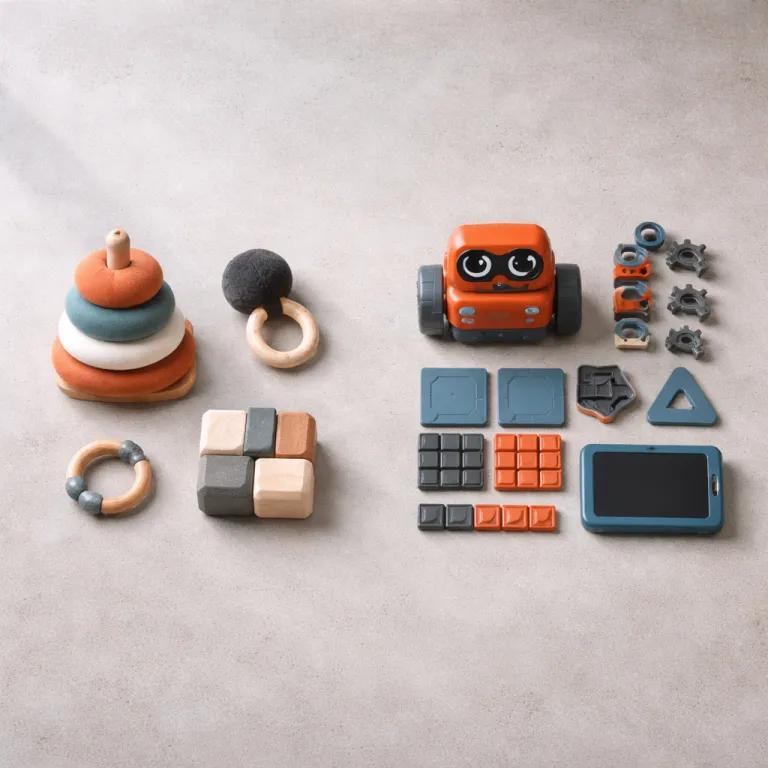
Why the first birthday is the worst time for your biggest gift
The luxury market often treats the first kids birthday as a coronation, yet most of those lavish presents are gone or sidelined by the next year. A silver rattle, a designer plush bear, even a custom rocking horse become parent facing objects, more about family status than about age appropriate engagement or meaningful milestone birthday memories for the kids. When you look closely at milestone birthday gifts kids actually remember, the first birthday gift almost never makes the list.
Developmental psychology is blunt about what a birthday baby can use; a one year old explores texture, weight, sound, and contrast, not the provenance of Italian cashmere or the artisan who carved the wood. Classic work on early cognition, from Piaget’s stages of sensorimotor development to Vygotsky’s zone of proximal development, shows that in this first year the baby brain is busy with cause and effect, not narrative play or complex board games that older kids adore. Meta-analyses on infant memory and perception echo this, emphasizing simple, repeatable sensory experiences over complex story driven toys. That means the best birthday gift at this stage is often a simple, safe, fun object that can be mouthed, dropped, and banged, not a fragile heirloom that lives on a high shelf like a museum piece.
When affluent relatives ask for birthday ideas for that first milestone birthday, it helps to reframe the question entirely. Think of these early gifts as consumables and tools for care, not as forever gifts or hallmark symbols of your love, because the kids cannot yet attach story or identity to them. A beautifully made baby gym, a soft organic plush set, or a sturdy cloth book with high contrast art are excellent presents, but they are really gifts to the parents’ daily routine rather than to the kids’ long term memory.
The economics of this first year are brutal if you track them honestly. By eighteen months, most baby specific gear and many early birthday gift ideas have been outgrown, stained, or quietly donated, even when they arrived in cool packaging with embossed cards and elaborate gift wrap. That expensive custom toy chest or engraved guest book from the first birthday party may still be in the nursery, but it functions as décor, not as a living part of kids milestone play. Surveys of parents in higher income brackets routinely find that spending on first birthday celebrations can be two to three times higher than on later grade school birthdays, even though parents report that children derive more lasting enjoyment from gifts received between ages five and ten; this pattern appears consistently in consumer polling by major market research firms.
Luxury retailers know this and quietly lean into it. Their marketing for first birthday party ideas often centers on photo moments and shareable unboxings, not on how the toy will perform in year three of rough play. When you see a campaign that pairs a birthday baby with a couture outfit, a plush animal, and a stack of branded cards, you are looking at a tableau designed for adults, not for kids who care more about crinkly paper than about the brand’s hallmark crest. As one children’s retail analyst put it in a recent industry report, “The first year is where luxury brands sell to parents’ aspirations, not to children’s needs.”
For high end buyers, the temptation is to equate price with permanence. In practice, the most expensive first birthday gift is often the least used, while the modest, washable, diy birthday sensory kit becomes the daily favorite. A $20–$40 set of textured balls and stacking cups, or a $30–$60 wooden push toy that supports early walking, will usually see more action than a $300 engraved keepsake box. If you want to honor this milestone birthday without wasting budget, treat the first year as a time for practical gifts, shared care, and low stakes experimentation with ideas kids can safely chew, drop, and ignore.
That does not mean you must skip sentiment. A slim, archival quality photo book that documents the first year, paired with a few handwritten cards from grandparents, can become a quiet family treasure, even if the baby never touches it. Here, the gift is the narrative you are building for the future child, not the object the baby handles during the birthday party itself, and that distinction matters when planning milestone birthday gifts kids will later appreciate.
The fifth birthday: where memory, identity, and toys finally meet
By the fifth year, the landscape changes completely, and milestone birthday gifts kids receive start to anchor identity. This is the age when a child names a plush dragon, assigns it a personality, and insists it sits at the table during a fun birthday dinner, turning a simple toy into a companion woven through daily life. Ask any adult about their favorite childhood birthday gift, and you will hear about something from around five to eight, not from the first year.
At five, kids can follow rules, negotiate turns, and engage with simple board games that reward patience and strategy. A well chosen kids birthday board game, especially one from the new wave of luxury board designs, can become the centerpiece of family party ideas and rainy day rituals for years. Many families report that a single, thoughtfully selected game ends up defining a whole season of play, which is worth considering before you commit to a big birthday gift in this category.
This is also the first age where kids milestone narratives become clear. They remember who gave which gift, they retell birthday ideas from the party, and they ask for specific themes like Star Wars, space, or animals, which means your gift ideas can finally align with their self chosen interests. A carefully made Star Wars starship model, for example, can be both a cool object on the shelf and a durable toy for daily play, bridging the gap between display piece and age appropriate adventure.
From a developmental standpoint, five year olds sit at a sweet spot. They are ready for more complex art projects, early diy birthday craft kits, and story driven play that can be supported by a custom book or a set of open ended building pieces. When you choose milestone birthday gifts kids can manipulate, narrate, and proudly show to friends at a birthday party, you are investing in their sense of competence, not just in another object. A $40–$80 wooden construction set, or a $30–$70 cooperative board game that scales in difficulty, can easily become the backbone of weekly family rituals.
Luxury does not need to mean delicate. I have seen hand finished wooden board games with brass inlays survive three siblings and a decade of use, while cheaper plastic sets crack before the second year. The point is not to chase the best brand name, but to look for repairable materials, replaceable cards or pieces, and designs that still feel fun when the child is seven, not only on the day of the kids birthday celebration.
At this age, shared rituals matter as much as the object itself. A high quality art case that comes out every Sunday, a plush character that travels on every holiday, or a custom guest book where the child collects signatures and little drawings from friends at each milestone birthday party can all become anchors of memory. When you think about milestone birthday gifts kids will carry forward, ask whether the gift invites repeated use, storytelling, and connection, or whether it will sit untouched after the party ideas have faded.
For grandparents and godparents, this is the moment to shift serious budget into play. Instead of another decorative baby frame, consider commissioning a small, child height reading nook with built in shelving for their favorite book series and a plush cushion they helped choose. Depending on materials and craftsmanship, this might range from $150 for a simple modular setup to $600 or more for a fully custom alcove. The fifth birthday is not about the unboxing; it is about the first time a child says, “This is my favorite,” and means it for more than a week.
Rewriting the luxury playbook: from year one to year ten
If you map where families actually spend on gifts across childhood, the curve is upside down. The first year often sees the highest per birthday gift spend, even though the kids have no memory of those gifts, while the fifth, seventh, and tenth birthdays receive more modest attention despite being the true milestone birthday anchors. For thoughtful buyers, the smarter strategy is to flatten that early spike and reserve your most ambitious gift ideas for the years when the child can participate.
Start with a simple framework. For the first year, focus on practical gifts that support care, sleep, and safe exploration, plus one or two sentimental items like a small custom piece of art or a linen bound guest book for messages at the birthday party. Between years two and four, shift toward open ended toys and ideas kids can use across multiple stages, such as modular play furniture, durable outdoor pieces, or a well designed playhouse that can later be integrated into a more sophisticated space, as shown in many guides to creating a luxury friendly treehouse play space.
Year five is your first major investment point. This is where milestone birthday gifts kids will remember should live: a serious art station, a thoughtfully curated library of picture book and early reader titles, or a set of heirloom quality board games that can grow with them. By year seven, you can layer in more specialized interests, from Star Wars themed engineering kits to diy birthday robotics projects, always checking that each birthday gift remains age appropriate and genuinely fun.
By year ten, the child’s identity is far more defined. Here, the best gifts often look like tools rather than toys: a real musical instrument, a serious art easel, or a custom built desk for creative work, all of which can be framed as milestone birthday celebrations of growing capability. A well made beginner guitar or keyboard in the $150–$400 range, or a $200–$800 solid wood desk with storage, can serve daily for years and feel like a rite of passage rather than a passing novelty. For more structured thinking about exquisite grade school gifts, it can help to look at editorial overviews that compare high quality options across art, science, and imaginative play.
Throughout these years, remember that luxury is not about maximalism. A single, well chosen board game that becomes the family’s favorite can be more valuable than a shelf of untouched boxes, just as one beloved plush companion can outshine a dozen themed toys tied to valentine day or mother day promotions. When you evaluate gift ideas, ask whether the object invites repeated, deep engagement or whether it simply fills a themed slot on a party checklist.
This reframed playbook also helps manage the flood of seasonal gifting. Instead of scattering budget across valentine day trinkets, mother day novelties, and random fun birthday add ons, you can reserve your most thoughtful spending for three or four true kids milestone events. That might mean a modest, diy birthday craft table for a sixth birthday party, followed by a more substantial, custom bike or art setup at ten, each chosen with the same care you would bring to a serious adult purchase.
When relatives ask for birthday ideas year after year, share this framework openly. Encourage them to choose smaller, playful gifts in off years and to collaborate on one or two major milestone birthday gifts kids can use for a long time, such as a shared board games library or a high quality reading chair. Over time, the family narrative shifts from “Who bought the biggest thing for the baby?” to “Which gift still matters in year five?”.
Thoughtful symbolism: making every milestone birthday gift work harder
Luxury gifting is always about symbolism, but with kids, the symbols need to be legible to the child. A baby cannot read engraved cards or appreciate the nuance of a limited edition art print, yet a five year old can understand that a custom book with their name on the cover was made just for them. When you plan milestone birthday gifts kids will receive, match the symbolic weight of the gift to what the child can actually perceive and use.
One practical tactic is to pair each major milestone with a specific domain. For the fifth year, choose something that supports play and imagination, such as a beautifully made puppet theater or a set of narrative rich board games that turn family evenings into fun birthday style gatherings all year. For the seventh, consider tools for making: a serious art kit, a diy birthday woodworking set under supervision, or a sewing machine, all of which tell the child, “Your ideas matter enough for real equipment.”
By the tenth birthday, you can lean into responsibility and autonomy. A high quality watch, a carefully chosen bike, or a custom backpack for travel can all function as both practical gifts and hallmark markers of growing independence, especially when framed as kids milestone steps. These objects often outlast trend driven toys tied to valentine day or mother day campaigns, because they are woven into daily routines rather than into a single birthday party.
Cards and words also deserve more attention than they usually get. A short, specific note about why you chose a particular birthday gift, tucked into the box or written in a slim guest book that appears at every milestone birthday, can become the thread that ties disparate gifts into a coherent story. Over time, those cards and notes may matter more than the objects themselves, especially once the kids outgrow the original toys.
For families who enjoy themes like Star Wars or other franchises, restraint is key. One or two well made, age appropriate pieces — a durable lightsaber toy, a thoughtfully illustrated book, a set of character driven board games — will serve better than a room full of branded clutter that loses its cool factor within a year. The aim is to choose gifts that still feel like the best versions of themselves long after the birthday ideas on Pinterest have shifted to the next trend.
Ultimately, milestone birthday gifts kids remember share three traits. They arrive at an age when the child can use and understand them, they invite repeated, evolving engagement, and they are backed by adults who show up to play the board games, read the book, or join the diy art project. The luxury is not only in the object, but in the time and attention wrapped around it — not the unboxing, but the fifth birthday it survives.
Key figures on children, memory, and meaningful gifts
- Longitudinal studies in developmental psychology show that most adults’ earliest stable autobiographical memories cluster around ages three to four, with far more detailed recall for events from age five onward. Reviews of this work consistently reach this conclusion, which supports prioritizing larger milestone gifts at or after the fifth birthday rather than in the first year. A widely cited synthesis by cognitive development researchers notes that while isolated flashes from age two may persist, coherent, narrative memories rarely do.
- Research on toy longevity in family homes indicates that open ended toys such as construction sets and board games often remain in active use for several years, compared with less than two years for many battery operated or trend driven toys. Observational work by play researchers and surveys from organizations focused on children’s play consistently highlight the value of investing in durable, flexible designs for milestone birthdays.
- Surveys of parents in higher income brackets have found that spending on first birthday celebrations can be two to three times higher than on later grade school birthdays, even though parents report that children derive more lasting enjoyment from gifts received between ages five and ten. Industry reports from children’s retail analysts and polling firms point to this clear mismatch between spending patterns and child centered value.
- Consumer behavior studies in luxury retail suggest that a large share of high end baby gifts are rarely or never used by the child, functioning primarily as décor or social signaling. Interviews with parents and sales data analyses in market research reinforce the argument for redirecting a portion of that budget toward later, more impactful milestone birthday gifts.
Questions parents and gift givers often ask
Which birthday should receive the most significant luxury gift ?
For most children, the fifth birthday is the first moment when a luxury toy or object can be chosen, named, and woven into lasting memory, so it makes sense to reserve your most substantial spending for this age or slightly later. Earlier birthdays, especially the first, are better suited to practical, durable items and modest sentimental pieces that support daily care rather than long term identity. Think of five, seven, and ten as your primary milestone anchors for major gifts.
How can I make a luxury gift feel personal rather than generic ?
Personalization works best when it aligns with the child’s real interests and capabilities, not just with monograms or engraving. A custom book that incorporates the child’s name and favorite themes, a tailored art kit built around their preferred medium, or a curated set of board games that match their temperament will feel more personal than a randomly engraved object. The key is to show that you have paid attention to who they are right now and who they are becoming.
Are experiential gifts better than physical toys for milestone birthdays ?
Experiences such as theater tickets, museum memberships, or special trips can be powerful milestone gifts, especially for older grade school kids, but they work best when paired with a tangible anchor. A physical object linked to the experience — a quality sketchbook for museum visits, a field guide for a nature trip, or a board game related to the theme — helps the memory endure in daily life. Rather than choosing between experiences and toys, combine them thoughtfully.
What makes a toy truly age appropriate at grade school level ?
An age appropriate grade school toy offers enough challenge to stretch skills without causing constant frustration, and it respects the child’s growing need for autonomy and narrative control. Look for toys and games with adjustable difficulty, open ended outcomes, and clear, comprehensible rules that a child can eventually manage without adult intervention. If a toy requires constant adult rescue or feels babyish after a few months, it is probably not well matched to the child’s developmental stage.
How many gifts should a child receive at a milestone birthday ?
There is no fixed number, but fewer, better chosen gifts tend to create more meaningful engagement than a large pile of loosely considered items. One major anchor gift, supported by a small number of complementary pieces or accessories, allows the child to focus attention and build deeper play patterns. For luxury buyers, the discipline lies in resisting the urge to overbuy and instead investing in quality, longevity, and shared use.