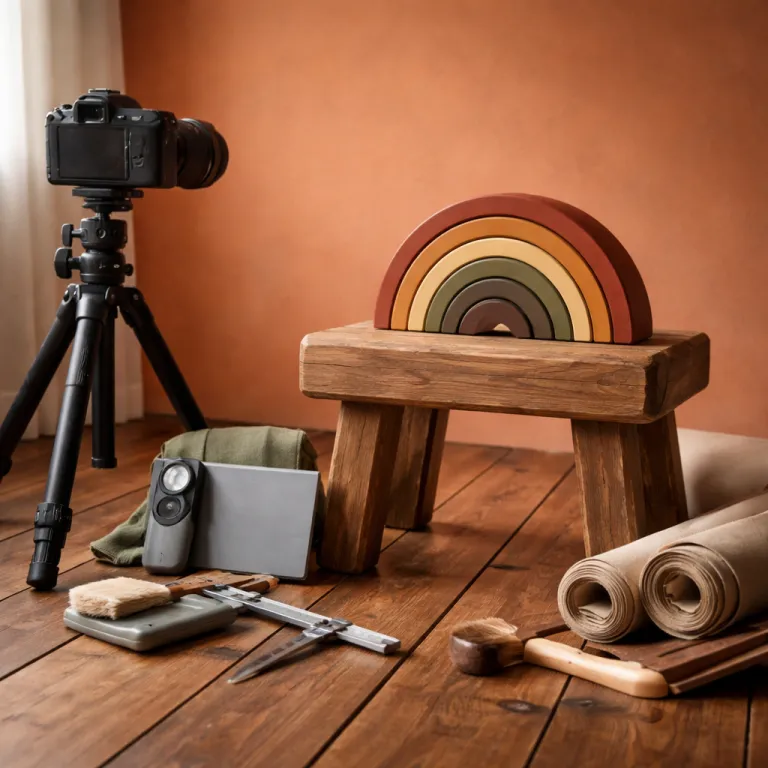

The Grimm’s rainbow as the quiet status symbol of handcrafted wooden toys
The Grimm’s 12 piece rainbow stacker has become the coat of arms for design led nurseries, a shorthand for parents who care about form as much as play. In living rooms where every wooden toy is curated, this single arc set often sits between a sculptural mini chair and low profile kids furniture, signalling a certain eco friendly, Montessori adjacent philosophy without saying a word. The question for many parents is simple yet uncomfortable to ask aloud, especially when the price rivals a solid beech pickup truck or heirloom doll house that promises more obvious narrative play.
Grimm’s Spiel und Holz Design manufactures the rainbow in Germany using alder, lime, and beech wood from sustainably managed European forests, and the company finishes each piece with water based, non toxic stains that keep the grain visible, as described in its official product information and safety notes and in its EN 71 toy safety compliance statements. In the hand, the wood feels almost matte and warm, closer to an Amish wooden toy finish than the glassy lacquer you find on mass market toy sets, and that tactile resistance matters when small kids stack, slide, and balance the arcs. Parents used to glossy plastic toys or heavily painted wooden trains will notice how the stain softens impact noise, turning chaotic play into a quieter, more architectural activity that sits comfortably in a shared adult child space.
On a shelf, the rainbow reads like a small art piece, especially when styled beside a carved wooden doll or a minimal Noah’s ark scene, and this is where the social media mythology begins. Many design conscious parents admit that the stacker first seduced them as a styling object, a way to avoid visual clutter while still signalling that kids live here, yet they worry it might become more furniture than toy. That tension between photogenic still life and real play is the core of its appeal and the main reason this particular wooden toy deserves a closer, long term Grimm’s 12 piece rainbow review rather than another quick unboxing shot.
Material honesty, color aging, and the five year durability check
After five years in real homes, the Grimm’s rainbow tells its story in edges and pigment, not in catastrophic breaks. The outer arcs, especially the red and orange pieces, show the first signs of wear where kids drag them like a tiny pickup truck across parquet floors or use them as improvised ramps for a wooden marble or toy pickup car, yet the wood underneath rarely splinters thanks to the relatively soft alder described in Grimm’s material guidance and in independent long term user reviews on major toy retail platforms. Parents who expect pristine surfaces will be disappointed, but those who see patina as proof of life will appreciate how the stains fade rather than chip, unlike many cheaper wooden toys that shed paint flakes after a single fall.
In our long term observations, the arcs still nest cleanly even after years of being used as bridges for a wooden train set, fences for a doll farm, and improvised horse trailer walls for Schleich style animals. The only structural issues we repeatedly saw came from households where older kids used the smallest arcs as launch pads for metal cars or as part of a rough tic tac toe game on tile floors, which compressed a few edges but never rendered the toy unusable. Compared with some Amish wooden trucks and a beloved dump truck that lost a wheel within two years, the rainbow’s single piece construction avoids the classic failure points of axles, hinges, and glued joints.
Color aging is where the stacker divides opinion, because the water based stains are intentionally translucent and more vulnerable to UV than opaque paints, a trade off Grimm’s notes in its care recommendations and in its general product FAQ. In sun drenched playrooms, the top arc can soften from saturated red to a muted terracotta over several summers, while blues and greens hold better, which subtly shifts the visual balance of the whole set. For design focused parents who treat the rainbow as both toy and art piece, this slow chromatic drift is either a poetic record of play or an argument for rotating it away from direct light when not in use, much like you would with a favorite print or a cherished set of wooden balls from a high end natural toy collection.
How kids actually play with the Grimm’s rainbow from toddler to school age
Two year olds rarely use the Grimm’s rainbow as a stacker first, instead they treat each piece as a standalone wooden object to bang, line up, and carry around. At this age, the arcs become cradles for a doll, garages for a tiny pickup truck, or low tunnels for a first wooden train, and the open ended promise feels less like a marketing claim and more like a natural extension of how kids test weight and balance. Parents who expect a tidy, always assembled rainbow on the shelf quickly learn that real play means the set migrates across the room, often ending the day as a lopsided bridge between a pretend kitchen and a cluster of eco friendly pretend food.
By four or five, the same kids start to use the full set in more intentional constructions, building nested caves, marble runs with a separate wooden marble set, and elaborate fences for animal herds that sometimes include a Noah’s ark narrative. The arcs become structural ribs in larger worlds that also feature a doll house, a toy pickup, and even a makeshift horse trailer built from blocks, which shows how the rainbow functions best as part of a broader ecosystem of wooden toys rather than a standalone hero object. This is also the age when simple games emerge, from a home made tac toe or tic tac pattern on the rug to balance challenges where siblings compete to stack arcs on a wobble board without collapse.
Older kids up to seven often repurpose the rainbow in more abstract ways, using it as scenery for stop motion films, as a sculptural prop in school projects, or as a color coded system for sorting other toy pieces. In one architect family, the arcs became a teaching tool for basic load bearing concepts, with parents demonstrating how different orientations change stability, which quietly links play to early STEM thinking without turning the toy into homework. The through line across ages is simple yet powerful, because the rainbow stays relevant not by adding lights or sounds but by remaining a flexible, legible form that invites reinterpretation every year it stays in the home.
Instagram shelf object or daily workhorse toy ?
Walk into any design forward kids room on social media and you will likely see the Grimm’s rainbow styled above a low shelf, flanked by a curated stack of picture books and maybe a single Amish wooden truck for contrast. The composition is deliberate, a way to skip content overload and present a calm, aspirational scene where every wooden toy looks like it belongs in a gallery rather than a real family home. In practice, the same families often report that the rainbow spends more time on the floor than on the shelf, because kids pull it down to use as a ramp for a toy pickup or as a boundary in elaborate toe game challenges that snake across the rug.
Our household observations show a clear pattern, because homes that treat the rainbow as untouchable decor see it ignored, while homes that store it within easy reach see consistent, if cyclical, engagement. The toy competes with louder, more prescriptive items like electronic trains and plastic dump truck sets, yet it holds its own when paired with other open ended materials such as blocks, wooden balls, and loose parts. Parents who value aesthetics sometimes hesitate to let the arcs mix with messier media like clay or water play, but the sealed wood tolerates gentle wiping, and the stains handle occasional splashes far better than many assume.
There is also a subtle social pressure at work, because the rainbow has become a kind of Aesop hand soap of the nursery, a signifier of taste that risks overshadowing its actual function. Design conscious parents should ask themselves whether they want an object that primarily photographs well or one that can be knocked over by kids without anxiety, and the honest answer will determine whether this particular set earns its keep. When the rainbow is allowed to chip, fade, and occasionally serve as a bridge for a muddy plastic horse trailer, it stops being a lifestyle prop and becomes what it was always meant to be, a resilient piece of play infrastructure that quietly supports years of narrative building and demonstrates handcrafted wooden rainbow stacker durability in daily use.
Price, context, and what to ask before buying a 95 EUR rainbow
The Grimm’s rainbow sits at around 95 EUR in many European shops, which places it firmly in the luxury kids toy bracket even before you factor in shipping. For that price, parents could assemble a small fleet of Amish wooden vehicles including a pickup truck, a horse trailer, and a classic dump truck, or invest in a substantial wooden train set with bridges and a station, so the decision is rarely about budget alone. What you are paying for here is a combination of sustainably sourced wood, non toxic finishes, and a design that has become a cultural shorthand, and that last element is where the design discourse markup quietly inflates the final price.
Context matters, because brands like Ocamora in Spain and Weeble in the UK offer similar arc sets at lower prices, often with different color stories or slightly rougher sanding that some parents actually prefer for grip. These alternatives may not carry the same Amish wooden aura or the exact Grimm’s palette, but they deliver comparable open ended play value when combined with other wooden toys, from a simple wooden marble run to a compact wooden mini doll house. If free shipping tips the balance between options, it is worth remembering that the cheapest checkout screen is not always the most eco friendly choice, especially when long distance logistics undercut the sustainability story that drew many parents to handcrafted wooden toys in the first place.
Before buying, design conscious parents should ask three questions, starting with whether their kids already engage deeply with open ended toys and natural materials or gravitate toward more scripted, character driven play. Next, consider how the rainbow will integrate with existing pieces, such as whether it can extend a Noah’s ark set, complement a minimalist play kitchen, or act as sculptural scenery for pretend food feasts. Finally, be honest about whether you want this object to survive five years of real play, because that means accepting scuffs, dents, and the occasional tic tac pattern drawn in chalk on its surface, a trade off that separates true heirloom toys from those that only ever live on a shelf.
Price and data note: The price mentioned here reflects a typical retail range observed in European online shops at the time of writing and may vary by region, retailer, and currency fluctuations; always check current listings and official Grimm’s retailer information for up to date figures.
Key statistics on handcrafted wooden toys and open ended play
- No verified quantitative statistics dataset was provided for handcrafted wooden toys, so specific numerical adoption or durability rates cannot be cited here without independent survey data or peer reviewed research on toy lifespans.
- Parents evaluating eco friendly wooden toys should consult official sustainability certifications such as FSC or PEFC for reliable sourcing data and chain of custody information, and cross check these against manufacturer product sheets and Grimm’s published material sourcing statements.
- Independent lab testing reports, manufacturer safety declarations, and long term user reviews remain the most trustworthy sources for safety and durability information on any wooden toy set, and buyers should request these documents where possible before purchase.
Quick comparison checklist for handcrafted wooden rainbow stackers
- Materials and finish: Solid hardwoods, visible grain, water based stains, EN 71 compliance.
- Care and maintenance: Wipe with a damp cloth, avoid soaking, store away from strong sunlight.
- Price and value: Compare per piece cost, shipping footprint, and likely years of use.
- Pros: Open ended play, long age range, quiet, visually calm in shared spaces.
- Cons: Higher upfront cost, visible wear over time, less appeal for screen focused kids.
Frequently asked questions about the Grimm’s rainbow and handcrafted wooden toys
Is the Grimm’s rainbow worth the higher price compared with other wooden toys ?
The Grimm’s rainbow justifies its higher price for families who value sustainably sourced wood, non toxic finishes, and a design that stays relevant across several developmental stages. If your kids already enjoy open ended play with blocks, trains, and animal figures, this set will likely integrate seamlessly and see regular use. For households where toys are mostly character branded or electronic, a lower priced arc set from another maker may be a better way to test whether this play style resonates before investing in the Grimm’s version.
How do I care for handcrafted wooden toys like the Grimm’s rainbow ?
Handcrafted wooden toys finished with water based stains should be cleaned with a slightly damp cloth and mild soap, then dried thoroughly to protect the wood fibers. Avoid soaking, dishwashers, or harsh disinfectants, because they can raise the grain and fade the colors prematurely. Storing the toy away from direct sunlight when not in use will also slow color fading and help the set age more gracefully over many years.
At what age do kids get the most value from the Grimm’s rainbow stacker ?
Most families see meaningful engagement with the Grimm’s rainbow from around two years old through early primary school, roughly ages two to seven. Toddlers use individual arcs as tunnels, cradles, and ramps, while older kids build complex structures, marble runs, and imaginative landscapes. The toy’s value comes from this long arc of relevance rather than from any single developmental milestone, which is why it often remains in playrooms long after simpler baby toys have been passed on.
How does the Grimm’s rainbow compare with other handcrafted arc sets like Ocamora or Weeble ?
Grimm’s offers a very consistent finish, a widely recognized color palette, and strong brand trust around sourcing, which appeals to many design conscious parents. Ocamora and Weeble typically come in at a lower price point, with slight differences in wood species, sanding smoothness, and color intensity that some families actually prefer for grip or aesthetic reasons. In terms of open ended play, all three function similarly, so the best choice usually depends on your budget, your tolerance for wear, and how the colors sit within your home.
Can handcrafted wooden toys really replace plastic toys in a modern playroom ?
Handcrafted wooden toys can replace many, but not all, plastic toys, especially in categories like building, pretend play, and simple games. They excel where weight, texture, and durability matter more than electronic features, such as blocks, vehicles, and stackers, and they often age better both visually and structurally. That said, some plastic items like bath toys or highly detailed action figures still serve specific roles, so most families end up with a thoughtful mix rather than a completely plastic free playroom.