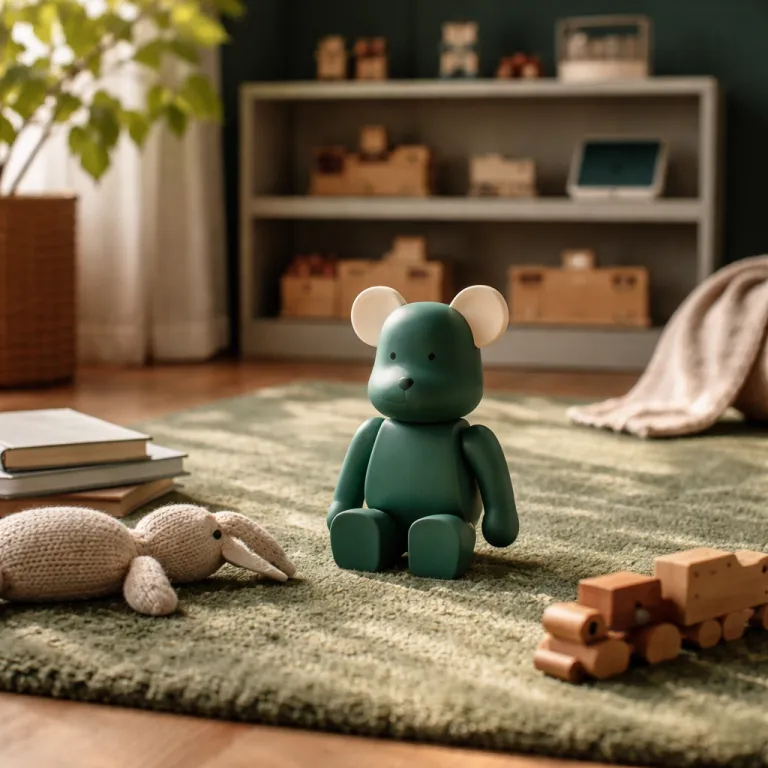
From Tokyo giveaway to nursery centrepiece
Bearbrick began as a tiny plastic bear-shaped toy handed out at the 2001 World Character Convention in Tokyo, created by Medicom Toy as an anniversary giveaway for its Kubrick line. The first Medicom Toy design team simply remixed their existing Kubrick block figure into a rounded bear silhouette, never imagining a future Bearbrick art toys nursery collection curated by parents. That origin as a free Bearbrick-style gift matters when you now see a 1000% Bearbrick figure, roughly 70 cm tall, standing beside a vintage rocking horse as part of carefully planned Bearbrick nursery decor.
Medicom quickly realised that this bear-shaped figure could host graphics the way a gallery wall hosts canvases, and the first Bearbrick series invited street artists, record labels, and fashion brands to treat the toy as a blank canvas. Over time, each new Bearbrick series became a capsule of visual culture, from graffiti lettering to luxury monograms, and the Bearbrick collection shifted from casual shelf filler to investment object. Parents who once queued for sneakers now track each series blind release the way watch collectors follow reference numbers, checking drops on platforms like StockX, eBay, and Yahoo! Auctions Japan before deciding which item feels safe enough to share with small hands.
That shift explains why a nursery today might hold a 400% toy Bearbrick beside a linen canopy and a hand-carved teddy bear. The Bearbrick art toys nursery collection is no longer an accident of leftover collectibles but a deliberate set of figures chosen for colour, theme, and future value. When a parent in the United States places a Chanel-inspired Bearbrick next to a cute teddy from a heritage maker, they are quietly telling their child that toys can be both playthings and cultural artefacts, and that designer toys for children can sit comfortably beside classic plush companions.
The nursery as gallery, the child as future curator
Walk into a high-end nursery now and you often see a low shelf lined with Bearbricks, KAWS Companion figures, and the occasional Yoshitomo Nara action figure. The Bearbrick art toys nursery collection sits beside cloth dolls and wooden blocks, and the room reads less like a toy box and more like a small gallery designed for a child-sized gaze. Parents who once collected limited edition action figures now edit a set of pieces that can age with their child, from first months to early school years.
This gallery mindset extends beyond Bearbrick into other designer toy lines, from Paola Reina dolls to soft sculptures, and many parents research deeply before each purchase. A thoughtful buyer might read long-form reviews about the charm of Paola Reina dolls on a specialist site, then compare that emotional feedback with their own experience of a glossy figure Medicom has produced for a fashion house. They weigh not only the price and potential appreciation but also whether the toy invites storytelling, whether the child will see a friend, a hero, or just a no-touch object left forever on a high shelf.
In this context, the classic teddy bear and the toy Bearbrick start a quiet conversation about what childhood objects should feel like. A plush cute teddy invites squeezing and dragging across the floor, while a glossy Bearbrick figure almost demands white gloves and a verified purchase certificate. The best nurseries balance both impulses, letting one or two Bearbricks stand as visual anchors while most toys remain ready for immediate, slightly chaotic action, so the space feels like both a gallery and a playroom.
When a toy stops being a toy
The central tension with any Bearbrick art toys nursery collection is simple to state and hard to resolve. At what point does a Bearbrick stop being a toy and become a sculpture that only adults are allowed to touch, even though it still looks like a friendly bear. Parents feel this every time a small hand reaches for a glossy 1000% figure that cost more than the crib, especially when recent auction results show similar pieces reselling for several hundred to several thousand dollars depending on the collaboration.
Medicom Toy has always positioned Bearbrick as a designer toy first and a plaything second, and that hierarchy shows in the materials, the paint, and the limited production runs. A Bearbrick series tied to a fashion house or artist often ships in a blind box format for smaller 100% sizes, which turns the purchase into a lottery rather than a straightforward toy aisle choice. That structure suits adult collectors who enjoy the chase, but it can frustrate parents who simply want a specific bear for a specific child without paying secondary market prices on sites like StockX or specialist galleries.
Other art toys have made similar crossings into the nursery, from KAWS Companion vinyls to Futura Pointman action figures and small Yoshitomo Nara sculptures. Each of these designer toys raises the same question about how much action they should actually see, and whether a scuff is damage or patina. For parents trying to understand what designer toys for kids actually means, a detailed guide to real makers and real play suitability can be more useful than any glossy campaign, especially when resale platforms highlight condition grades as clearly as toy safety labels.
The child who inherits the Bearbrick collection
There is a quiet fantasy behind many a Bearbrick art toys nursery collection. A parent imagines a child turning eighteen, opening a cabinet, and finding a carefully preserved Bearbrick collection waiting as both emotional archive and financial cushion. The figures have stood through years of bedtime stories, yet their joints still click crisply because they were rarely used as true action figures.
Reality is usually messier, because children treat any bear-shaped object as a potential companion, not a portfolio asset. A limited edition Bearbrick from a coveted Bearbrick series might spend months untouched, then suddenly become the chosen bedtime guardian after a nightmare, and the first scratch arrives before anyone can negotiate rules. That moment forces a decision about whether the toy remains a verified investment item or becomes a fully fledged action figure with all the wear that implies.
Some families split the difference by keeping one set of Bearbricks in a higher cabinet and another more robust designer toy on lower shelves, much like they might separate heirloom porcelain from everyday plates. Others lean into play and accept that even a rare figure Medicom produced in collaboration with a luxury house can survive gentle handling if the child is coached. The most resilient collections are those that still feel like part of the child’s world, not a museum they are only allowed to dust, and that balance display value with the everyday reality of designer toys for children.
Prices, sellers, and the quiet logistics of luxury play
Behind every serene Bearbrick art toys nursery collection sits a spreadsheet, even if it only lives in a parent’s head. Price, shipping, seller reliability, and payment products all shape which Bearbricks actually reach the playroom, especially for families outside Japan or the United States. The emotional story might be about a child and a bear, but the practical story is about import duties, marketplace fees, and seller feedback.
Parents buying from major platforms now look for the verified purchase badge and read seller feedback as carefully as they once read stroller crash test data. They compare how long shipping took, whether the item arrived double boxed, and whether the Bearbrick figure showed any paint rub on arrival, because a damaged surface can halve resale value. When a listing for a Batman Hush collaboration or a Mickey Mouse themed Bearbrick appears among best sellers, experienced buyers know to check whether the seller is offering a sealed blind box or an opened series blind figure with photos, often cross-checking recent sold prices on eBay or StockX before committing.
Luxury nurseries also mix art toys with more functional design objects, such as a chromatic balloon dog lamp that nods to Jeff Koons while still being safe for nightly use. Parents who already understand the fine line between art toy crossover and practical lighting often apply the same scrutiny to every new Bearbrick set they bring home. In the end, the most successful rooms feel coherent because every action, from first purchase to final placement, respects both the child’s need for play and the object’s need for care, turning Bearbrick nursery decor into a quietly curated design project.
FAQ
Are Bearbrick figures safe to keep in a nursery?
Bearbrick figures are made from ABS plastic with smooth surfaces and rounded edges, which makes them generally safe as decor in a nursery. For children under three years, smaller 100% figures should be kept out of reach because of choking risk, in line with common small-parts warnings and EN71/ASTM F963 toy-safety guidance, while 400% and 1000% sizes are more suitable as floor-standing objects. Always check that the figure is stable, away from direct sunlight, and not accessible for unsupervised rough play.
Should children be allowed to play with Bearbrick toys?
Bearbrick was designed as a collectible art toy, so the joints and paint are not optimised for heavy daily play like traditional action figures. Older children who understand gentle handling can enjoy posing and light play, especially with less rare figures, while very young children are better served with more robust toys that explicitly meet age-graded safety standards. Many parents keep high-value Bearbricks as display pieces and offer other designer toys or plush bears for everyday use.
How do I choose which Bearbrick series belongs in a nursery?
For a nursery, parents usually prioritise calm colour palettes, friendly themes, and collaborations that will age well visually. Series that feature characters like Mickey Mouse or abstract patterns tend to integrate more easily with textiles and wall art than horror or graphic designs. Checking the full checklist for each Bearbrick series before buying helps ensure the final mix feels cohesive and appropriate for a child’s room.
Do Bearbrick toys hold their value over time?
Limited edition Bearbrick releases, especially collaborations with major fashion houses or artists, have historically shown strong resale performance when kept in excellent condition, with some 1000% figures trading for several times their original retail price on collector marketplaces. Value depends on rarity, demand, and condition, so opened or heavily played figures usually command less than sealed or carefully displayed pieces. Parents who care about long-term value often keep boxes, avoid direct sunlight, and document purchases from verified sellers.
How can I tell if a Bearbrick is authentic?
Authentic Bearbrick figures carry clear Medicom Toy markings on the foot, consistent printing quality, and precise joint movement without excess looseness. Buying from authorised retailers, established galleries, or online sellers with strong verified purchase histories reduces the risk of counterfeits. Comparing your figure to official product photos and checking for correct packaging details, including holograms or series logos where applicable, are practical final checks before placing it in a nursery.
Sources
Medicom Toy (Bearbrick product specifications and release information)
Statista (global toy and collectibles market data, including licensed collectibles growth)
NPD Group (U.S. toy sales and collectibles category insights, especially adult collector segments)
Business of Fashion (coverage of fashion–toy collaborations and Bearbrick releases, including luxury brand partnerships)