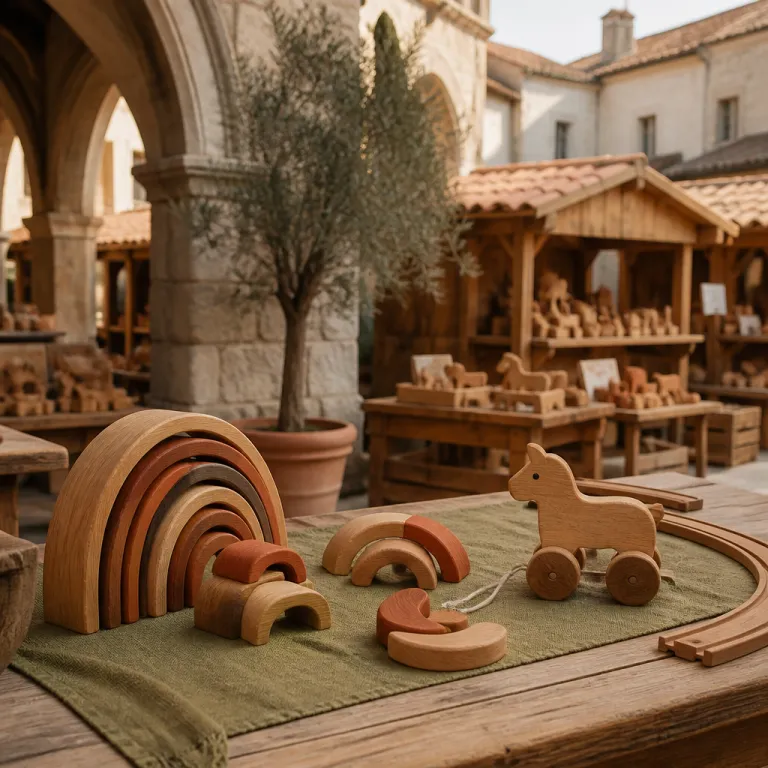
The quiet circuit of European heritage toy fairs
European toy fairs with an artisan, premium focus form a parallel universe to mainstream retail. In this quieter circuit, the leading market for heirloom toys grows through whispered recommendations, not sponsored posts, and the next Grimm’s Spiel & Holz–style brand often appears years before any consumer sees it on a social channel. Parents who walk these aisles step behind polished product categories and into the real manufacturing and supply stories that shape what their children will eventually hold.
At the top tier sit the mega shows, where the European high-end wooden toy niche hides in small halls while licensing giants shout nearby. Spielwarenmesse in Nuremberg remains the reference point for any serious buyer tracking the global toy market: the 2024 edition hosted more than 2,300 exhibitors from around 60 countries, yet our earlier Spielwarenmesse follow up analysis shows how slowly true premium craft brands scale compared with character licenses. These fairs publish every market report and report view imaginable, yet the most interesting toy often comes from a single table run by an exhausted couple who still handle their own distribution and supply chain.
Mid tier events such as the kids sections at Maison & Objet in Paris or Kind + Jugend in Cologne act as a bridge between heritage workshops and the global market. Here, a small group of buyers from America, Asia, and the Gulf quietly compares high quality wooden toys, premium craft kits, and even adjacent product categories like soft furnishings or sports equipment for kids. The European artisan toy ecosystem depends on these shows to test whether a brand can reach beyond its local channel without losing the hand finished character that first drew attention.
From mega shows to Waldorf markets : three layers of scouting
Parents who care about European heritage toy culture should understand the three layers where new designs emerge. Mega shows such as Spielwarenmesse and Licensing Expo in America reveal how the global market moves, but they rarely show the first spark of a future cult wooden toy brand. That spark usually appears earlier at regional craft fairs, Waldorf handmade markets, or in a tiny stand sponsored by an international limited distributor testing a single product.
At the mega level, halls are carved into product categories that mix mass market toys, licensed characters, and a small but potent cluster of premium craft brands. You will see large booths from a United States based LLC presenting dozens of toy lines priced in neat USD brackets, next to a modest stand where a European maker shows only three toys yet attracts every boutique retailer in the group. The artisan premium segment survives here by offering high quality materials, transparent manufacturing supply stories, and a slower, more honest approach to distribution.
Move down a tier and the tone changes from spectacle to conversation, which is where parents can meaningfully evaluate a toy beyond its packaging. At Waldorf handmade markets, there is no catalog, no online report view, and often no facebook LinkedIn presence at all, only a maker explaining how each toy will age in real play. These markets are where you meet the people who carve blocks to order, assemble craft kits at their kitchen table, and quietly shape what the leading market for sustainable toys will look like in five years.
What you find at Waldorf handmade markets that you never see online
Walk into a Waldorf handmade market and the first thing you notice is silence where you expected noise. Tables are lined with toys that look almost unfinished compared with glossy online brands, yet the European artisan premium ethos is visible in every grain of beech and maple. Here, the toy is not a product category but a relationship between maker, child, and the family who will live with it for decades.
Many of these makers work alone or in a tiny group, often without a formal brand name, and they rely on word of mouth rather than any global channel. You might see a parent testing a set of craft kits that double as early geometry lessons, while the maker explains how their manufacturing supply chain is just three people and a local sawmill. One woodworker at a German Advent market described it simply: “If a block breaks, I want the family to email me, not a help desk,” capturing how direct contact replaces anonymous customer service.
These fairs also reveal how adjacent crafts quietly influence the European premium toy scene. A stall selling premium craft textiles for dolls might sit beside a woodworker who once built sports equipment and now turns that expertise into balance boards for sensory play. For grandparents or godparents planning a milestone gift, this is where you can ask direct questions, request small custom changes, and understand why a toy will still feel right when the child outgrows the nursery and moves on to an elegant wooden locker in a more grown up room.
Scandinavian and Japanese circuits : where the next cult wooden toy quietly appears
The European craft toy story does not stop at Germany and France. Scandinavian fairs such as the Stockholm Furniture Fair kids section and Danish Design Days treat toys as part of a broader design language, not as isolated products. In these spaces, a wooden toy sits beside lighting, storage, and textiles, and the conversation turns to how children actually play in rooms rather than how a product photographs.
Scandinavian makers often operate as a loose group of studios sharing a manufacturing supply network, which helps them reach the global market without diluting quality. A single brand might present both toys and small sports equipment for indoor balance play, using the same high quality birch and the same careful finishes. Buyers who attend these fairs track how such brands manage distribution, from local boutiques to carefully chosen online channels, and they read every market report to see whether growth aligns with sustainable production.
Across the world, Japanese artisan scenes intersect with European premium toy culture in subtle ways. Names like Naef (Swiss but widely shown in Japan), Tsumiki–style block makers, and small Komagome or Asahikawa wood studios sometimes appear only at regional craft fairs, yet their toys later surface in European shops as quietly revered objects. Boutique retailers often use tools similar to a private report view rather than public facebook LinkedIn hype, sharing notes on which craft kits, premium craft puzzles, or modular blocks hold up best under daily play before committing to larger orders.
How boutique retailers scout, and how parents can follow the same path
Retail buyers who specialise in high quality European toy lines work more like curators than shoppers. They move through fairs with a mental checklist that covers play value, durability, supply chain transparency, and whether a toy brand can maintain quality once demand grows. The goal is not to fill shelves quickly but to identify toys that will still feel relevant when the child who receives them is old enough to pass them on.
Most buyers start at mega shows to understand the leading market trends, then spend the real time at mid tier fairs and grassroots markets. They look at how a toy sits within broader product categories, whether craft kits encourage genuine diy creativity, and how clearly the maker explains pricing in EUR or USD relative to material and labour. A strong artisan premium candidate often has modest packaging, minimal social media, and a distribution plan that favours a few committed partners over a rapid global channel expansion.
Parents and premium gift givers can borrow this method without needing a wholesale badge. Treat each fair as a living market report, where every conversation with a maker adds qualitative données to your sense of what high quality really means in practice. When you see a small LLC or international limited workshop quietly surrounded by serious buyers, that is usually your signal that this toy, this brand, and this particular craft buddy style maker will matter long after the unboxing, because the real luxury is not the first photograph but the fifth birthday it survives.
FAQ
How can parents access European heritage toy fairs without being trade buyers ?
Many European premium toy events reserve certain days or specific halls for the general public. Spielwarenmesse, for example, opens selected areas to families on its final weekend, while some regional shows in France and Germany run dedicated “consumer days.” Check each fair’s website for family or visitor information, and focus on smaller Waldorf markets or regional craft fairs, which usually welcome parents directly. When trade only rules apply, nearby off site markets often spring up where the same makers sell to individual families.
What should I look for when evaluating a premium wooden toy at a fair ?
Start with the basics : type of wood, finish, and how joints or moving parts are constructed. Ask the maker about their supply chain, repair options, and whether spare parts will be available in a few years. Then watch how children interact with the sample toy on the table, because real play patterns reveal more than any brochure or market report.
Are craft kits at these fairs really better than what I find online ?
Craft kits at European artisan toy events tend to prioritise open ended creativity over themed, single use projects. Makers usually explain how each kit supports specific skills, from fine motor control to early design thinking, and they often include refill options to extend the life of the product. You also gain direct accountability, because the person who assembled the kit is standing in front of you and can adapt contents for your child’s age.
How do prices at artisan fairs compare with luxury retail boutiques ?
Prices at heritage toy fairs often sit slightly below what you would pay in a high end boutique, because you are closer to the source and fewer distribution layers take a margin. Some makers quote in EUR while international buyers think in USD, so ask for a clear price list and any shipping costs. The key is to compare not just the ticket price but the expected lifespan and repairability of the toy.
Which months are best for visiting European toy fairs focused on premium toys ?
The richest stretch for European artisan and heritage events usually runs from early autumn through late winter. Major trade shows cluster in January and February, while many Waldorf markets and regional craft fairs take place in the weeks leading up to the winter holidays. Planning travel in this window lets you combine mega shows, mid tier design fairs, and smaller handmade markets in a single trip, especially if you use a specialised guide such as a detailed overview of the world’s most exclusive toy fairs.
Sources
Spielwarenmesse official publications (2024 exhibitor statistics) ; Maison & Objet and Kind + Jugend exhibitor data ; Waldorf education and market association materials.