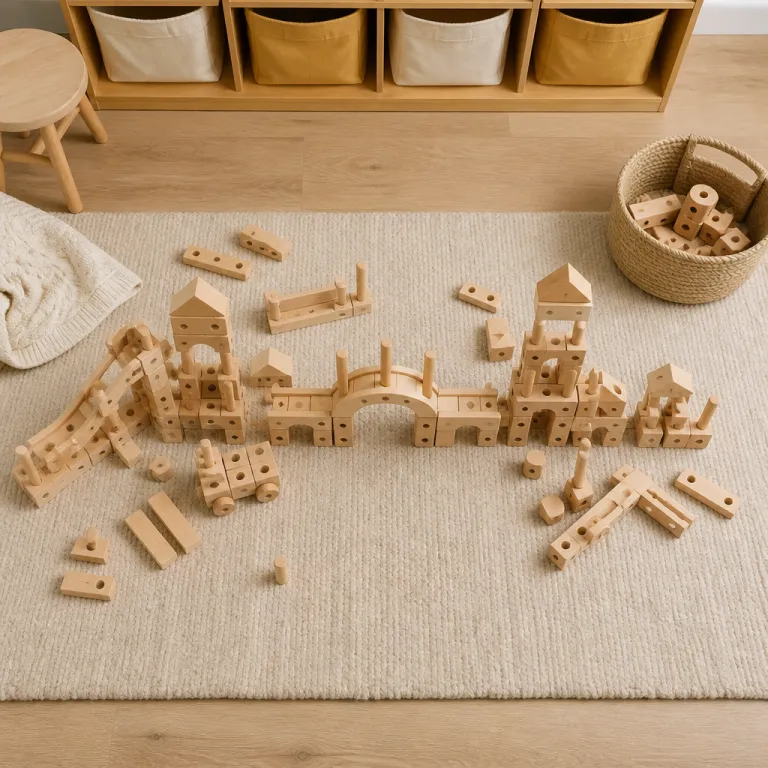
Luxury wooden construction toys for design conscious, eco aware families
Why refined wooden construction toys appeal to luxury minded parents
Wooden construction toys speak to parents who value calm aesthetics and meaningful play. In a nursery curated with care, a beautifully finished wooden toy or complete building set feels closer to design furniture than cluttered plastic. These toys kids cherish for years often become heirloom gifts that bridge generations and still look at home in a thoughtfully designed living room.
High end wooden toys use carefully selected timber and precisely cut building blocks to support open ended construction. When you choose a premium product, you are paying for dense hardwood, safe finishes, and engineering that keeps blocks stable during ambitious games of balance and building. That is why the price of a luxury building set can be several times higher than mass market wood toys, yet still offer strong value over many years of daily play and display.
Parents of toddlers and older kids often notice that a single elegant wooden toy encourages quieter, deeper play. Instead of flashing lights, the features that matter are proportion, weight, and how the blocks feel in small hands across different ages. One parent described how their four year old “returned to the same wooden block set every afternoon for months, building a new city each time,” a pattern that illustrates how these construction toys invite kids to create wooden structures that grow in complexity as their skills develop and their imagination expands.
Handcrafted quality, materials and eco friendly credentials
In the luxury segment, the story behind the wood matters as much as the design of the toys. Many of the most respected wooden toys brands now use timber certified by the Forest Stewardship Council (FSC), and that independent label reassures parents about responsible forestry. When a product is described as FSC certified, it signals that the wood toys come from forests managed for long term ecological balance rather than short term gain, as outlined in the FSC Global Market Report 2022.
Eco friendly wooden construction toys also minimise finishes and rely on natural oils or water based paints that are safer for toddlers who still mouth their toy blocks. Parents comparing kids wooden options quickly see the difference between anonymous plywood and solid beech or maple wood, especially when they feel the smooth edges of wooden blocks or a toy van. For families who prioritise sustainability, reading eco luxe certifications such as FSC for wood and GOTS or OEKO TEX for textiles on play mats or storage baskets becomes part of the selection ritual, and a dedicated guide to these eco friendly labels can be found in this article on eco luxe certifications that matter for wood toys.
Handcrafted wooden building pieces often show subtle variations in grain and colour that mass produced construction toys cannot replicate. These features are not flaws; they are reminders that each wooden toy began as a living tree and passed through skilled hands. For parents who see toys as long term gifts rather than disposable items, this combination of craftsmanship and forest stewardship feels aligned with their values and their desire for a lower impact lifestyle.
Developmental benefits across ages, from months to early school years
Luxury wooden construction toys can support a child from the first exploratory months through the early school years. For babies around six to twelve months, large wooden blocks with rounded edges invite safe grasping, banging, and early cause and effect play. During these early months, the goal is not elaborate building games but sensory exploration of weight, texture, and sound.
As toddlers grow into the two to three years range, a thoughtfully curated building set becomes a stage for early problem solving. They begin stacking building blocks into towers, driving small toy cars under improvised bridges, and integrating a favourite toy van into simple pretend play. At this stage, toys toddlers use most often are usually the ones that allow both construction and storytelling, and parents see how a single wooden building collection can replace several plastic toys kids rarely touch.
By four to six years, many kids wooden creations become surprisingly architectural, with complex wooden construction layouts that stretch across the playroom. This is where a high quality wooden block set truly shows its value, because precise dimensions allow stable construction toys that do not collapse at the slightest touch. For a deeper look at why a premium building set offers more learning potential than a budget alternative, parents can read this analysis of what a 300 euro wooden block set offers beyond a 30 euro one, which discusses how consistent sizing supports more advanced spatial reasoning and cooperative play.
Evaluating features, safety and price in the luxury segment
Selecting luxury wooden toys means looking beyond surface beauty to examine features, safety standards, and long term value. For infants under twelve months, check that each wooden toy or loose block is too large to fit through a standard choke test cylinder, and that the finish is saliva resistant. Between twelve and thirty six months, toys toddlers handle should still be robust enough to survive drops, chewing, and enthusiastic construction games without splintering.
Price in the premium wooden construction category often reflects three main factors: quality of wood, precision of building blocks, and ethical production. A set made from solid hardwood with FSC certified timber and hand sanded edges will cost more than a similar looking product in softwood or composite materials. For instance, a large Grimm’s wooden building set with around one hundred colourful blocks typically retails in the 250 to 300 euro range, while a comparable sized unbranded softwood set may cost around 30 euros but offer less durability and fewer complex building options.
Safety certifications, clear age recommendations, and transparent sourcing information are non negotiable for toys kids will use daily. Look for explicit references to the Forest Stewardship Council or similar certification schemes, and confirm that any paints or lacquers used on wood toys are tested for heavy metals. When brands share detailed product data, including exact dimensions of wooden blocks and recommended ages, they signal a level of care that aligns with luxury expectations and helps parents compare options with confidence.
Curating a minimalist yet rich wooden building collection
A refined playroom rarely needs a mountain of toys; it needs a coherent selection of wooden construction toys that work together. Start with one generous building set of wooden blocks in a neutral wood tone, then add a few character pieces such as toy cars or a sculptural toy van. This approach keeps visual noise low while giving kids wooden elements enough variety to sustain complex play and evolving storylines.
When curating, think in terms of systems rather than isolated products, and choose construction toys that share compatible scales and proportions. A set of unit building blocks can pair beautifully with open ended figures, ramps, and simple wood toys that extend the play narrative. Parents who appreciate brands like Grapat, Grimms or Spielgaben often enjoy this kind of loose parts ecosystem, and a detailed comparison of such open ended systems is available in this guide to the loose parts showdown for discerning families.
Rotating toys by seasons or developmental stages helps maintain a sense of novelty without constant new purchases. For younger ages, keep out only a portion of the building blocks and a few favourite wooden toys, then gradually introduce more complex wooden construction elements as attention spans grow. This rhythm respects both the child’s need for focused play and the parent’s desire for a serene, uncluttered space.
Gifting luxury wooden construction toys with meaning
When relatives ask for ideas, a carefully chosen wooden construction gift can anchor a child’s play for years. Instead of multiple small toys, suggest that family members contribute to one substantial building set or a complementary collection of wooden blocks. This turns birthdays and seasonal gifts into opportunities to deepen an existing world of play rather than scatter attention.
For babies under twelve months, ideal gifts include large, graspable wood toys with simple shapes and gentle colours. Between twelve and thirty six months, families might choose a starter set of building blocks, a few sturdy toy cars, and perhaps one distinctive toy van that becomes a signature piece. Older kids often appreciate more specialised construction toys, such as wooden building planks or architectural sets that challenge their spatial thinking while still harmonising with earlier wooden toys.
Luxury gifting also involves presentation and storytelling about the product, from the origin of the wood to the forest stewardship practices behind an FSC certified label. Including a small card that explains how the certification system protects forests can help children connect the toys kids love with the natural world. Over time, these conversations nurture both aesthetic appreciation and a quiet sense of responsibility toward the forests that made their favourite toys possible.
Key figures on wooden construction toys and sustainable play
- A report from the Forest Stewardship Council notes that more than 220 million hectares of forest are FSC certified worldwide, providing a significant resource base for FSC certified wood toys that support responsible wooden construction (FSC Global Market Report 2022, available from the official FSC publications library).
- Market analyses of the global traditional toys segment show that construction toys and building blocks consistently rank among the top categories for educational value, with parents reporting higher perceived learning benefits compared with many electronic games (for example, Euromonitor International and NPD Group category reports on traditional toys and games).
- Consumer surveys in Europe indicate that a growing share of parents are willing to pay a higher price for eco friendly wooden toys, especially when clear product labelling highlights forest stewardship and non toxic finishes, and when brands explain how their sourcing policies reduce environmental impact.
- Developmental research on early childhood play has repeatedly linked block play in the three to seven years range with improved spatial reasoning and later performance in science, technology, engineering and mathematics subjects (see, for instance, Wolfgang, C. H., Stannard, L. L., & Jones, I., 2001, Journal of Research in Childhood Education, and Verdine, B. N. et al., 2014, Developmental Psychology).
FAQ about luxury wooden construction toys
What ages are best for investing in luxury wooden construction toys ?
High quality wooden construction toys can be introduced from around six to nine months with large, safe blocks, then expanded through the toddler and preschool years. The most intensive use usually occurs between two and seven years, when children move from simple stacking to complex building games. A well chosen building set can still support creative play for older kids who enjoy architectural challenges and collaborative projects.
How many wooden blocks does a child really need ?
For toddlers, around thirty to forty medium sized wooden blocks are usually enough to build satisfying towers and simple structures. By the time kids reach four to six years, a more generous building set of sixty to one hundred pieces allows bridges, enclosures, and multi level constructions. Luxury collections often grow gradually as family and friends add compatible gifts over several years, building a cohesive system rather than a random assortment.
Are eco friendly wooden toys safer than plastic alternatives ?
Eco friendly wooden toys made from solid wood and finished with tested, non toxic coatings can reduce exposure to certain chemicals found in some plastics. Safety still depends on the specific product, so parents should look for clear labelling, independent testing, and references to schemes such as the Forest Stewardship Council. For babies and toddlers, smooth edges, appropriate sizes, and robust construction are just as important as material choice.
Why are luxury wooden construction toys more expensive ?
Higher price usually reflects the cost of quality hardwood, precise machining of building blocks, hand finishing, and ethical production standards. Brands that use FSC certified timber and maintain strong forest stewardship practices also pay more for responsibly sourced wood. Over time, the durability and long usable life of these toys can offset the initial investment, especially when a single building set serves several siblings.
How can I maintain and store wooden building sets ?
Wooden building sets should be stored in a dry room, away from direct heat sources that could warp the wood. Wipe blocks and toy cars with a slightly damp cloth and mild soap when needed, then allow them to dry fully before returning them to a box or shelf. Many families use open baskets or low shelves so kids can see their wooden toys and independently choose what to play with, which also encourages children to participate in tidying up.