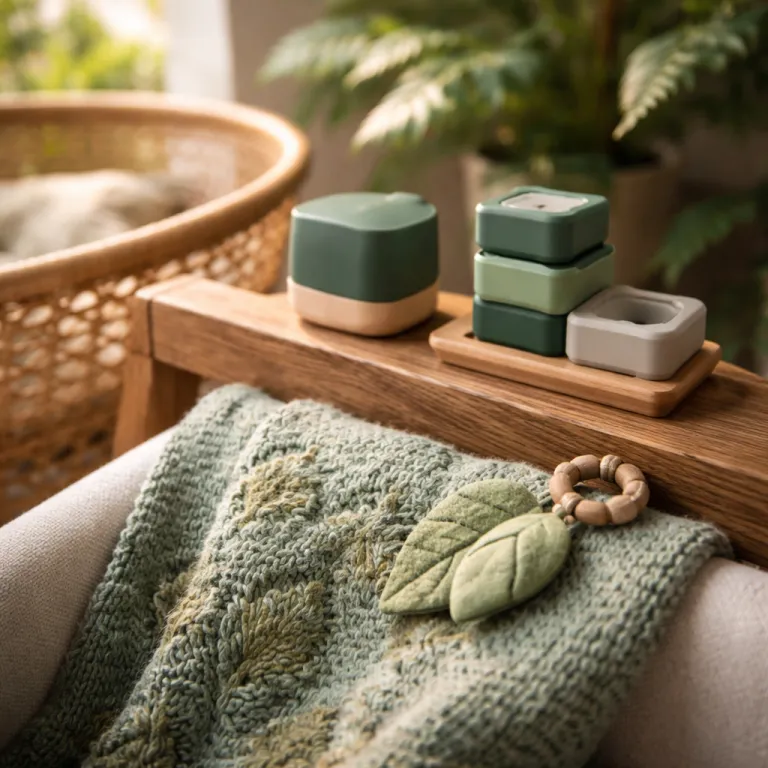

Heirloom goes mainstream in the baby nursery
Nestig’s 2024 Kids Room Trend Report, based on a nationally representative survey of 1,000+ U.S. parents and interior designers, confirms what many luxury parents already practice. The headline shift in 2026 nursery trends toward artisan toys is a move to solid wooden toys, hand sewn animals, and nature inspired objects that treat the nursery as a design space rather than a branded billboard. For babies under 12 months, this translates into a quieter visual field, more natural materials, and toys that feel soft in the hand but structurally high quality over the long term.
According to Nestig, “parents are increasingly prioritizing natural materials and timeless pieces over character-driven décor,” a framing that matters when you select each toy for an infant who explores the world with mouth and hands. Parents now ask first about natural wood, organic cotton, and natural fibers, then about color and style, because baby skin and early safety standards leave no room for toxic paints or questionable finishes. In this context, 2026 nursery trends in artisan made toys are less about a look and more about a safety strategy that keeps products free from toxic substances while still feeling perfect for a refined baby nursery.
For affluent families, the mainstreaming of artisan toys changes the calculus of what to buy and when. Once niche brands like Odin Parker and Timber Sprout Toys now appear in broad sustainable toy lists and gift guides, which means their wooden toys and hand painted rattles may face price pressure and longer lead times as demand grows over time. Parents who want a selection full of truly hand painted, nature inspired pieces for their baby nursery are starting to commission custom toys early, before a child grows into more complex play and before the market’s full refresh of trends pushes makers toward faster, less personal production.
Safety, materials and the quiet luxury of infant toys
For infants, luxury is not a logo; it is the feel of natural fibers against baby skin and the assurance that every toy in the nursery is safe to mouth, drop, and sleep beside. The strongest signal inside 2026 nursery trends for artisan toys is the near universal pivot to organic cotton, natural wood, and other natural materials that are free from toxic paints and unnecessary chemical treatments. Parents who once focused on matching the wall color now interrogate every label, asking whether products are genuinely non toxic or simply marketed as such, and looking for clear references to standards such as ASTM F963, EN71, GOTS, and OEKO-TEX.
This shift shows up in the smallest details of nursery design for babies. A soft organic cotton comforter, like the kind highlighted in many organic cotton baby blanket guides, now shares the same palette as hand painted wooden toys on the shelf, creating a mix match of textures that still feels coherent in a carefully planned design nursery. When designers talk about a full refresh of a baby nursery, they increasingly mean replacing plastic mobiles and battery heavy toys with quiet, nature inspired objects that respect both safety and long term durability as a child grows, such as a simple natural wood play gym or a sculptural wooden rattle set.
Material choices also reshape how parents think about space and time. A compact nursery design might rely on a few high quality wooden toys, a single natural wood play arch, and a small rotation of soft cotton rattles, rather than a large selection full of disposable plastic toys that age badly. In this model, current 2026 nursery trends around handcrafted toys open a window onto slower consumption, where each toy earns its place over time and where safety, tactility, and design ideas matter more than flashing lights or licensed characters, turning the room into a calm, heirloom inspired retreat.
What to buy now: infant focused artisan pieces before the rush
As artisan toys move from niche to norm, the infant segment is where scarcity will be felt first. Makers who specialize in hand painted rattles, small wooden animals, and soft baby safe teethers often work in tiny batches, and 2026 nursery trends in handcrafted infant toys are already pushing waitlists longer for these products. For parents planning a baby nursery today, the strategic move is to secure foundational pieces early, then let the rest of the design nursery evolve as the child grows and as new collections arrive from favorite artisan brands.
Start with a core trio that respects both safety and sensory needs. A set of natural wood stacking cups or boats for bath play, a soft organic cotton comfort object, and one or two wooden toys with clear, muted color accents can anchor the space while leaving visual room for future mix match additions. For water play, refined boat bath toy sets that turn water play into a mini regatta show how even bath time can align with natural materials and non toxic finishes, extending the same safety logic beyond the crib and into everyday routines.
From there, think about how each new toy will age across developmental stages. A high quality wooden cradle or chair from an exquisite baby doll furniture collection can serve first as a sculptural object in the nursery, then as active play furniture once babies become toddlers and their play space needs a full refresh. In this sense, 2026 nursery trends in artisan toys are less a passing aesthetic and more an investment in long term calm, where every new piece refresh opens the room gently rather than overwhelming it, and where the real luxury is not the unboxing but the fifth birthday it survives and the memories it holds.
Key statistics on sustainable and artisan nursery toys
- Nestig’s Kids Room Trend Report, published in 2024 and based on survey responses from over 1,000 U.S. parents and designers, highlights solid wooden toys, hand sewn stuffed animals, vintage finds, and artisan made pieces as the dominant direction for upcoming nursery design, with more than half of surveyed parents prioritizing natural materials for new purchases; the report’s methodology and topline findings are publicly summarized on Nestig’s site.
- Market visibility for artisan focused retailers such as Odin Parker and Timber Sprout Toys has increased significantly in recent sustainable toy brand roundups and gift guides, signaling stronger mainstream demand for natural materials and non toxic finishes and a noticeable rise in search interest for wooden toys and organic cotton baby gifts, as reflected in year over year growth reported in multiple retail trend summaries.
- Industry sustainable brand lists now consistently emphasize organic cotton, natural wood, and responsibly sourced natural fibers as baseline expectations for high quality infant toys rather than niche differentiators, often alongside references to standards such as ASTM F963, EN71, GOTS, and OEKO-TEX to verify safety and textile claims, with many featured products explicitly noting third party testing or certification in their product descriptions.
Questions parents also ask about luxury artisan toys for infants
How do I verify that an artisan toy is genuinely non toxic and safe for my baby?
Check that the maker clearly states compliance with recognized safety standards for your region, such as ASTM F963 and CPSC rules in the United States or EN71 in Europe, specifies the use of natural materials such as natural wood and organic cotton, and explicitly notes that finishes are free from toxic paints or solvents. Reputable brands will list every material, including glues and varnishes, and will often share third party test results or certifications such as GOTS or OEKO-TEX rather than vague claims about safety. When in doubt, prioritize simple construction, unfinished or lightly finished wood, and textiles that are certified organic, especially for items that will spend significant time against baby skin.
Are wooden toys really better than plastic toys for infants?
Wooden toys made from high quality natural wood offer a different set of advantages than plastic toys, especially in the first year. They tend to be more durable over the long term, easier to keep clean without degrading, and less likely to contain additives associated with toxic risk when properly finished and tested to standards like ASTM F963 or EN71. For infants, the weight, temperature, and texture of wooden toys also provide richer sensory feedback, which can support early motor development while keeping the visual field calmer in a carefully curated nursery design.
How many toys does a baby actually need in a luxury nursery space?
Most infants benefit more from a small, thoughtful selection full of well chosen toys than from a crowded room. A practical guideline is to keep only a handful of toys accessible at any one time, rotating items every week or two so that each object feels fresh without overwhelming the baby nursery. This approach aligns with 2026 nursery trends in artisan toys, which emphasize intentional design ideas, calm color palettes, and nature inspired materials over volume.
Can artisan toys support development as my child grows, or are they mainly decorative?
Well designed artisan toys are typically built with open ended play in mind, which means they can adapt as a child grows from infant to toddler and beyond. A simple set of stacking blocks, for example, begins as a grasping exercise for babies, becomes a construction toy in toddlerhood, and later turns into a prop in imaginative play, extending its useful life over time. When you choose pieces that balance aesthetic appeal with functional design, you avoid purely decorative objects and instead build a nursery where every item earns its place through both beauty and developmental value.
How should I balance mix match aesthetics with a cohesive nursery design?
Start by defining a restrained palette of two or three main colors drawn from natural materials such as wood, undyed cotton, and wool, then allow yourself to mix match shapes and makers within that framework. This method lets you integrate different artisan brands and hand painted details without losing visual calm, because the shared materials and tones tie the space together. Over time, each new toy can act as a small refresh that opens the room visually, rather than a jarring addition, keeping the overall design nursery coherent while still feeling collected and personal.