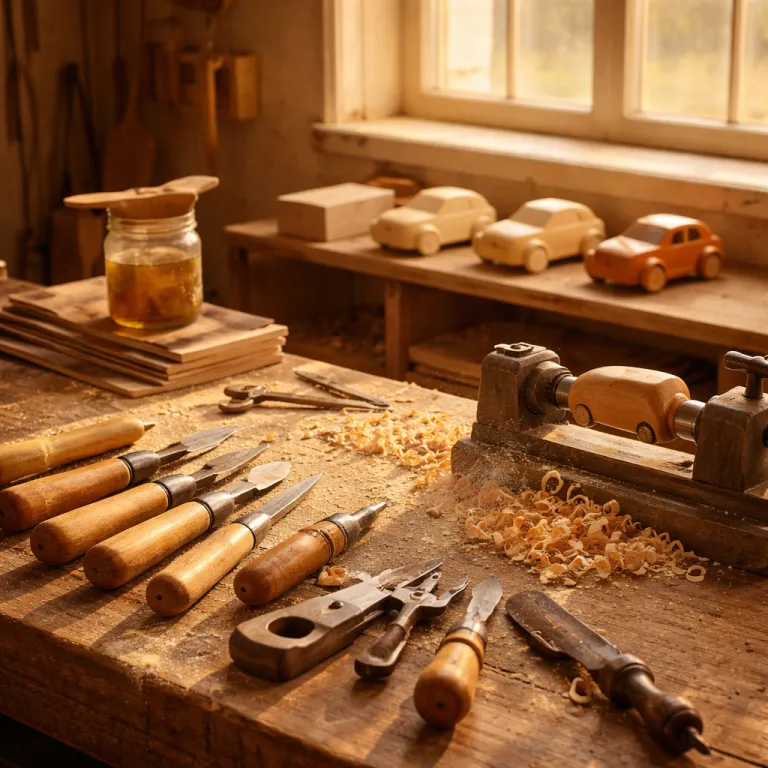

Why the best handcrafted wooden toys are rarely in stock
A truly luxurious wooden toy does not start at the checkout page. It begins when a maker stands in front of a rack of raw boards and rejects half of them because the grain will not survive years of play. That quiet refusal, long before any toy trucks or toy trains exist, is the first signal that you are buying more than décor for the kids room.
In small US workshops working at an Odin Parker– or Timber Sprout Toys–style scale, a typical week is mostly unglamorous sorting, planing and waiting rather than constant carving. One day is spent matching species for a coordinated wooden toy collection, another is dedicated to moisture testing each piece of wood so that a future toy pickup truck or toy car will not warp when your child leaves it near a sunny window. The pace feels slow compared with mass market wooden toy lines, yet that slowness is exactly what makes the final wooden toys feel calm in the hand and stable on the shelf.
Parents used to instant free shipping often misread lead time as poor service rather than proof of care. When a maker quotes six weeks for a wooden toy tractor with a matching horse trailer and a detachable wooden mini skid loader, they are usually protecting curing times, not padding the calendar. If a brand claims heirloom quality and still promises a complex wooden pickup truck and dump truck set to ship in forty eight hours, assume that someone else already did the hard work with the wood or that the toy was never truly handcrafted in the first place.
Inside a week at a small workshop: from raw wood to rolling truck
Walk into a workshop similar to Timber Sprout Toys on a Monday morning and you will not see finished toys, you will see lumber. Makers start by reading each piece of wood like a map, checking grain direction, knots and moisture so that a future toy truck or toy skid loader will roll straight instead of twisting over time. They separate boards for structural parts of wooden toys, such as axles for a pickup truck or tractor, from boards better suited to gentle curves on a rocking horse or a smooth marble run.
Once Kids and comparable studios often dedicate midweek to rough shaping, using a mix of traditional hand planes and carefully tuned CNC machines. The CNC handles the first pass on repetitive elements in a wooden toy collection, such as identical wheels for a toy car train combo or matching sides for a horse trailer, while hand tools refine every edge that a child will touch. This is also when makers drill precise holes for marble tracks, carve the bed of a dump truck and test how each wooden toy balances when kids push, pull and play aggressively.
By Friday, the workshop smells of oil and wax rather than fresh sawdust. Artisans lay out an entire set of wooden toy pieces, from a tiny wooden mini pickup to a larger toy pickup truck with detachable trailer, and apply eco friendly finishes in thin, patient layers. If you are also considering a larger play setup, such as a wooden play refrigerator for the playroom, pairing it with a small fleet of these handcrafted wooden toys creates a coherent, tactile world where every toy feels intentionally related rather than randomly purchased.
Wood selection, tools and the hidden engineering of child safe play
The difference between a safe wooden toy and a splinter hazard is usually decided before the first cut. Serious makers choose hardwood species with tight grain for structural parts of toy trucks and toy trains, reserving softer wood for larger, less stressed panels that kids will not chew. They also orient grain so that a pickup truck bed or tractor trailer tongue resists snapping when a sibling sits on it during pretend play.
Traditional hand tools still matter, even in workshops that use CNC for efficiency. A machine can rough out ten identical toy car bodies or a full batch of wooden skid loader arms, but only a sharp chisel and practiced hand can soften the inside of a wheel arch so it feels genuinely child safe against a toddler’s palm. That last pass is where heirloom quality emerges, especially on complex shapes like a wooden pickup towing a horse trailer or a compact toy skid loader designed to climb over block piles.
Finishing is its own engineering problem. Makers sand every piece of wood through multiple grits, then apply eco friendly oils and waxes that penetrate rather than sit on the surface, which keeps wooden toy surfaces grippy enough for small hands yet easy to wipe clean. If you are drawn to refined wooden toy airplanes or vehicles, look for brands that explain their finishing schedule in detail, because a rushed topcoat is usually what fails first when kids grind marble pieces or crash a toy truck repeatedly on the floor.
The curing clock: why oil, wax and waiting shape the final price
Once the cutting and sanding stop, the most critical phase for handcrafted wooden toys begins, and it looks like nothing is happening. Freshly oiled wooden toys rest on open racks while natural finishes soak into every piece of wood, from the chassis of a toy truck to the slender rails of a toy train carriage. Makers time this absorption carefully, because a child safe surface depends on oil curing fully rather than remaining tacky under small fingers.
Waxing adds another layer to the schedule. Artisans buff eco friendly wax into the corners of a wooden pickup bed, the steps of a toy skid loader and the curved sides of a horse trailer until the surface feels almost like satin, then they leave the toys alone again. This pause lets the finish harden so that when kids play with a tractor and trailer set or send marble balls racing through a track, the wooden toy surfaces resist moisture, drool and the occasional snack smear.
All this waiting shows up in the final price, but not in the way many parents assume. When a small maker lists a toy car and pickup truck set for what feels like a premium price, a significant share of that number covers days when the workshop could not touch the product at all. If you see a complex wooden toy collection, complete with dump truck, skid loader and horse trailer, offered for immediate sale with glossy finishes and no mention of curing time, treat that as a warning sign rather than a bargain.
Transparent economics: what you really pay for in heirloom quality toys
Luxury in kids toys is often confused with branding, yet the economics of a genuinely handcrafted wooden toy are surprisingly straightforward. A small US or EU maker might spend several hours selecting and cutting wood for a single toy truck, then another block of time sanding, assembling and finishing, all before accounting for workshop rent and safety testing. When you divide the retail price by those hours, the hourly rate often looks more like that of a skilled tradesperson than a luxury goods magnate.
Consider a mid sized wooden toy collection built around a tractor, pickup truck and matching trailer. Raw materials might include sustainably harvested wood, eco friendly oils and waxes, child safe glues and small metal axles, which together represent only a fraction of the final price. The rest covers labor for shaping each piece of wood, hand fitting wheels so they roll smoothly, and testing the wooden toy joints so that a child can load a dump truck with blocks or park a toy pickup beside a stable without anything wobbling loose.
Stock levels tell their own story. When a brand such as Grace and Haven or a small Once Kids line shows only a few wooden toys available for immediate sale, that usually reflects limited bench capacity rather than poor planning. By contrast, a shop offering dozens of complex toy car and toy truck designs with constant free shipping and no variation in lead time is probably reselling factory made items, even if the marketing language leans heavily on words like heirloom quality and eco friendly craftsmanship.
How to shop: lead time as your most reliable luxury signal
Parents who buy intentionally often start by comparing price, yet with handcrafted wooden toys the smarter first question is about time. Ask a maker how long it takes to build a wooden toy tractor with a detachable trailer or a small fleet of toy trucks, and listen closely to whether they mention drying, curing and finishing stages. A clear, slightly nerdy answer about oil absorption and wax setting is a better indicator of heirloom quality than any lifestyle photo.
Lead time also helps you separate real workshops from curated resellers. If a brand claiming to handcraft wooden toy pieces can ship a full wooden toy collection — tractor, pickup truck, dump truck, skid loader and horse trailer — within forty eight hours all year round, you are likely looking at imported stock rather than bench made work. By contrast, a maker who offers a modest range of toy car and toy pickup designs, explains seasonal backlogs and occasionally asks you to confirm you understand the wait is almost always closer to the wood and the tools.
Use sustainability as a cross check rather than a slogan. Workshops that already invest in eco friendly finishes and energy efficient equipment tend to think long term about both the planet and your kids play patterns, which is why their wooden toy designs often integrate with other open ended pieces like foam blocks or play kitchens discussed in sustainable toy guides. In practice, that means a single wooden mini pickup or train car can join block towers, marble runs and animal figures in endlessly varied, genuinely fun scenarios, and the real luxury becomes not the unboxing but the fifth birthday it survives.
Key figures on handcrafted wooden toys and sustainable play
- According to trend summaries from the Toy Association published around 2020, global sales of eco friendly toys grew by more than 70 percent over a recent five year period, reflecting a strong shift toward wood, recycled plastics and non toxic finishes in the premium segment. This overview is based on aggregated industry trend reporting rather than a single peer reviewed study.
- Consumer surveys from major market research firms such as Nielsen and Deloitte in the late 2010s indicate that over 60 percent of millennial parents are willing to pay a higher price for toys that are clearly labeled as child safe and sustainably produced, especially when those toys are made from certified wood. Exact percentages vary by survey year, sample size and region.
- Lifecycle analyses summarized by environmental organizations and academic reviews suggest that durable wooden toys can have a significantly lower carbon footprint than comparable plastic toys when used by multiple kids or passed between families for at least five years, although results depend on transport distances, energy sources and end of life disposal.
- Industry data on small workshops, drawn from case studies and maker surveys published between roughly 2015 and 2022, suggests that labor can represent more than half of the final retail price for handcrafted wooden toys, with finishing and curing alone accounting for several hours per piece in many documented examples.
FAQ about handcrafted wooden toys for luxury minded families
How can I tell if a wooden toy is genuinely handcrafted ?
Look for small variations in grain, edges and finish rather than perfect uniformity, and read how the maker describes their process in terms of wood selection, tools and curing time. Brands that share workshop photos, mention specific species and explain their oil and wax schedule are usually doing the work themselves. Extremely fast shipping on complex designs is often a sign of factory production, even when the marketing language sounds artisanal.
Are handcrafted wooden toys really safer for kids than plastic toys ?
Handcrafted wooden toys can be very safe when they use non toxic, child safe finishes and avoid small detachable parts for younger kids. Many small makers prioritize eco friendly oils and waxes, rounded edges and robust joinery that resists breaking into sharp fragments. Always check for safety testing information and age recommendations, especially on toy trucks, trains and marble runs with moving pieces.
Why do high quality wooden toys cost more than mass market options ?
The higher price usually reflects skilled labor, slower production and better materials rather than pure branding. Makers spend time selecting stable wood, shaping each piece, sanding thoroughly and allowing finishes to cure fully, which adds days to the process. When you spread the cost over years of play and the possibility of passing toys to younger siblings, the long term value often compares favorably with cheaper items that break or lose appeal quickly.
How should I care for handcrafted wooden toys to make them last ?
Most wooden toys only need gentle cleaning with a damp cloth and mild soap, followed by thorough drying away from direct heat. Avoid soaking them in water or using harsh cleaners, which can strip eco friendly finishes and raise the grain. Some makers recommend occasional re oiling with a food safe product to refresh the surface, especially on heavily used toy trucks, trains and kitchen play pieces.
What types of wooden toys offer the best long term play value ?
Open ended designs such as vehicles, blocks, trains and animal figures tend to grow with kids because they support many different play scenarios. A simple tractor and trailer, a sturdy pickup truck or a small set of wooden cars can join building games, storytelling and role play for years. Choosing neutral colors, durable finishes and compatible scales also helps different sets work together, extending both interest and lifespan.