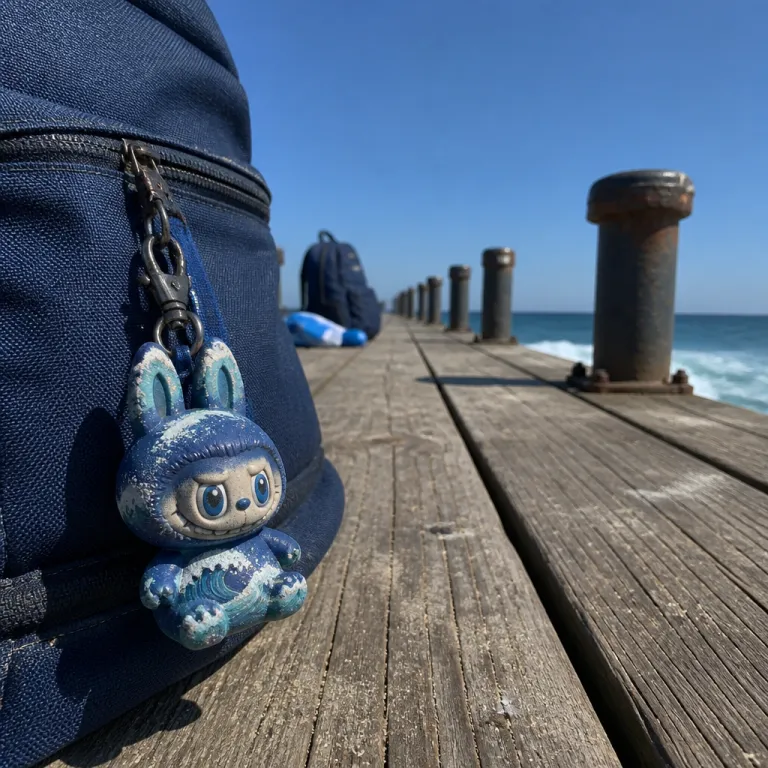
From sketchbook creature to front row accessory
Labubu began as a slightly feral doodle in Kasing Lung’s sketchbook. The character moved from Hong Kong art fairs into Pop Mart’s production pipeline, then onto the wrists and bags of people who usually queue for Hermès rather than a blind box release. That journey is the backbone of the current labubu pop mart toy culture luxury moment, and parents feel its pull even when they only wanted a small toy for a bedroom shelf.
In Pop Mart’s ecosystem, labubu is not just a designer toy but a full product language, with vinyl figures, plush toys, bag charms, and large scale sculptures all treated as collectible toys rather than playthings. The company perfected the blind box model, where customers pay for a sealed box and only learn which character they have after opening, and this blind box ritual has become a kind of social performance shared in real time on social media. When you walk into mart stores in Beijing, Seoul, or a Pop Mart store in a United States mall, you see parents and teenagers shoulder to shoulder, each hoping to find Labubu in a wall of blind boxes that look more like a cosmetics display than a toy aisle.
Luxury houses noticed that energy and moved fast. Moynat, Loewe, Tiffany, Omega, and even Louis Vuitton invited labubu into their high fashion vocabulary, turning a once niche designer toy into a soft power tool for brands that want to feel plugged into youth culture. The result is a labubu pop mart toy culture luxury loop where fashion brands borrow credibility from labubu fans, while Pop Mart borrows status from luxury fashion, and the object itself drifts further from anything a child might reasonably throw across a playroom. Parents who read full campaign reports from these brands can see the strategy clearly, yet the emotional tug of a limited edition box on a flagship store counter remains hard to resist.
The bag charm era and the vanishing child
Walk any fashion week venue and you will see labubu swinging from It bags as bag charms, not sitting on children’s beds. The same sculpt that once came in a blind box now hangs beside a Tiffany key or an Omega branded tag, and the toy has become a portable status signal rather than a companion for imaginative play. This is the bag charm era of labubu pop mart toy culture luxury, and it raises a blunt question for parents who care about play culture ; where is the child in this picture.
When a plush toy is designed primarily to clip onto a leather tote, its proportions, materials, and stitching are optimized for visibility and durability in public, not for bedtime squeezing by small hands. I have handled both the standard Pop Mart plush toys and the limited edition plush toy collaborations, and the difference is obvious ; the luxury versions use denser stuffing, more rigid surface fabrics, and hardware that would feel cold and heavy against a child’s cheek. These are still technically toy products, but they function more like jewelry, and the mart labubu collaborations sold through mart stores or a luxury brand store counter are priced and packaged accordingly, often in rigid box formats that echo watch cases rather than toy packaging.
Parents tell me they buy one labubu for the child and one for themselves, a quiet split between play and display that mirrors the broader art toy market. The Pop Mart Crybaby and Skullpanda series, which share shelf space with labubu, have seen triple digit sales spikes, and many of those units never leave their box because customers treat them as investment grade collectible toys. When you read a global market report on art toys, you see that large scale labubu products can cost between 300 and 1 400 euros per unit and are often sold via lottery, and that pricing alone keeps them out of most children’s rooms and squarely in adult collections.
For parents looking at refined bath boats or other elevated play objects, the contrast is stark. A carefully engineered boat set that turns water play into a mini regatta, such as the refined boat bath toy sets often recommended for design conscious families, is built to be soaked, dropped, and argued over in the tub. By comparison, a labubu bag charm clipped to a tote at the pool is part of labubu pop mart toy culture luxury, but it is not part of your child’s sensory world, and that gap matters more than any logo on the tag.
What luxury houses gain, and what toy culture loses
Luxury brands are not collaborating with Pop Mart out of sentiment ; they are buying access to a global community that treats a 12 centimetre vinyl figure with the same reverence once reserved for a limited run sneaker. When a labubu capsule appears in a high fashion window, it signals that the house understands collectible toys, social media hype cycles, and the way younger customers now value experiences and niche collectibles over traditional luxury goods. For a parent who reads brand content and annual reports, the pattern is clear ; labubu pop mart toy culture luxury is a bridge between heritage brands and a generation raised on blind boxes and livestream drops.
From the toy side, the gains are obvious but more double edged. Pop Mart secures placement in prime retail real estate, from Parisian flagships to department stores in the United States, and labubu fans gain new ways to find Labubu, whether through a mart store, a luxury concession, or even a curated corner on Amazon where Pop Mart products sit beside designer sneakers. Yet every time a labubu appears as a limited edition bag charm or a co branded plush toy, the definition of toy stretches further toward fashion accessory, and parents who care about developmental play feel that stretch as a loss. The object is still a product in the legal sense, but culturally it has migrated into the same category as a silk scarf or a leather bracelet.
There is also the question of craft. Quality art toys from established makers can appreciate between 8 and 15 percent annually, and that financialization encourages people to keep pieces sealed in box, protected from the scuffs and dents that mark real childhood use. When you compare that to a well made wooden airplane designed for children who love timeless play, such as the refined wooden toy airplanes that pick up patina with every crash landing, the difference in philosophy is stark. One object is meant to be held until the paint wears off ; the other is meant to be photographed in perfect condition, shared as content, and perhaps resold to another collector who will also never let a child near it.
Parents navigating labubu pop mart toy culture luxury often ask whether they should treat these pieces as part of a long term family collection or as toys. My answer is simple ; if you would be upset to see it dropped down a staircase, it is not a toy in the sense that matters for your child’s development. That does not make the object bad, but it does mean you should budget for separate play focused products, whether that is a robust wooden airplane, a thoughtfully engineered bath set, or another designer toy built explicitly for children, as outlined in many guides to what designer toys for kids actually mean and who makes the real ones.
The collector parent tension and the future of play
In many affluent homes I visit, labubu sits on a high shelf, just out of reach of the child whose room it technically decorates. The parent may have queued at a Pop Mart store, entered a lottery, or paid a premium on a resale platform, and that effort creates a protective instinct that runs directly against the chaos of real play. This is the core tension of labubu pop mart toy culture luxury for parents ; you are both the collector and the caregiver, and those roles do not always agree.
Social media amplifies that tension. A carefully staged photo of a labubu next to a stack of art books, tagged with the right brands and shared story captions, can generate more engagement than any image of a child actually playing with a toy. People read full comment threads debating which mart labubu variant is most rare, while the child in the room may be more interested in a no name plush toy that can be dragged through the garden without consequence. When you scroll through global feeds, you see labubu fans in the United States, Europe, and Asia using the figure as a shorthand for taste, and that symbolic function can easily overshadow any remaining play value.
For parents who want to engage with this culture without sacrificing play, a few practical distinctions help. Treat limited edition labubu products, especially those tied to luxury fashion brands, as part of an adult collection, and keep a separate rotation of robust, child safe toys that can be chewed, thrown, and left in the sun. If you buy a blind box at a mart store, decide before opening whether the product inside is headed for a shelf or the playroom, and be honest with yourself about why ; children read that ambivalence in real time, and it shapes how they understand ownership, care, and value.
There is nothing inherently wrong with a family collection that includes designer toy pieces, art prints, or even a small book series about characters like labubu, as long as everyone in the home understands which objects are for play and which are for looking. The danger comes when every object becomes too precious to touch, and childhood turns into a gallery of untouchable products curated for social media rather than lived experience. In the end, the toys that matter most are not the ones that appear in a global report on luxury collaborations, but the ones that still feel right in a child’s hand after the fifth birthday party they survive.
Key figures behind the Labubu effect
- The art toy market has seen annual growth rates estimated in the high single to low double digits, with quality pieces from established makers often appreciating between 8 and 15 percent per year according to industry analyses, which encourages many collectors to keep labubu and similar figures sealed in box rather than in children’s hands.
- Large scale collectible toys linked to Pop Mart collaborations, including oversized labubu products, are frequently priced between 300 and 1 400 euros per unit and are sometimes sold via lottery style drops, a structure that positions them closer to limited edition art objects than everyday kids’ toys.
- Series adjacent to labubu within the Pop Mart portfolio, such as Crybaby and Skullpanda, have recorded triple digit sales spikes in recent reporting periods, indicating that demand for blind boxes and collectible toys is growing faster than many traditional luxury product categories.
- Luxury collaborations featuring characters like labubu have helped Pop Mart expand from its home markets into regions such as the United States and Western Europe, with mart stores and branded corners in major department stores acting as physical hubs for labubu fans and new customers discovering blind box culture.
- Consumer research on younger luxury buyers shows a marked shift toward experiential spending and niche collectibles, with many people in their twenties and thirties prioritizing limited edition designer toy products and fashion collaborations over classic accessories, a trend that underpins the current labubu pop mart toy culture luxury phenomenon.