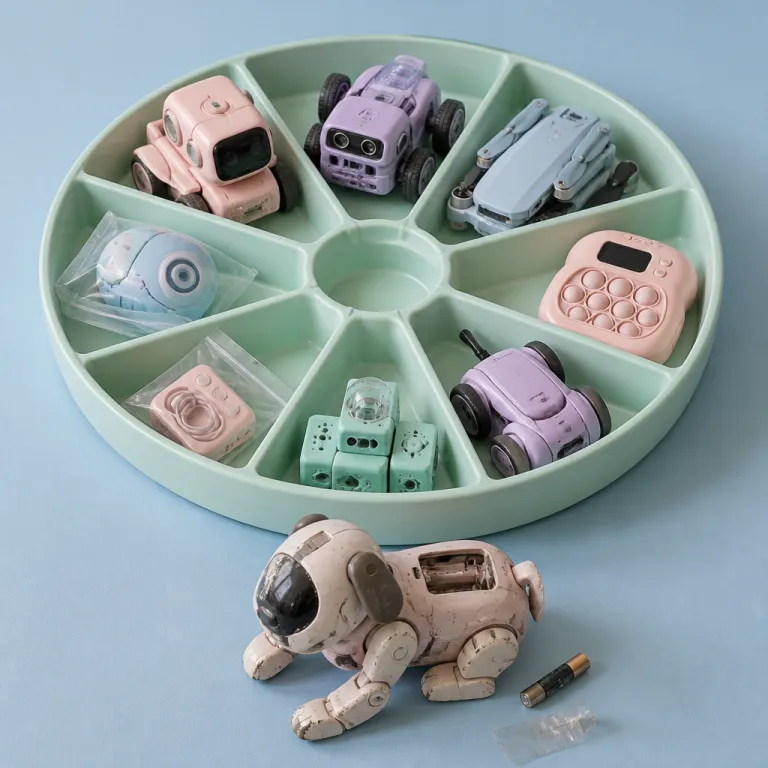
When rotation serves the grid more than the child
The toy rotation method is often discussed as a strategy for encouraging children’s deep play, but the conversation usually starts with storage, not with the child. Parents see pristine shelves, labeled bins, and rotating toys that promise calm, curated order in every room. The social media version of toy rotation turns play into a visual project, where the goal is a before-and-after reveal rather than deeper engagement that actually respects how young children stay with one idea for days or even weeks.
In many luxury homes, playtime is now scheduled like Pilates, with a strict plan for when each toy appears and disappears from the playroom. The rotation calendar looks efficient, but it quietly teaches that every toy is replaceable, and that the reward is the new set of activities rather than the slow satisfaction of meaningful play with one beloved object. When a toy rotation system changes the entire shelf every two weeks, toys feel like content drops, and children explore just long enough to sample, not to stay immersed.
For preschool child development, that pattern matters more than the price of the toys. A three-year-old builds attention spans through repetition, not through constant novelty that interrupts pretend play just as it becomes interesting. When we design childcare spaces or home playrooms around rotation first, we risk training children that new toys keep coming if they get bored quickly, which quietly discourages problem solving and encourages skimming the surface of play instead of developing sustained focus. A more child-centered approach keeps a core set of toys reliably present, while using rotation sparingly to reduce clutter rather than to chase constant excitement.
Fewer toys, always available, for deeper narratives
The research behind the tension between toy rotation and children’s deep play is clear on one point: familiarity breeds complexity. Experimental studies on preschool play show that when the same toy is available over time, children create longer storylines, richer pretend scenarios, and more sophisticated problem solving with that object. In other words, a smaller selection of toys that stay put can encourage deeper play than a large collection that is constantly cycling in and out of sight.
Luxury parents often hear that fewer toys automatically means better focus, but the nuance is that fewer toys must also be stable, not endlessly swapped out. A small, well-chosen set of open-ended materials — a solid wood school bus, a set of magnetic blocks, a basket of stuffed animals — allows children to return to the same objects day after day and create evolving narratives that stretch their learning. A carefully crafted vehicle, such as a high-quality wooden bus that can be loaded, driven, and repurposed in different stories, often becomes a long-term anchor for meaningful play rather than just another object in a rapid rotation.
When toys encourage continuity, children stay longer in one imaginative world, and that helps them build emotional resilience as well as cognitive flexibility. A child who knows that a favorite toy will not vanish at the end of the week is more likely to attempt complex constructions, to test new roles in pretend play, and to tolerate frustration instead of waiting for the next novelty. Fewer toys, kept visible and reachable, allow children to explore their own ideas without an adult-controlled schedule dictating when curiosity must move on. A practical starting point is to choose three to five open-ended toys per play zone — for example, a block set, a vehicle, and a small basket of figures in the building area — and commit to keeping those specific items available for at least a month before considering any changes.
Montessori misread: what the method really says about choice
Many parents justify a strict toy rotation schedule by referencing Montessori, but the original approach is often misread. Authentic Montessori environments use fewer toys and materials, yet they remain consistently available on low shelves, so the child can choose the same activity for weeks without adult interference. The emphasis is not on rotating toys for novelty, but on respecting the child’s internal timetable for learning, repetition, and concentration.
In a well-designed Montessori-inspired preschool space, each toy or material has a clear place, and thoughtful storage helps the child return it independently, which quietly encourages responsibility and order. Rotation happens, but slowly and in response to the child, not to a calendar: a guide might introduce a new open-ended material when the previous one no longer challenges the child, or when child development milestones suggest readiness for a next step. Observational work in Montessori classrooms, such as the studies summarized by Lillard (2017, Montessori: The Science Behind the Genius, 3rd ed., Oxford University Press), indicates that the best materials are designed for long-term use, where the same toy supports different levels of problem solving as attention spans grow.
For luxury buyers, the lesson is simple yet demanding: invest in toys that allow children to revisit them in new ways over time, rather than in sets that depend on constant rotation for excitement. When playtime is driven by the child’s curiosity, not by adult aesthetics, toys encourage self-directed learning and help children stay engaged without continual refreshes. A small shelf of Montessori-aligned toys keeps the room calm, but more importantly, it keeps meaningful play at the center instead of the performance of perfect rotation. A sample shelf might include a single wooden vehicle, a tray of nesting blocks, a basket of realistic animal figures, and one fine-motor activity such as threading beads — each with a clear spot, all available every day.
Designing a preschool playroom that favors depth over novelty
Reimagining the balance between toy rotation and deep play in a luxury preschool playroom starts with layout, not with labels. Think in zones — a pretend play corner, a construction area, a quiet nook with stuffed animals and books — and then choose a few open-ended toys for each zone that can live there all year. Storage should support autonomy: low shelves, shallow baskets, and transparent bins help children explore without needing an adult to unlock the next activity.
Instead of rotating toys on a fixed schedule, use rotation as a surgical tool when a specific toy truly stops inviting meaningful play, or when clutter begins to overwhelm a sensitive child. That might mean quietly removing one or two items to a closet for a season, while keeping core favorites — the wooden train, the dollhouse, the animal figures — always accessible so toys feel reliable rather than fleeting. For outdoor spaces, a curated set of water and sand toys can stay in use all summer, allowing children to stay immersed in evolving experiments with pouring, floating, and building instead of chasing new gadgets every weekend.
Parents who work in or closely with childcare settings often notice that the most settled groups use fewer toys overall, but they use them harder. The same block set, kept in the same place, helps children build from towers to cities to elaborate narratives over time, and that continuity helps children with shorter attention spans gradually stay engaged for longer stretches. When rotation becomes a background adjustment rather than the main event, toys keep their emotional weight, and the playroom starts to create a sense of security instead of a constant promise of the next new thing. A simple alternative to rigid rotation is a quarterly “edit”: once each season, scan the shelves, remove anything untouched for several weeks, and add only one or two new materials that genuinely extend the stories children are already telling in their play.
Key figures on toy choice, rotation, and deep play
- A study in the journal Infant Behavior and Development (Dauch, Imwalle, Ocasio, & Metz, 2018, Vol. 50, pp. 78–87, doi:10.1016/j.infbeh.2017.11.005) found that toddlers offered four toys showed significantly longer periods of focused play than toddlers offered sixteen toys in the same room, using a within-subjects design with video-coded observations of free play.
- Research from the University of Toledo (same study by Dauch et al., 2018, doi:10.1016/j.infbeh.2017.11.005) reported that children in a low-toy condition used each toy in more varied ways and demonstrated more sophisticated play sequences than children in a high-toy condition, indicating that reduced choice encourages more creative problem solving during unstructured play sessions.
- Observational data from Montessori preschools, including longitudinal classroom studies summarized by Lillard (2012, Journal of School Psychology, 50(3), 379–401, doi:10.1016/j.jsp.2012.01.001), consistently show that children often choose the same material for several consecutive days, and that repeated use over weeks is associated with improved concentration and self-regulation compared with children who switch activities frequently.
- Surveys of early childhood educators in high-quality childcare centers, such as those reported by Trawick-Smith (2010, Early Childhood Education Journal, 37(6), 431–438, doi:10.1007/s10643-009-0364-1), indicate that most teachers rotate materials seasonally or in response to developmental changes, rather than on a weekly schedule, prioritizing continuity of play over constant novelty.