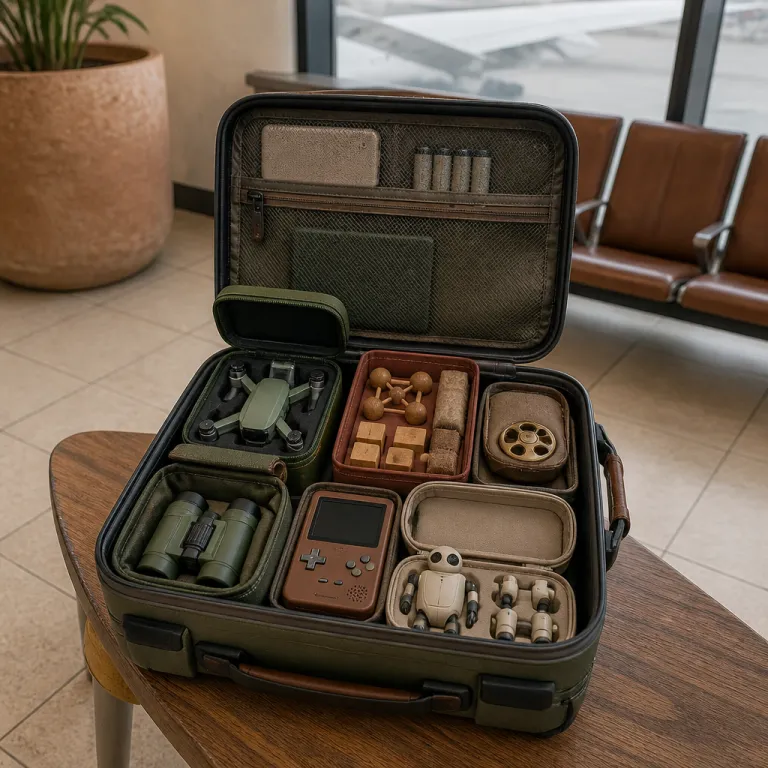
The carry-on constraint for luxury travel toys kids carry-on
Luxury travel with kids starts with a single hard limit. Most major airlines cap cabin luggage at around 55 x 35 x 23 cm (about 22 x 14 x 9 inches), a size echoed in guidance from carriers such as Lufthansa and British Airways, so every toy must earn its space beside snacks, wipes, and your own bag of essentials. The families who build the best in-flight play kits accept this constraint early and let it guide what toys children actually bring on board.
Think of your luxury travel toys kids carry-on as a curated set rather than a stuffed bag. A focused selection of five to seven activities travels better than twenty small plastic novelties that roll under seats and never return, and this is especially true once big kids start lobbying for extra devices and a second Toy Story–themed plush. When you choose options with clear purposes — one fine motor toy, one quiet book, one open-ended play set — you keep kids calmer and you keep your own luggage organized.
Parents often ask whether to pack a separate bag so that kids carry their own travel gear. For a transatlantic flight, I prefer one shared cabin suitcase where you control the rotation of each toy and can see which items still hold attention after several hours. This approach also respects airline rules on standard cabin baggage limits while leaving room for a mini blanket or small pillow that babies, toddlers, and younger preschoolers genuinely need.
Age 1–3 : quiet objects that survive months, years, and many flights
For one to three year olds, luxury travel toys kids carry-on choices must be chew-safe, wipeable, and impossible to lose in a seat track. A silicone stacking toy in a compact set of five or six pieces builds fine motor skills without hard edges, and it still fits inside a mini packing cube or small cloth bag. When you treat this as one of your core favorites, you quickly see how such toys keep kids grounded during long taxi times.
Pair that stacker with a soft fabric book and a refillable water drawing pad, and you have a trio that works across many months and multiple trips. The fabric book gives babies and toddlers something to crinkle and explore, while the water pad lets kids play with color on a tray table without staining clothes or raising any security questions about liquids in your luggage. Beeswax crayons in a tiny tin can join the kit for hotel time, but I keep them in the checked bag rather than in the main toy pouch to avoid melted wax in warm cabins.
Parents who like to shop Amazon for convenience can still apply a luxury filter. Look past the best-seller badge and scan how the regular price compares to any sale price, then read reviews that mention how long the toy lasted in real travel and whether it meets safety standards such as ASTM F963 or carries a CE mark. For milestone gifting at this age, I often point clients to guidance on the first birthday versus fifth birthday gift debate, because the toy that matters on a plane is rarely the one that photographs best at home.
Age 3–6 : magnetic stories, mini worlds, and the art of contained play
Once kids reach three to six years, your luxury travel toys kids carry-on can become more narrative and more compactly engineered. A slim magnetic tangram set in a metal case lets kids play with shapes on a vertical seat back or a tiny tray, and the pieces stay put when turbulence hits. I like one magnetic toy per child at most, because too many magnets can confuse security scanners and slow your progress through the airport.
For this age, a small-world play set built around a few wooden figures and a fold-out mat turns the tray into a stage. You might choose options that echo a favorite story or a beloved book, but keep the figures large enough that big kids will not accidentally kick them into the aisle when they stand, and avoid any tiny accessories that challenge fine motor control at altitude. A travel-scale pack of tiles or panels, such as a reduced stack of building pieces stored in a zip bag, gives children a way to build vertically without needing a full flat surface.
Parents often ask whether to let kids carry their own mini backpack for these travel toys or to centralize everything. For a transatlantic flight, I prefer one shared organizer inside your main cabin luggage, because it keeps the rotation of play objects under your control and prevents a child from leaving a favorite set in the airport lounge. If you are choosing a special present from a godparent or relative, it can help to share resources like this guide on the hardest godparent gift decisions so that the toy aligns with your travel philosophy.
Age 6–10 : grade school gifts that respect attention spans and cabin space
For six to ten year olds, the luxury travel toys kids carry-on becomes less about distraction and more about autonomy. A compact logic puzzle toy, a slim deck of cards in a small case, and a stitched travel journal turn the flight into a private retreat where big kids can choose options that match their mood. When you add a high-quality set of watercolor pencils and a precision coloring book, you give them a way to play quietly for long stretches without screens.
At this stage, I treat the kit as a grade school gift in its own right rather than a last-minute airport purchase. You can assemble a curated set at different budgets — around 50, 100, or 200 in your local currency — by mixing one best travel game, one art toy, and one book that kids love to reread, and you can track how the regular price compares to any sale price to judge real value. Families who like to shop Amazon can still filter by materials, avoiding flimsy plastic in favor of waxed canvas pouches, solid wood pieces with rounded edges, and luggage-friendly cases that slide easily into a carry-on bag.
For siblings, I avoid duplicate items and instead build complementary kits that encourage shared play without competition. One child might carry the card game while another carries the puzzle, and they can swap mid-flight, which helps keep kids engaged without overfilling the cabin luggage. When relatives ask what to buy, you can point them toward thoughtful discussions of complex gifting such as this piece on age, taste, and home constraints for godparent gifts, then suggest specific travel toys that fit inside your existing system.
Three complete luxury kits and the toys to leave at home
When I audit family luggage before a long flight, I often see three patterns. The first is a bag overflowing with small plastic trinkets that cost little at full price but add up in stress, and the second is a reliance on tablets that fails the moment Wi‑Fi drops or batteries die. The third, and most successful, is a tightly edited luxury travel toys kids carry-on kit that respects both the cabin dimensions and the real way kids play after hour six.
Around the 50 budget, I suggest one silicone stacker, one fabric book, a mini water drawing pad, and a small logic puzzle or card game, all packed into a single pouch that kids carry themselves from gate to seat. At roughly 100, you can upgrade materials to solid wood, add a magnetic tangram set in a metal case, and include a stitched travel journal with a fine-motor-friendly pen that glides smoothly without leaking, while still watching how regular price compares to any sale price. At the 200 level, you are paying for craftsmanship and longevity rather than excess quantity, building a kit that will serve multiple children in the family and survive many months and years of flights.
Some objects simply do not belong in a carry-on for babies, toddlers, or older kids. Anything noisy, anything with dozens of tiny pieces, and anything that needs a wide flat surface will frustrate both your child and your seat neighbors, no matter how much kids love it at home. The quiet luxury here is restraint — not the unboxing, but the fifth birthday it survives.
FAQ
What is the single most important toy to pack for a long flight with toddlers ?
For most toddlers, a silicone stacking toy or similar fine motor object is the most important item, because it is quiet, durable, and endlessly reconfigurable. It works for a wide range of ages within the one to three bracket and can be used on a tray table or in a parent’s lap. Choose a compact set that fits easily into your cabin luggage and can be rinsed quickly in an airport sink.
How many toys should I include in a luxury travel toys kids carry-on kit ?
For a transatlantic flight, five to seven well-chosen toys travel better than a large number of small items. Aim for one sensory toy, one art or drawing option, one book, one game, and one open-ended play set, adjusting slightly for age. This balance keeps kids engaged without overloading your bag or cluttering the limited space around the seat.
Are magnetic toys safe to bring through airport security ?
Most small magnetic sets designed for children are allowed in cabin luggage, but dense blocks can sometimes trigger extra screening. To reduce delays, pack only one magnetic toy per child, keep the set in a clearly labeled case, and be ready to place it in a separate tray if requested. Avoid very heavy or industrial-style magnets, which are unnecessary for play and more likely to raise questions.
Should my child carry their own toy bag on a long flight ?
For short flights, letting kids carry a mini backpack can build independence, but for long transatlantic routes a shared organizer inside your main carry-on is usually more practical. This setup prevents a tired child from misplacing a bag in the terminal and lets you control the timing of each new toy. You still involve kids in choosing favorites before the trip, so they feel ownership without the risk of loss.
How do I balance screens with physical toys during summer travel ?
Many families use screens as a backup rather than the core of their luxury travel toys kids carry-on strategy. Start the flight with physical toys, books, and art supplies, then introduce limited screen time later in the journey when attention naturally wanes. This approach preserves the novelty of digital entertainment while ensuring that the toys you invested in still see real play.