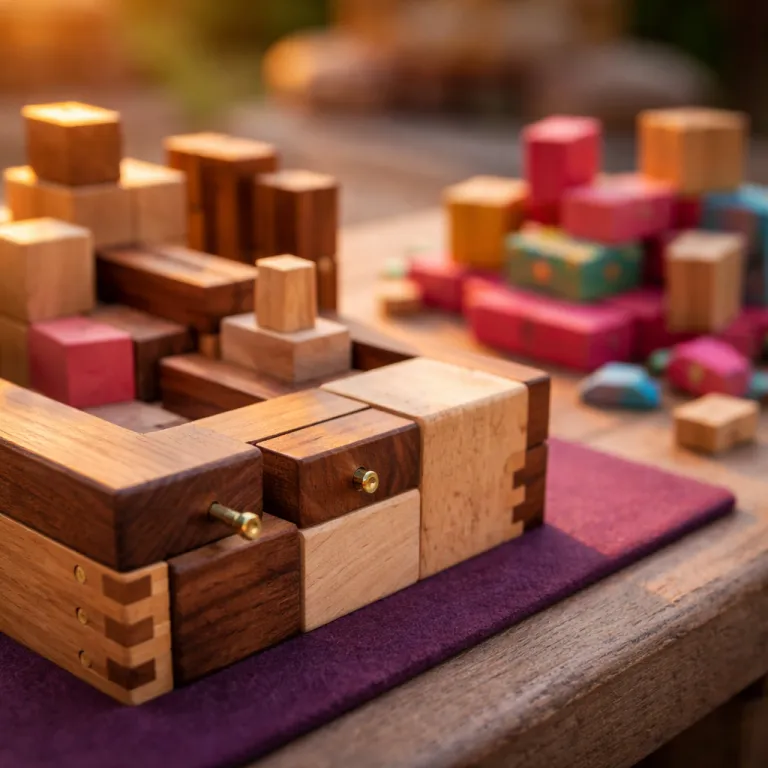
What makes a premium wooden block set feel truly elevated
A premium wooden block set looks simple, yet it is carefully engineered. The difference between luxury wooden toys and mass-market blocks is not just the higher price, but the way every building block aligns, stacks, and survives years of daily play. When you run your hand across quality wood blocks, edges feel softened yet precise, never fuzzy, rough, or splintered.
High-end makers such as Uncle Goose, Haba, and Spielgaben use kiln-dried hardwood for their wooden blocks, usually beech or maple, with dimensional tolerances often under 0.5 millimetres so each block set behaves almost like a calibrated tool.1 That precision means children can stack seven or eight building blocks without wobble, turning simple stacking toys into early lessons in physics and balance for a wide range of ages. When a wooden building system behaves predictably, children learn to trust their toys and push their own building skills further month after month.
Wood species matters as much as design in any premium wooden block set. Beech and maple wooden toys feel dense in the hand, while rubberwood offers a slightly lighter block that younger children can lift easily during pretend play sessions. Parents choosing between different block set options should look beyond the number of pieces in the product description and ask how the wood was sourced, whether from managed forests, and how that choice will feel after several years of use.
Wood, finish, and the quiet engineering behind the price tag
When you compare a premium wooden block set with a cheaper block set from a large marketplace such as Amazon, the first visible difference is usually the finish. Luxury wooden toys use water-based stains and oils that penetrate the wood, while budget wooden products often rely on thick surface paints that chip within months of rough play. After five hundred hours of stacking games and building, a well-finished wooden block still feels silky, not gummy or sticky.
Beech and maple are closed-grain hardwoods, so they accept stain evenly and resist dents, which is why many European makers choose them for wooden building systems that must last for many years.2 Rubberwood, often used in mid-range wooden toys, is slightly softer but still durable when sourced from managed forests and sealed correctly, making it a smart compromise for younger ages who drop every block. In all cases, the finish must be non-toxic, saliva-resistant, and certified to standards such as EN 71 or ASTM F963, because kids explore toys with mouths as much as hands during the first eighteen months.3
Price differences also reflect how many times each block piece is sanded and inspected. A premium block set might pass through several sanding stages, including hand-sanding on edges, while a cheaper piece often shows sharp corners or tiny splinters after only one month of use. If you are already investing in elevated pretend play pieces such as an artisanal play kitchen or luxury pretend food accessories, it makes sense to demand the same finish quality from the building blocks that will live on the same shelf.
Dimensional precision, stacking performance, and real play value
The soul of any premium wooden block set lies in its geometry. Dimensional precision determines whether your kids can build a bridge three blocks wide or a tower ten blocks high without silent frustration. When blocks are off by even one millimetre, stacking toys become wobbly puzzles rather than intuitive building tools.
High-quality wood blocks from brands such as Haba or Uncle Goose are cut so that two short sides equal one long side, and four thin planks match the height of a cube, which turns a simple set piece count into a rich system of ratios. This internal logic lets children learn early math concepts through play, because every building block can be combined into larger units without leftover gaps. Over months and years, that consistency encourages more ambitious games, from symmetrical castles to abstract sculptures that would collapse instantly with irregular wooden pieces.
Parents sometimes focus on whether a product includes 50 pieces or 100 pieces, but the real question is how many distinct configurations the geometry allows across different ages. A well-designed block set grows from chunky stacking for a twelve-month-old baby to architectural experiments for children in primary school, without ever feeling outgrown. When you are already curating tactile objects such as a soft animal plush chosen with care from guides on selecting a truly luxurious plush toy, it is worth choosing building blocks with the same long horizon in mind.
From months to years: how a block set ages in real family life
A premium wooden block set should feel relevant from the first birthday to the start of school. In the earliest months and years, chunky cubes and rectangles serve as grasping toys, then quickly become stacking toys for clumsy towers and noisy crashes. By the second year, those same wooden blocks support simple pretend play, turning into cars, food, or tiny houses in improvised games.
Between the third and fifth years, a thoughtful block set becomes a quiet engine for spatial reasoning, as kids experiment with symmetry, bridges, and enclosed spaces using every building block shape. At this stage, the difference between a carefully milled wooden building system and a cheap wooden bucket from Amazon is stark, because precise wood blocks allow frustration-free corrections when a design fails. Older ages often return to the same block set for school projects, marble runs, or as scenery for figurines, proving that the right wooden toys can outlast many electronic gadgets.
Families who track their purchases over time often realise that a higher initial price spread across eight or ten years of use beats several disposable plastic toys bought every month. A well-chosen product can even move between siblings and cousins, surviving multiple baby shower gift cycles without looking tired. When you already invest in heirloom pieces such as a solid wood mud kitchen, as explored in this guide to luxury wooden mud kitchens, it makes sense to expect the same decade-long durability from your building blocks.
Cost per year, configuration math, and how to choose
For affluent parents, the real question is not whether a premium wooden block set is expensive, but whether its cost per year of meaningful play makes sense. To answer that, look beyond the headline price and examine wood species, finish quality, and the internal geometry that governs how each block interacts with the others. A set that supports rich building games for ten years will quietly outperform three cheaper block sets that fracture or bore your kids within months.
When comparing options, consider how many distinct shapes and ratios appear in the set piece list, not just the total piece count. A system with cubes, double-length blocks, planks, and arches multiplies configuration possibilities, turning one block set into a platform for open-ended play across many ages. In contrast, a bucket of identical block units may look generous on paper but quickly limits what children can build once they move beyond simple stacking.
Ethical sourcing should also factor into your decision, especially if you already prioritise managed forests for furniture and other wood purchases. Choosing wooden toys made from certified wood supports better forestry practices and usually correlates with higher manufacturing standards, because brands that care about sourcing tend to care about tolerances and safety too. In the end, the luxury is not the logo on the box, but the quiet reliability of a wooden block that still fits perfectly in your child’s hand after ten full years of play.
FAQ about premium wooden block sets
How many pieces should a premium wooden block set include for one child
For a single child, around 40 to 60 pieces of varied shapes usually offers enough building blocks for rich play without overwhelming storage. Families with multiple kids or those who love elaborate games may prefer 80 to 100 pieces, especially if the block set includes arches and planks. Focus less on the exact set piece number and more on whether the geometry supports both simple stacking and complex building.
Which wood species are best for long lasting wooden blocks
Beech and maple are excellent choices for a premium wooden block set because they are dense, durable hardwoods that resist dents and warping. Rubberwood can also perform well when sourced from managed forests and finished properly, offering a slightly lighter feel for younger ages. Softwoods such as pine are more prone to dents and may not keep clean edges after years of heavy play.
From what age can kids safely use a wooden block set
Most classic wooden toys in block form are suitable from around twelve months, provided each wooden block is large enough to avoid choking risks. Between twelve and eighteen months, children mainly enjoy banging and simple stacking, then gradually shift to more intentional building games. Always check the manufacturer’s recommended ages and avoid very small block elements for toddlers.
Are premium wooden blocks worth the higher price compared with plastic sets
Premium wooden blocks typically offer better tactile feedback, more stable stacking, and longer lifespan than most plastic block sets. When you spread the price over eight to ten years of use, the cost per year often undercuts several cycles of cheaper plastic toys that crack or lose appeal quickly. Many parents also prefer the aesthetic and environmental profile of wood blocks made from responsibly managed forests.
What should I look for when buying wooden blocks as a baby shower gift
For a baby shower, choose a premium wooden block set with large, rounded shapes, non-toxic finishes, and clear age guidance for early use. Look for products made from certified wood and water-based stains, ideally from brands with a track record in wooden toys. A timeless, neutral-coloured block set will suit any child and remain relevant as they grow from months to years.
References and buying checklist
Indicative product examples and price ranges (approximate, subject to change):
| Brand / Set | Material | Pieces | Typical price range |
|---|---|---|---|
| Uncle Goose Classic ABC Blocks | Basswood (hardwood) | 28 | US$40–60 |
| Haba Basic Building Blocks | Beech | 26–60 | US$50–120 |
| Spielgaben Wooden Set | Beech | Over 400 elements | US$300–450 |
Manufacturers such as Haba and Spielgaben describe tight dimensional tolerances and multi-stage sanding in their product literature, while safety standards like EN 71 (Europe) and ASTM F963 (United States) specify requirements for non-toxic, saliva-resistant finishes and mechanical safety for children’s toys.23
Quick buying checklist for premium wooden block sets:
- Wood species: Prefer dense hardwoods such as beech, maple, or high-quality rubberwood from managed forests.
- Finish and safety: Look for water-based stains or natural oils, plus clear EN 71 or ASTM F963 compliance on the packaging.
- Piece geometry: Check that cubes, planks, and longer blocks follow simple ratios (for example, two short sides equal one long side).
- Age guidance: Ensure block size is appropriate for under-threes and avoid small parts for toddlers.
- Longevity and value: Consider cost per year of use, not just the initial price, and whether the set can grow with your child.
[2] See technical information and material descriptions published by European wooden toy manufacturers for details on beech and maple properties.
[3] Refer to official summaries of EN 71 and ASTM F963 toy safety standards for current requirements on chemical and mechanical safety.