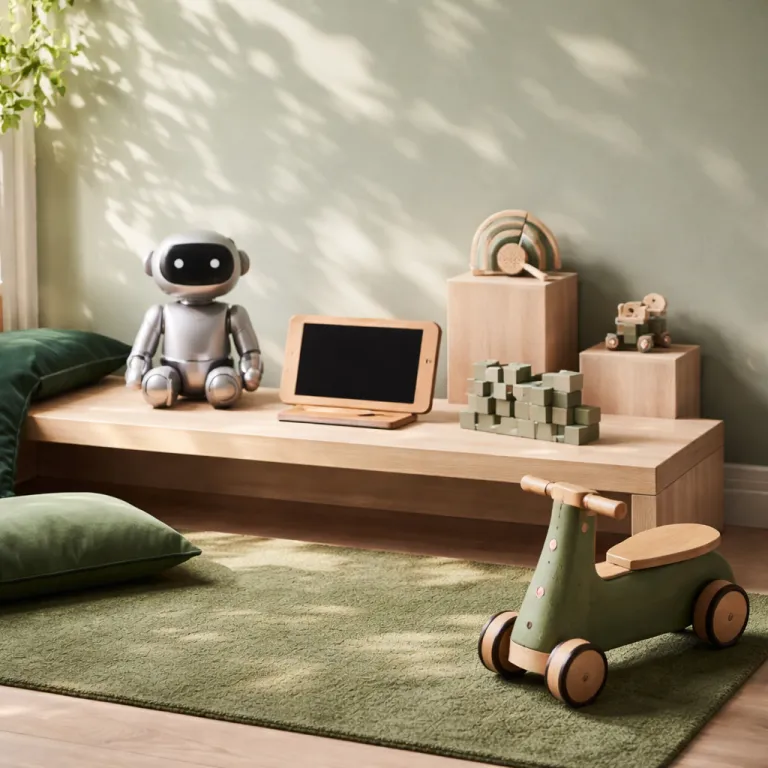
The three faces of luxury in kids toys: brand, craft, design
The three faces of luxury in kids toys: brand, craft, design
Type “luxury kids toys” into Google and you mostly see a digital wall of glossy boxes, high price tags, and algorithm friendly product grids. The search engine reads the term as a commercial signal and serves you brand premium toys first, because the market has trained it to equate a higher price in USD with higher status rather than better play. Parents of young children deserve a sharper lens than that, especially when a single toy can cost more than a well made kids chair or a weekend away.
Real luxury in kids toys tends to fall into three tiers that overlap but rarely align perfectly. Brand premium toys are the Hermès rocking horse or the Gucci teddy bear, where the logo does most of the work and the toy itself may not justify the sale price beyond collectability. Craft premium toys are the hand finished wooden toys from workshops such as Grimm’s, Ostheimer, or Odin Parker, where the value sits in FSC certified timber, non toxic finishes, and the way a play set still feels solid after five years of daily play.
Design premium toys sit in a third category, where the object is engineered for developmental depth and aesthetic clarity rather than for a toy sale headline. Think of a carefully weighted toy van from Candylab, a modular wooden car set from Fagus, or a Wonder Wise style balance board that shifts from bridge to rocker to reading chair as your kids grow. These toys often look understated in a crowded shop display, yet they quietly outlast the retro toy trend cycle and keep their place in the living room long after the baby toddler phase has passed.
Why Google’s “luxury kids toys” results mislead parents who care about play
Search results for luxury kids toys in the United States lean heavily on mass market platforms and affiliate roundups, because those pages are optimized for clicks, not for how your children actually play. You will see endless plastic toys labeled as premium, often bundled into a giant play set or baby toys set sale, but the materials and build quality rarely match the elevated price. The algorithm rewards volume and recency, while parents need evidence of how a kids toy behaves after three years of being dropped, chewed, and dragged under a sofa.
Amazon’s “luxury” filters tend to surface large licensed brands, limited edition LEGO sets, and glossy baby gifts that photograph well but may not be eco friendly or FSC certified. A retro toy car finished in chrome might look high quality on screen, yet the thin plastic shell can crack within two years of regular play, turning an expensive toy into landfill. By contrast, a mid priced wooden toy van from a specialist shop may carry a similar USD price but offer repairable parts, safer finishes, and a tactile weight that encourages open ended play for children across several age bands.
Parents researching toddler gifts online often land on listicles that treat a toy sale as the main story, not the child’s experience. Before you add another kids toys bundle to your cart, look for more focused guides such as an analysis of why pull along toys make a thoughtful luxury gift for children, which frame price and materials around motor development and long term engagement. When you start from the question “How will my baby toddler or school age kids actually use this?” rather than “Is this on sale?”, the search term luxury kids toys begins to mean something closer to longevity and learning than to logos and limited editions.
Age specific luxury: what $50, $150, $300 and $500+ really buy you
For parents navigating the luxury kids toys market, price bands can be more useful than brand names. Around 50 USD, you are typically choosing between a single high quality wooden toy and a larger plastic play set that promises more pieces for the same sale price. In this range, a small Grimm’s stacking set, a PlanToys wooden car, or a Hape pull along animal often beats a noisy electronic toy because it supports years of imaginative play instead of a few weeks of button pressing.
At roughly 150 USD, you enter the territory of substantial wooden toys and modular sets that can anchor a play corner for several years. This is where a well designed toy van garage, a multi piece Wonder Wise style balance board set, or a curated bundle of baby toys and toddler gifts from a specialist shop starts to make sense. You are paying for FSC certified materials, thoughtful joinery, and a design that works for both baby toddler stages and older children, rather than for a one season trend. Look for pieces that can be disassembled for repair, have replaceable parts, and are rated for at least five years of regular family use.
Once you cross 300 to 500+ USD, you are often looking at heirloom scale pieces such as indoor jungle gyms, large scale play set furniture, or sculptural kids chairs that double as design objects. Before committing at this level, read analyses of the luxury kids toy market such as a breakdown of the price of jungle gyms, which explains how timber grade, hardware quality, and safety testing affect the final price. At the very top end, the question is not whether the toy looks luxurious but whether it will still feel safe, stable, and relevant when your children are several years older and play in more demanding ways, and whether the maker offers maintenance guidance or spare components.
How to judge a luxury toy’s claim: materials, provenance, longevity, intent
When you hold a toy in your hand, luxury should be legible in the details long before you see the price tag. Start with materials, because a genuinely high quality kids toy will usually feel dense, balanced, and warm, whether it is made from solid wood, metal, or carefully chosen textiles. FSC certified beech or maple in wooden toys signals a supply chain that respects forests and gives your children a safer surface to chew, stack, and throw, while organic cotton and wool in soft toys reduce exposure to harsh finishes.
Provenance matters just as much as the material list, especially in a globalized toy market where the same design can appear under multiple labels. A workshop that specializes in wooden baby toys and toddler gifts, for example, will often publish details about finishes, testing, and repair options, while a generic toy sale listing may only mention a vague “premium plastic” and a temporary sale price. Look for brands that treat their toys like furniture, naming the wood species, the fabric composition, and the expected years of use for children across different stages, and that reference recognized safety standards in their product descriptions.
Longevity and design intent show up in how a toy ages, not how it unboxes. A well considered play set can shift from baby toddler grasping toy to preschooler building tool, then to prop in school age storytelling games, without feeling babyish or disposable. When a teddy bear still sits comfortably in a reading chair next to a favourite book after hundreds of bedtime routines, or when a wooden car set still rolls smoothly under a toy van ramp years later, you are seeing what luxury kids toys should mean in practice: durable companions that justify their footprint and price.
Where real luxury lives: makers, retailers and the limits of big platforms
True luxury kids toys rarely come from the same factories that flood big box aisles, even when the branding suggests otherwise. Workshops in Germany, Japan, and small studios in the United States often produce limited runs of wooden toys, textile animals, and modular play furniture that never appear in a mainstream toy sale flyer. These makers focus on grain direction, joint strength, and dye stability, because they expect their toys to survive not just one child but several children over many years.
Specialist retailers curate these objects with an editor’s eye rather than an algorithm’s bias toward volume. A well run online shop will explain why a particular wooden kids chair costs more than a plastic alternative, detailing the FSC certified oak, the non toxic finish, and the way the seat height adapts from baby toddler stages to early school years. They might pair a retro toy car set with a matching toy van garage and a small shelf for book storage, showing how a few high quality toys can create a cohesive play environment without visual clutter.
As you explore top options in this space, pay attention to how retailers talk about care, repair, and end of life. A brand that offers spare parts for a wooden play set or replacement wheels for a toy car is signaling a commitment beyond the initial sale. The same mindset applies to larger pieces such as Montessori wardrobes, where guides to choosing a refined wardrobe for a luxury kids bedroom emphasize adjustability, durability, and how the furniture supports children’s independence rather than just matching a nursery theme.
Age specific finds: building a thoughtful luxury toy hub at home
Creating a home based luxury toy hub is less about filling shelves and more about editing them for each age band. For babies under two years, a small rotation of tactile baby toys, a soft teddy bear, a single wooden rattle, and a low chair or floor cushion near a basket of board books can be enough to support rich play. In this phase, prioritize safe materials, washable textiles, and simple shapes that invite grasping, mouthing, and early cause and effect exploration.
For toddlers and preschool children, the center of gravity shifts toward movement, construction, and role play. A sturdy wooden play set with ramps for toy cars, a toy van that can carry blocks, and a few open ended figures can anchor the space, while a nearby shelf holds a curated set of picture books and art materials. Parents often find that a small number of high quality kids toys in constant rotation leads to deeper play than a room full of impulse purchases from the latest toy sale.
By the early school years, your luxury toy hub can evolve into a mixed use space that respects both play and rest. A comfortable kids chair, a low table for LEGO building or model making, and a storage system that lets children manage their own set sale style rotations help them take ownership of their environment. At this stage, luxury means that the same wooden toys, retro toy cars, and beloved teddy bear still feel at home next to chapter books and craft projects, proving that the real value of luxury kids toys lies not in the unboxing but in the fifth birthday they survive.
Key figures that reshape how we think about luxury kids toys
- Industry analyses of the global art toy and designer toy market, including reports from firms such as The NPD Group (for example, 2022 U.S. Toy Industry Performance) and Euromonitor International (for example, Toys and Games global brief, 2021), suggest that this segment is on track to reach a value in the mid tens of billions of USD by the middle of the decade. This growth means more luxury labeled toys competing for your attention, but not all of them are designed with children’s daily play in mind.
- Market research from organizations such as The NPD Group and Toy Association briefings, including 2022–2023 holiday season updates, indicates that “kidults”, meaning adults who buy toys for themselves, now account for roughly a quarter of toy sales in the United States. This shift helps explain why some luxury kids toys look more like display pieces than durable play companions for children.
- Conscious parenting trends have driven a notable rise in demand for heirloom quality wooden toys and eco friendly materials, with some specialist retailers and trade publications reporting double digit year over year growth in this segment in post 2020 surveys. Parents are increasingly willing to pay a higher price when a toy is FSC certified, repairable, and designed to last for many years of family use.
- Smart toys and connected play devices have seen annual growth rates in the low to mid teens, while luxury collectibles have grown at a faster pace in recent years, according to aggregated industry reports and toy fair presentations from 2019 to 2023. For families, this means a more complex decision between digital features and tactile, open ended toys when allocating a fixed budget in USD.
FAQ about luxury kids toys and age specific choices
How much should I spend on a luxury toy for a baby or toddler?
For a baby or young toddler, a range of 40 to 80 USD usually buys a genuinely high quality toy made from safe materials, such as a solid wooden rattle, a soft teddy bear, or a small stacking set. Spending more at this age rarely adds developmental value, so prioritize FSC certified wood, organic textiles, and ease of cleaning over elaborate features. A single well chosen toy that supports daily play is more valuable than a large bundle bought only because it was on sale.
Are wooden toys always better than plastic for luxury play?
Wooden toys often feel more luxurious because they use natural materials, age gracefully, and can be repaired, but not every wooden toy is automatically high quality. Look for solid hardwoods, smooth sanding, and non toxic finishes, as well as clear information about where and how the toy was made. Some plastic toys, especially durable construction sets or carefully engineered vehicles, can also offer long lasting play value when they are built to withstand years of use.
What makes a toy truly eco friendly in the luxury segment?
A genuinely eco friendly luxury toy combines responsible materials, ethical production, and a design that encourages long term use rather than quick replacement. Certifications such as FSC for wood, organic labels for textiles, and transparent factory information are good starting points, but you should also consider whether the toy can be repaired, passed on, or recycled. The most sustainable kids toys are often the ones that remain in active play for many years and across multiple children.
How can I tell if a high price reflects real quality or just branding?
When evaluating a high price, check whether the brand explains materials, construction, and testing in detail, or whether it leans mainly on logos and lifestyle imagery. A serious maker will describe wood species, fabric composition, safety standards, and expected years of use, while a purely brand driven product may focus on limited editions and packaging. If you can easily imagine the toy still being used in three to five years, the price is more likely to reflect genuine quality.
How many luxury toys does a child really need at each age?
Most children benefit from a small, well chosen selection of toys rather than a crowded room, even in affluent households. For babies and toddlers, five to ten core toys that cover movement, grasping, sensory exploration, and early pretend play are usually enough, while older children may thrive with a few construction sets, role play items, and creative tools. Rotating toys in and out of sight keeps play fresh and helps each object earn its place, which is the quiet test of true luxury.