The language of purpose-driven play toy marketing claims
Walk down any luxury toy aisle and every box now whispers about purpose-driven play toy marketing claims. The same brand that once sold simple wooden blocks now promises targeted development, measurable outcomes, and a curated program of activities for gifted kids. When every toy claims to be transformative, parents and educators need a sharper lens to judge which toys genuinely support children and which simply repackage entertainment as pedagogy.
Start with the words printed on the packaging, because the language around play and imagination is rarely accidental in this price bracket. Terms like Montessori inspired, STEM aligned, or designed with educators often appear beside glossy icons for problem solving, creativity, and skill building, yet many toys never explain how their features actually translate into real play experiences. A serious luxury brand should be able to show, not just tell, how its toy supports open ended exploration, imaginative thinking, and long term development for children and families.
Look for specificity over poetry when you evaluate these purpose-driven play toy marketing claims on a website or in a boutique. A credible toy will name the developmental domains it targets, describe concrete activities, and explain which materials and design choices support those goals, instead of leaning on vague phrases about imagination key benefits or innovative play magic. When a company cannot connect its imaginative story to clear, observable play experiences, you are mostly paying for narrative, not for a $200 box that earns its space in your home.
In practice, that means checking whether the language matches the design. A box that promises open ended engineering but includes only a single fixed build, or that advertises language development without any opportunities for children to generate their own stories, is relying on aspirational copy rather than evidence. When the strongest claims appear in the largest font and the most concrete details hide in the fine print, treat the purpose-driven play narrative as a hypothesis you still need to test.
What Montessori inspired and STEM aligned should actually mean
Montessori inspired should signal a toy built around open ended play, real world materials, and a child led experience, not just muted colors and a wooden finish. In practice, that means the toy allows kids to repeat activities independently, control their own error checking, and move from simple to complex problem solving without constant adult direction. If a so called Montessori toy requires an app, scripted program steps, and frequent third party content updates, the marketing has outrun the pedagogy.
STEM aligned claims deserve the same scrutiny, especially in high end STEM kits marketed as educational luxuries for families. A genuine STEM toy will connect its features to specific scientific or mathematical concepts, provide a variety of challenges, and encourage imaginative experimentation rather than only one correct build that ends the experience once completed. When a brand leans heavily on STEM language but offers only a single ended project with no room for open ended tinkering, you are looking at a science themed toy, not a science learning tool.
Developmental is the vaguest label of all, yet it appears on luxury toys for children from toddlers to tweens. Used honestly, it should refer to clear age ranges, observable skill building, and play experiences that evolve as kids grow, instead of a generic promise that the toy is good for development in some undefined way. When you see developmental on a $200 box without any explanation of which skills, which ages, and which activities are involved, treat that word as decoration, not data.
Educators who review toys for classrooms often use simple checklists to cut through this language. For example, a primary teacher might ask whether a STEM kit offers at least three levels of challenge, whether children can self-correct without adult hints, and whether the same materials support both guided tasks and free play. When a product can pass that kind of informal audit, its Montessori inspired or STEM aligned label starts to mean something concrete.
The certification gap behind luxury educational claims
Organic food has labels, sustainable wood has FSC marks, and even electronics carry energy ratings, yet purpose-driven play toy marketing claims operate in a near vacuum. There is no universal third party certification that verifies whether a $200 STEM kit truly supports problem solving or whether a plush robot meaningfully advances language development. In luxury kids toys, that gap leaves parents and educators relying on brand reputation, design literacy, and their own ability to decode dense marketing copy.
Regulators in Europe are already tightening rules on environmental messaging through initiatives like the Green Claims Directive, which targets vague sustainability promises that cannot be backed by data. A similar standard for educational toys would force brands to align their language about play, imagination, and skill building with evidence from real play experiences, not just internal hopes. Until that exists, families must treat every developmental icon and every imaginative learning badge as an unverified claim rather than a guarantee.
Luxury STEM kits marketed as educational luxuries sit at the center of this problem, because they often cost more than 200 dollars and promise a complete learning program in a box. When a brand advertises measurable outcomes, age specific benefits, or curriculum alignment, you should expect to see references to independent educators, published frameworks, or at least transparent internal testing methods. Without that, the difference between a premium toy and a premium price is mostly the thickness of the cardboard and the gloss of the website.
Red flags in purpose-driven play toy marketing claims
Age range inflation is the first red flag, especially on complex STEM toys that claim to suit children from four to twelve years old. A single toy rarely offers the same depth of play experiences, problem solving, and imaginative challenge across such a wide span of development, no matter how many features the brand lists. When you see a huge age band, assume the toy is either underpowered for older kids or overwhelming for younger ones, and that the marketing team chose inclusivity over accuracy.
Vague skill claims are the second warning sign, particularly when a box lists creativity, critical thinking, and confidence without explaining the activities that support each skill. A serious educational toy will connect those outcomes to specific materials, such as modular gears that encourage open ended engineering or sensors that invite kids to design their own experiments. If the packaging only gestures at these skills without linking them to concrete play, the purpose-driven play toy marketing claims are mostly aspirational.
The third red flag is the educational sticker on what is essentially an entertainment product, such as a character themed gadget with minimal interactivity. When a toy leans heavily on licensed imagery, sound effects, and scripted play, there is usually little room left for imagination key moments or innovative play pathways. In those cases, the benefits offers section on the box often reads like a wish list rather than a reflection of how children will actually use the toy after the third day.
Other warning signs include claims of curriculum alignment without naming any standard, or references to expert advisors without identifying who they are. When a company cannot point to even a small classroom pilot, a short term after school program, or a documented home trial with clear observations, its educational language remains untested theory.
Green flags that justify a $200 STEM kit
On the positive side, some luxury STEM kits earn their price by being ruthlessly specific about who they serve and how. They define a narrow age band, describe the developmental stage in plain language, and show how the toy evolves from guided activities to open ended experimentation as kids grow. When a brand can articulate that journey clearly, its purpose-driven play toy marketing claims begin to feel like a roadmap rather than a billboard.
Look for published research summaries, expert endorsements, or at least transparent testing notes from educators who have used the toy in real classrooms or family settings. A strong example is a premium robotics kit that shares data about how long children stayed engaged, which problem solving strategies emerged, and how parents and educators were supported through a companion guide. When a company opens its process like this, it invites you to judge the toy on evidence, not just on the elegance of its materials.
Finally, prioritize toys that clearly support open ended play, even when they are sold as structured STEM programs. The best kits include a variety of components that can be recombined, encourage imaginative hacks, and remain interesting after the official challenges have ended. If you want to see how this looks in practice, examine any premium STEM toys that survive the second year of heavy use, where families report that children keep returning to the same box for new play experiences rather than shelving it after the initial build.
Some brands now publish simple evidence blocks on their product pages, listing tested age ranges, average session length, and the proportion of children who chose to keep tinkering after the guided builds. Even when these figures come from internal studies, they offer a more concrete basis for judging value than a generic promise of lifelong learning.
Why the best STEM toys feel unfinished on purpose
Luxury STEM toys that genuinely support development often feel slightly unfinished, as if the designers left space for your child to complete the work. That is intentional, because open ended design invites kids to bring their own imagination, questions, and problem solving strategies into the play. When a $200 box arrives with only one correct build and a tightly scripted program, the toy has already ended the most valuable part of the learning experience.
Open ended play in this context means more than just a pile of parts, because high end kits balance structure and freedom with care. They might include a sequence of starter activities that gradually fade into prompts, leaving children to design their own experiments, stories, or engineering challenges using the same materials. In these toys, the features are not just technical specifications but invitations to imaginative play experiences that evolve over months, not hours.
Parents sometimes worry that open ended toys will feel too abstract for kids who crave clear goals, especially in STEM domains. The strongest brands solve this by offering a layered program, where early builds provide quick wins and later challenges demand deeper problem solving and more imaginative thinking. That structure respects both the need for immediate engagement and the long arc of development, turning a single toy into a series of unfolding play experiences.
STEM kits as educational luxuries, not status objects
In affluent households, it is easy for a premium STEM kit to become a status object, displayed more than used. The toys that escape this fate are the ones whose materials invite handling, whose activities tolerate mess, and whose design rewards repeated experimentation rather than careful preservation. When a brand builds for patina instead of perfection, its purpose-driven play toy marketing claims about long term development start to ring true.
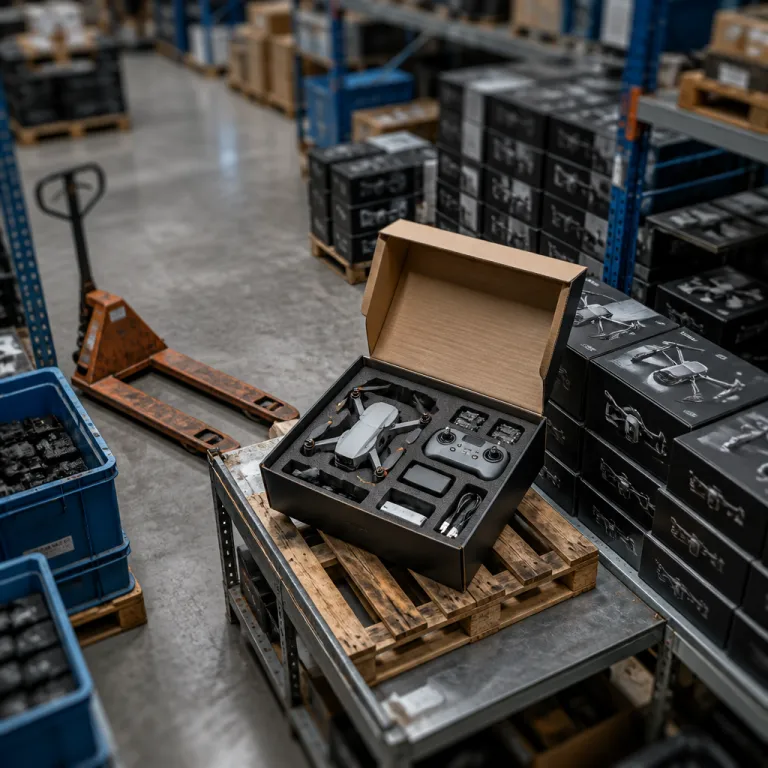
Consider a high end DIY drone kit built around a Pixhawk flight controller, marketed as a family engineering project. The best versions pair robust components with a thoughtful learning pathway, guiding children from basic assembly to imaginative modifications, and then to open ended tinkering with sensors and code. A detailed build guide, like those described in resources on building a high end DIY drone kit with Pixhawk for your child, can turn a daunting box of parts into a shared experience where both kids and adults stretch their skills.
What separates these kits from luxury theater is not the carbon fiber or the brushed aluminum, but the way they frame failure as part of the program. Crashes, miswired motors, and calibration errors become opportunities for problem solving, not reasons to abandon the toy. When a brand designs for this kind of resilient, imaginative engagement, the benefits offers section on its website feels less like marketing and more like a field report from real families.
The quiet power of toys with no claims at all
There is an uncomfortable truth at the heart of this market, which is that some of the best developmental toys carry almost no educational language on the box. A set of high quality wooden planks, a modular marble run, or a well balanced weather station kit can support rich play experiences without ever mentioning purpose-driven play toy marketing claims. In these cases, the design itself carries the argument, and children instinctively test the limits of the materials through imaginative construction and repeated ended play.
Parents who have watched a child return to the same open ended building set for years know that imagination key moments rarely arrive with a curriculum attached. Instead, they emerge from quiet afternoons when kids mix toys, invent rules, and stretch the intended use of each component. A thoughtful guide on how a children’s weather station elevates playtime for young explorers shows how even a single well designed kit can unlock a variety of activities, from data collection to storytelling, without heavy handed educational branding.
When you encounter a beautifully made toy with minimal claims, pay attention to how it feels in the hand, how it sounds when it moves, and how easily it combines with other materials in your home. Those sensory details often predict whether the toy will support deep, sustained development better than any icon or slogan. In a market saturated with promises, the quietest boxes sometimes hold the longest lasting play.
A practical rubric for reading a $200 box
To navigate purpose-driven play toy marketing claims without a formal certification system, you need a personal rubric that fits on a mental index card. Think of it as a quick audit you can run in a boutique or on a website before committing to another large box in the playroom. The goal is not perfection, but a consistent way to separate toys that genuinely support development from those that only perform educational language.
Start with clarity by asking whether the brand explains who the toy is for, what skills it targets, and how play experiences will change over time. If the packaging or product page cannot describe specific activities, materials, and features that support problem solving, imagination, and skill building, the claims are too thin for a luxury price. A strong toy will make it easy to picture your child using it in at least three different ways, across a variety of ages or stages.
Next, check for openness by looking at how the toy handles ended and open ended play. Does the program end once a fixed set of challenges is complete, or do the materials invite ongoing imaginative use, modifications, and mixing with other toys. In general, the more a toy supports open ended exploration, the more likely it is to earn its keep over years rather than weeks.
Questions to ask before you buy
When you evaluate a luxury STEM kit, ask who designed it and whether educators were involved beyond a single consultation. A credible brand will often name specific educators, describe how parents and educators were included in testing, or reference classroom pilots that shaped the final features. If the only experts mentioned are generic third party advisors with no clear role, treat that as a sign that the educational framing may be thin.
Then, look for evidence of real world use, such as long term reviews, detailed case studies, or transparent failure stories. Toys that have been in families for several years tend to reveal their true development value, whether through worn edges on frequently handled materials or through stories of how children extended the original activities into new imaginative directions. When a company shares these narratives openly, it signals confidence that its benefits offers are grounded in lived experience, not just launch day excitement.
Finally, consider how the toy fits into your existing ecosystem of play, rather than treating it as a standalone solution. The best purpose-driven play toy marketing claims acknowledge that no single box can cover every aspect of development, and instead position the toy as one tool among many in a rich environment of books, outdoor time, and unstructured play. In the end, the real luxury is not the price of the toy, but the time and attention your family can give to the fifth birthday it survives, not the unboxing it stars in.
Key figures shaping purpose-driven play
- Industry analyses of STEM based toys in the early 2020s have reported sustained year over year growth in global sales, reflecting parents’ desire for entertainment plus learning rather than pure distraction, according to summaries of market data from firms such as The NPD Group and Circana.
- Premium and luxury segments of the toy market have grown faster than mass market categories in recent years, as rising disposable incomes push families toward branded items that promise educational value alongside design quality, based on reports from major consulting firms tracking consumer goods and toy industry performance.
- Regulatory focus on unverifiable environmental claims, including the European Union’s Green Claims Directive proposal first presented in 2023, signals a broader shift toward demanding evidence for marketing promises, a trend many analysts expect to extend to educational and developmental claims in toys.
- Industry surveys of parents consistently show that a majority rank learning and development as top reasons for purchasing toys, yet few can name any independent standard or third party body that verifies those educational claims, according to research summaries from toy trade associations and education focused nonprofits.
Statistics that matter for luxury educational toys
- Market research from organizations such as The NPD Group and Circana has reported double digit growth for STEM and STEAM toys in several recent years, indicating that purpose-driven play toy marketing claims now influence a significant share of high end toy purchases.
- Analyses by groups like Toy Industries of Europe and the Toy Association have highlighted that parents are increasingly concerned about the accuracy of developmental claims, mirroring their skepticism toward unverified green claims in other consumer sectors.
- Consumer behavior studies show that parents who research toys on a brand’s website before buying are more likely to prioritize open ended play potential and long term development benefits over immediate entertainment value, according to survey based reports on digital shopping habits.
- Reports from education focused nonprofits suggest that toys which support sustained, imaginative play experiences over weeks and months correlate more strongly with measurable skill building than toys that rely on scripted, one time activities, based on classroom pilots and after school program evaluations.