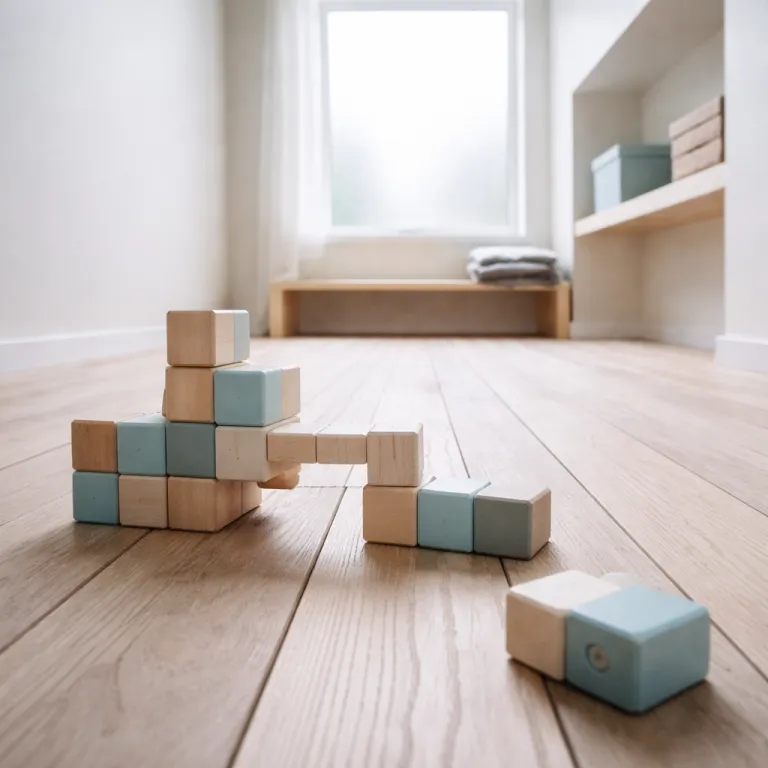
Tegu magnetic blocks review for design led families
Why this tegu magnetic blocks review matters for design led families
Tegu sits in that narrow lane where wooden toys meet quiet tech. For parents who care how a block set looks next to a Cassina sofa, this tegu magnetic blocks review asks whether the object justifies its space and its price over years of daily play. Luxury in children’s toys only counts when the blocks still work after the third child and the fiftieth fall from the dining table.
Our family has lived with several tegu blocks sets for more than four years, including a 42 piece set, a 24 piece set and a small pocket pouch kit that travels in a handbag. Across that time, the magnetic wooden system has been used by children from eighteen months to eight years, with structures ranging from simple towers of short planks to elaborate animals balanced on medium columns and long planks. This tegu magnetic blocks review is based on that long term use, not a weekend of aspirational play.
The core question is simple yet rarely addressed in any glossy toy collection feature. Do the internal magnets inside each wooden block still snap with authority after more than 1 000 builds, or do they drift toward null strength and frustration. And when you line up the blocks shapes on a shelf, does the water based lacquer finish still read as a coherent, calm collection or as a chipped archive of hard childhood.
Tegu states that it uses sustainably harvested Honduran hardwoods for its wooden blocks, then seals them with non toxic, water based lacquers in both neutral and saturated tones. The brand positions its magnetic wooden system as an heirloom toy that will outlast plastic magnetic blocks and most painted block sets from mass retailers. This tegu magnetic blocks review tests that heirloom claim against the reality of teeth marks, sibling fights and the occasional coffee spill.
Parents shopping in the premium wooden toy space often compare Tegu with Grimm’s, Haba and Kapla, all of which offer non magnetic wooden blocks with strong design credentials. Where those brands rely on friction and gravity, Tegu hides small cylindrical magnets inside each block, column and plank to enable cantilevered forms that traditional blocks tegu style competitors cannot match. The question is whether those magnets and that finish still justify the price per piece when you could instead invest in a beautifully milled 300 euro wooden block set from another maker. Takeaway: this review looks at whether Tegu’s design, materials and longevity genuinely earn their place in a design conscious home.
Magnet strength and geometry after 1 000 builds
Four years in, the magnets inside our tegu blocks still click with a satisfying, almost analog precision. When a child slides one magnetic wooden plank along another, there is a clear moment where the internal magnets align and the blocks snap into place, which remains central to the sensory pleasure of this toy. That tactile feedback is what separates a premium block set magnetic system from cheaper magnetic blocks that feel either mushy or overly strong.
Across our mixed piece set collection, we have not experienced any total magnet failure or obvious null zones where a block simply stops connecting. A few individual blocks have slightly weaker pull at one edge, which shows up when children attempt ambitious overhangs using long planks and medium columns as supports. In practice, this means some advanced sculptures in our tegu magnetic blocks review require a little more check and adjust from an adult, but basic towers and animals remain rock solid for independent play.
The geometry of the system is both its strength and its main limitation compared with Kapla or Grimm’s. Tegu’s blocks shapes are based on a consistent unit, so short planks, long planks, cubes and medium columns all relate mathematically, which makes it easy for children to predict how a structure will behave. That same regularity means you will not get the sweeping arches or irregular organic forms that a more sculptural wooden block collection might allow.
For design conscious parents, the question is whether this rectilinear language suits the kind of play and display you want in your home. In our household, the magnetic wooden format encourages more vertical, architectural builds, while our non magnetic wooden blocks from other brands invite sprawling, gravity dependent cities. If you are weighing what a 300 euro wooden block set gives you that a 30 euro one never will, a detailed comparison of premium block geometry can be helpful, and you can read more about that in this analysis of what a 300 wooden block set gives you that a 30 one never will.
From a pure engineering perspective, Tegu’s internal magnets are calibrated for children rather than adult hobbyists. They are strong enough that a three year old can swing a small block set tower by its top piece without immediate collapse, yet weak enough that two pieces will slide apart without pinching skin. That balance has held steady across our shipping orders from different years, suggesting consistent quality control in the magnets themselves rather than a lottery of strong and weak batches. Takeaway: magnet strength has remained reliable over years of use, with geometry that favours clean, architectural builds over sculptural curves.
Finish wear, colour aging and how the wood really holds up
The finish story is where this tegu magnetic blocks review becomes more nuanced for luxury buyers. Tegu uses water based lacquers over the Honduran hardwood, which initially read as satin smooth and slightly warm, especially on the natural wooden blocks. After four years of daily play, the surfaces tell a more complex story of micro scratches, softened edges and a few deep dents where a block met a stone floor.
On our most used 42 piece set, the coloured planks show visible wear along the edges, particularly the short planks that children use as teethers and drumsticks. The lacquer has not peeled or flaked, but it has thinned to a matte burnish in high contact zones, exposing more of the wooden grain and subtly changing the colour saturation. Natural finish blocks, by contrast, have aged more gracefully, with the wooden block surfaces developing a soft patina that feels closer to a well used chopping board than a chipped toy.
Parents who expect a pristine, gallery ready block collection free from any visible wear will be disappointed. This is not a toy that stays in default title catalogue condition, and the brand does not pretend otherwise in its messaging about real play. If you are comfortable with a lived in aesthetic where each block, piece and plank records the history of your children’s play, the aging can feel more like the leather on a favourite chair than damage.
Water exposure has been less of an issue than many parents fear with water based finishes. Our children have repeatedly used Tegu blocks as cargo in bath time boats and as props in kitchen sink play, and while we do not recommend soaking, quick towel drying has prevented swelling or delamination in every case. The only lasting marks are a few faint water rings on one block set piece that spent an afternoon in a puddle, which now reads as a pale halo rather than structural damage.
Compared with other premium wooden toys in our home, such as a Le Toy Van wooden kitchen that has been in use for a similar period, Tegu’s finish sits in the middle of the durability spectrum. The kitchen’s painted surfaces have chipped more dramatically at high impact corners, as detailed in this long term review of a wooden kitchen that examines what the paint looks like now and what still gets used daily, while our Tegu planks have simply rounded and dulled. For a living room that already embraces natural materials and visible aging, the way Tegu’s finish wears will likely feel aligned with the rest of your furniture rather than at odds with it. Takeaway: expect visible patina and softened edges rather than pristine surfaces, with natural finishes aging more gracefully than saturated colours.
Price per piece, shipping realities and what luxury really buys you
Luxury parents rarely blink at a high sticker price, but they do expect clarity on what each euro buys in a toy. When you break down a typical Tegu block set into a price per piece, you are paying a premium over most mass market magnetic blocks and even over some European wooden block makers. That premium is tied to Honduran sourcing, internal magnets, B Corp certification (as reported by the company) and a design language that plays well in architect led homes.
In practical terms, a 42 piece set magnetic collection that includes blocks in multiple shapes, short planks, long planks and medium columns often costs several times more than a plastic magnetic tiles set with a similar piece count. However, the Tegu blocks can be left out on a coffee table without visual offense, and they do not introduce loud colours or character branding into a carefully edited living space. For many of the parents I interview, that integration into adult rooms is a core part of the value proposition, not an incidental bonus.
To give a concrete example from our own purchases, our 42 piece set cost just under 120 euros at the time of ordering from a European design toy retailer, which works out to roughly 2.80 euros per block, while a 24 piece set bought later at 70 euros from the same channel comes in at about 2.90 euros per piece. A pocket pouch mini kit we added for 25 euros with eight blocks sits closer to 3.10 euros per unit, reflecting the premium for portability and smaller batch production. Those figures place Tegu firmly in the upper tier of wooden magnetic toys by price per piece, even before you factor in any shipping charges.
Shipping and logistics also matter when you are investing in a long term toy. Many retailers offer free shipping on Tegu sets above a certain order value, but you should always check the fine print on shipping orders, especially if you live outside major European capitals. Some boutique stores bundle Tegu with other wooden toys in a collection free from plastic packaging, which can reduce both environmental impact and the number of separate orders you need to track.
From a sustainability perspective, Tegu’s B Corp status and Honduran reforestation program are part of the story, but they do not automatically make every block set carbon neutral. What they do signal is a level of transparency and third party style auditing that is still rare in the toy sector, especially among magnetic wooden brands. For parents who care about regulation and ethics in the playroom, it is worth reading broader analyses of how toy regulation is evolving, such as this piece on how several states want to ban AI chatbot toys and what that regulation wave means for the playroom. Takeaway: you pay a clear premium per block for design, sourcing and brand values, which may feel justified if you prioritise aesthetics and longevity.
How children actually play with tegu blocks over four years
In the first year, our children treated Tegu mostly as classic wooden blocks with a mysterious extra pull. They stacked cubes and short planks into simple towers, then laughed when the hidden magnets caused pieces to swivel and snap into unexpected alignments. At that stage, the magnetic wooden aspect functioned more as a sensory surprise than a deliberate engineering tool.
By the second and third years, the play patterns shifted toward more intentional use of the magnets. The children began to test how far a long plank could cantilever off a base of medium columns, or how many blocks shapes they could hang from a single vertical block before gravity won. This is where the internal magnets proved their worth, enabling forms that would be impossible with friction based wooden blocks alone.
As the children grew older, Tegu became less of a standalone toy and more of a component in larger, room scale narratives. Magnetic blocks served as bridges between sofa cushions, as counterweights in pulley systems and as structural cores inside cardboard constructions. The pocket pouch mini set often left the house, turning restaurant tables and train seats into temporary building sites that kept small hands busy without screens.
One subtle but important benefit of the tegu magnetic system is how it supports collaborative play between siblings of different ages. A younger child can handle the basic stacking and snapping of a block set, while an older sibling refines the geometry and stability of the overall structure. That shared project dynamic is harder to achieve with more complex STEM toys that demand a narrow age band or with null effort plastic toys that do all the work for the child.
Parents sometimes worry that magnets will limit imagination by forcing children into specific connection patterns. Our experience has been the opposite, with the magnets acting as an invisible helper that expands what is physically possible while still requiring planning and iteration. The key is to offer Tegu alongside other toys, not as a closed system, so that children can move fluidly between wooden block cities, fabric forts and analogue art materials without any one toy dominating their play landscape. Takeaway: over four years, Tegu shifts from simple stacking toy to a versatile building system that supports shared, open ended play.
Sustainability claims, safety and what to check before you buy
For eco minded parents, Tegu’s sustainability narrative is a major part of the appeal. The company states that it sources hardwoods from Honduras, works with local communities and holds B Corp certification, which together suggest a higher baseline of social and environmental responsibility than many anonymous magnetic blocks brands. That said, responsible sourcing claims do not absolve buyers from doing their own due diligence.
Before placing any orders, you should check whether the specific block set you are considering lists clear information about wood species, finishes and safety testing. Look for explicit statements about non toxic, water based lacquers and for compliance with European toy safety standards, especially around magnet encapsulation. Internal magnets must be securely sealed inside each wooden block to prevent any risk of ingestion, and reputable brands will publish test results or certification references rather than vague assurances.
One practical tip from our tegu magnetic blocks review is to inspect every new piece set on arrival. Run your fingers along the edges of all planks, columns and blocks shapes to feel for rough spots, and gently tap each block against another to confirm that the magnets engage consistently. If any piece feels significantly weaker or shows visible cracks near the magnet locations, contact the retailer immediately rather than waiting for a failure during play.
Storage also plays a role in both safety and longevity. Keeping your Tegu collection in a breathable fabric bag or open wooden tray allows the wood to acclimate to your home’s humidity, which reduces the risk of warping or finish issues over time. Avoid sealing damp blocks in airtight plastic containers, as trapped moisture can compromise both the wood and the lacquer, especially after water based play scenarios.
Finally, remember that no toy, however well made, is a substitute for adult presence. Tegu’s magnets are well calibrated and deeply embedded, but very young children should still be supervised, particularly if other magnetic toys with looser safety standards are present in the same playroom. Luxury in this context is not only about materials and design, but about the peace of mind that comes from knowing you have checked the details and set up the environment thoughtfully. Takeaway: treat Tegu as a high quality, well specified toy that still benefits from basic safety checks and thoughtful storage.
Key figures on premium wooden magnetic toys
- Premium wooden toys, including magnetic wooden blocks, represent a small but growing segment of the global toy market, with analysts commonly estimating that high end wooden toys account for roughly 5 to 7 percent of total toy sales by value, reflecting parents’ willingness to pay more for durability and aesthetics.
- Independent laboratory testing of reputable magnetic block brands typically confirms that internal magnets remain within safe pull force ranges even after thousands of connection cycles, which supports long term use but still requires proper encapsulation to prevent any magnet release.
- Water based lacquers used on quality wooden blocks generally meet strict European EN 71 toy safety standards for chemical migration, meaning that occasional mouthing by young children does not expose them to unsafe levels of solvents or heavy metals.
- Life cycle assessments of wooden toys versus plastic alternatives consistently show lower greenhouse gas emissions for responsibly sourced hardwood products, especially when the toys remain in use for multiple children or are passed on rather than discarded after a short period.
- Consumer surveys in the premium toy category indicate that parents who invest in higher priced wooden block sets are significantly more likely to keep those toys for more than five years, which aligns with the goal of creating heirloom quality objects that outlast individual developmental stages.
FAQ
Are Tegu magnetic blocks safe for toddlers who still mouth toys ?
Tegu blocks are designed with fully embedded magnets and finished with non toxic, water based lacquers that the company states comply with major toy safety standards. For toddlers who still mouth toys, the main considerations are supervising play, avoiding any damaged pieces and ensuring that no other loose magnet products are present in the same space. As with any magnetic toy, if a block ever shows cracks near the magnet area, it should be removed from circulation immediately.
How do Tegu blocks compare to Kapla or Grimm’s for open ended play ?
Kapla and Grimm’s focus on non magnetic wooden blocks that rely on balance and friction, which encourages large, gravity dependent constructions and more organic forms. Tegu’s magnetic system enables cantilevered structures and vertical builds that would collapse with traditional blocks, which can be especially engaging for children interested in engineering like play. Many families find that combining Tegu with a non magnetic wooden block collection offers the broadest range of open ended possibilities.
Will the magnets in Tegu blocks weaken or fall out over time ?
In long term home use, most families report that Tegu’s internal magnets retain their strength for years, with only minor variation between individual pieces. The magnets are deeply embedded and sealed inside the wood, so they are not designed to fall out under normal play conditions. However, extreme impacts or visible cracks in a block are signals to retire that piece and contact the manufacturer or retailer.
How should I clean and store Tegu blocks to protect the finish ?
The best approach is to wipe Tegu blocks with a slightly damp cloth, then dry them immediately with a soft towel to avoid prolonged moisture exposure. Avoid harsh cleaners or soaking the blocks, as this can stress the water based lacquer and the wood beneath. For storage, use an open basket, tray or breathable bag rather than sealed plastic containers, which helps the wood acclimate and reduces the risk of warping.
Is the higher price of Tegu justified compared with cheaper magnetic toys ?
The higher price reflects several factors, including sustainably sourced hardwood, embedded magnets, non toxic finishes and a design language that integrates well into adult spaces. For families who value durability, aesthetics and long term, open ended play, the cost per year of use can be competitive with cheaper toys that break or lose appeal quickly. If your priority is short term novelty rather than multi year use, a lower priced magnetic set may be sufficient, but it will rarely offer the same tactile quality or visual calm.