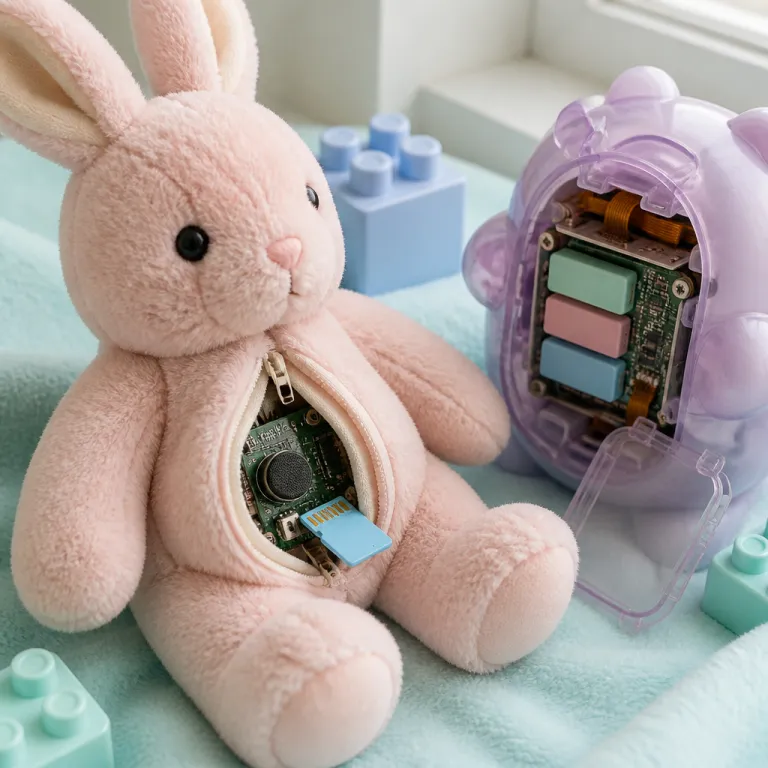
Section 1 – Why luxury AI toys are different, and why that matters for privacy
Luxury smart toys promise richer play, but they also create richer data trails. For affluent parents buying beautifully designed connected toys, the gap between perceived child safety and actual data privacy can be surprisingly wide. A talking plush toy that feels like a gentle tutor for your child may quietly ship voice recordings and other data to multiple servers every night.
High end AI powered toys for kids often blend sensors, microphones, cameras, and cloud AI in a single device, which means these products collect far more information about children than traditional toys ever could. When a child hugs a connected bear or drives a premium app linked robot car, the toy may log every interaction, including timestamps, usage patterns, and even emotional tone inferred from voice. Parents buying these objects as design forward children’s toys rarely expect that the toy will behave more like a smart speaker than a stuffed animal, yet the underlying architecture is often similar.
For this guide to AI toys and children’s data privacy, think of each toy as both an object and a data collection device. The same toy that supports child development with adaptive stories and language games may also generate a persistent profile of your child, including preferences, sleep times, and behavioral patterns. When toys kids use daily are quietly transformed into always connected devices that sync with distant servers, the question is no longer whether the toy is fun, but whether the child privacy tradeoff is acceptable for your family.
Section 2 – What AI toys actually collect: from voice recordings to behavioral fingerprints
Most parents toy shopping for premium connected products assume the microphone only wakes when their child speaks directly to the toy. In practice, many smart toys record short buffers continuously, then upload voice recordings and transcripts to the cloud whenever a wake word or button press is detected. Those recordings can be used to improve speech models, refine child development insights, or, in weaker privacy regimes, to train unrelated commercial systems.
Beyond audio, AI toys collect a wide spectrum of data about children, including device identifiers, IP addresses, approximate location, and detailed logs of in app choices and play patterns. Some toys connected to companion apps track how often a child repeats a level, which characters they prefer, and how quickly they respond to prompts, turning play into a behavioral dataset that can be mined for engagement metrics. When toys record these patterns over months, the resulting profile of a single child can be more granular than many parents realize, especially if a third party analytics service is involved.
Luxury powered toys that pair with remote controlled vehicles or trains add another layer, because the toy will often sync with a smartphone that already holds sensitive data. If you are comparing a high end AI train set with a more traditional remote controlled train, start by reading a detailed review on remote controlled trains for kids, then map those hardware features to potential data collection points. Treat every sensor, from accelerometers to cameras, as a potential source of privacy risk for kids, and ask which streams are truly necessary for child safety or learning.
Section 3 – COPPA’s new teeth: what the updated rules mean for your playroom
In the United States, the Children’s Online Privacy Protection Act, or COPPA, governs how companies can collect data from children under 13. A 2013 rule update, with enforcement actions continuing through 2017 and beyond, expanded the definition of personal information to include biometric identifiers, granular location, and persistent device IDs that many smart toys quietly rely on. For parents, this means that a connected toy which once operated in a gray zone may now fall squarely under stricter child privacy and data protection obligations.
Under the updated COPPA framework, companies behind connected toys must obtain verifiable parental consent before collecting, using, or sharing children’s data, including voice recordings and photos. They must also provide clear parental controls that allow parents to review, delete, and limit data collection, rather than burying these options behind obscure menus or vague language. If a brand cannot explain in plain English how it handles recording functions, data retention, and third party sharing, that is a red flag for any parent evaluating AI powered toys for kids.
Luxury powered toys such as high end electric ride ons often blur the line between toy and vehicle, especially when GPS tracking and app based dashboards are involved. When you evaluate a premium model, pair design and performance insights from independent guides to high end electric cars for children with a close reading of the privacy policy to see how the company treats children’s information. A brand that treats child safety and privacy as core design constraints, not legal afterthoughts, will usually offer granular parental controls, minimal default data collection, and transparent explanations of how toys collect and store information about kids.
Section 4 – Architecture matters more than aesthetics: offline, hybrid, and cloud dependent toys
When you hold a beautifully stitched AI plush toy, you see fabric, not servers. Yet the most important privacy decision is often whether the toy processes data on device or sends it to the cloud for analysis. In this children’s data privacy guide, architecture, not price, is the primary lens for judging whether toys connected to the internet can still be considered safe toys for your child.
Fully offline smart toys process voice commands and interactions locally, storing minimal data and usually avoiding any third party analytics, which dramatically reduces the risk of unauthorized data collection. Hybrid designs may keep core functions on device but still upload some usage metrics or anonymized logs, so parents must check whether those toys collect identifiers that could be linked back to individual children. At the far end of the spectrum, cloud dependent toys children interact with daily may stream every request, response, and error to remote servers, creating detailed archives of a child’s voice, questions, and play habits.
For luxury buyers, the temptation is to equate higher prices with better privacy, but the correlation is weak. A modestly priced analog wooden castle with no electronics, like the kind often profiled as quiet luxury castle blocks, offers near perfect child privacy simply because it never connects. When you compare such analog toys to AI powered toys, ask whether the connected features genuinely enhance child development or simply add online novelty while expanding the silent databases that surround your kids.
Section 5 – How to read a toy privacy policy like a pro
Most privacy policies for children’s toys are written to satisfy regulators, not parents. Yet a careful reading before buying can reveal whether a toy treats child safety and privacy as a design principle or a compliance checkbox. This guide recommends setting aside ten quiet minutes to scan four specific sections before any connected toy enters your home.
First, look for a clear explanation of what data the toy will collect, including voice recordings, images, location, and behavioral logs, and whether toys record by default or only after explicit consent. Second, check how long the company keeps data about children, whether it shares information with any third party partners, and whether those partners can use the data for their own purposes. Third, confirm that robust parental controls exist, allowing you to review, export, and delete your child’s data, and to turn off non essential data collection without breaking basic functionality.
Finally, scan for language about children’s privacy rights under COPPA and any international laws if the company operates globally, because serious brands tend to exceed the minimum legal standard. If a policy is vague about what toys collect, uses broad phrases like “including but not limited to” without examples, or buries key settings deep in an app, treat that as a warning sign. For luxury minded parents buying connected toys, the real premium is a company that writes for humans, not just lawyers, and that treats your child as a person, not a dataset.
Section 6 – A five question decision framework before any connected toy crosses the threshold
Before you bring any AI toy into your living room, pause and run it through a simple five question filter. This framework balances child development benefits, child safety, and privacy risks in a way that respects both your time and your standards. The goal is not to ban all smart toys, but to ensure that the toys kids keep close to their beds and voices earn that intimacy.
Question one: would this toy still be worth buying if all online features disappeared tomorrow, leaving only its physical design and offline play value. Question two: does the toy require a constant internet connection, or can it function as a partially offline toy connected only when you choose, which gives you more control over when toys collect data. Question three: do the parental controls allow you to limit data collection, disable recording features, and manage multiple children profiles separately, or are settings all or nothing.
Question four: is there a non connected alternative, such as a beautifully crafted analog toy or a simpler electronic device, that delivers similar joy or learning without the same data privacy footprint. Question five: if a breach exposed every piece of data this toy holds about your child, would you still feel that the tradeoff between smart features and children’s privacy was justified. When the honest answer is no, the analog option wins, because the most luxurious toy in a child’s life is often the one that protects their story by never recording it in the first place.
Key figures on AI toys, children, and data privacy
- A 2017 Federal Trade Commission settlement with VTech Electronics over its Kid Connect service showed that unsecured voice recordings and personal data from children were stored for years, illustrating how long toy data can linger when deletion policies and security practices are weak.
- Research from consumer protection groups such as the Norwegian Consumer Council’s 2016 “Toy Fail” report found that several popular connected toys transmitted data to multiple analytics and advertising partners, increasing the number of third party entities that may access children’s information.
- Industry surveys by organizations like Common Sense Media and the UK Information Commissioner’s Office have indicated that many parents underestimate the extent of data collection by smart toys, often assuming that only basic usage metrics are stored when, in reality, detailed interaction logs and behavioral profiles are common.
- Analyses of privacy policies for children’s toys by academic and nonprofit researchers have revealed that some companies reserve the right to retain de identified data indefinitely, which can still pose risks if re identification techniques improve over time or if datasets are combined.
FAQ
How can I tell if a smart toy is safe for my child’s data
Start by checking whether the toy clearly explains what data it collects, how long it keeps that data, and whether it shares information with any third party services. Look for strong parental controls, options to delete voice recordings and other logs, and a commitment to minimizing data collection to what is strictly necessary for core features. If the company cannot answer basic questions about child privacy and security, choose a different product.
Are offline toys always better for privacy than connected toys
Offline toys that never connect to the internet generally offer stronger privacy because they do not create digital records about your child. However, some connected toys use on device processing and limited data collection in ways that can be reasonably safe when combined with transparent policies and robust parental controls. The key is to understand the architecture and decide whether the benefits of connectivity justify the additional data privacy risks.
What types of data do AI toys usually collect from children
AI toys often collect voice recordings, interaction logs, device identifiers, and sometimes approximate location data through connected apps. Many systems also track how often a child uses certain features, which characters they prefer, and how they respond to prompts, building a behavioral profile over time. Parents should review privacy policies to see whether this data is used only to support child development features or also shared with third party analytics or marketing partners.
How do the COPPA rules protect my child when using smart toys
COPPA requires companies to obtain verifiable parental consent before collecting personal information from children under 13, including audio recordings and device identifiers. It also obliges them to provide clear notices, allow parents to review and delete data, and limit how long they keep children’s information. While COPPA offers important protections, parents still need to read policies carefully and choose brands that go beyond the legal minimum.
When should I choose an analog toy instead of a connected one
An analog toy is often the better choice when connectivity adds little to the core play experience or when the data collection required feels disproportionate to the benefits. If a toy needs constant online access, gathers extensive information about your child, or offers weak parental controls, a non connected alternative will usually provide similar joy with far fewer privacy concerns. For many families, the most meaningful toys are those that shape memories, not databases.