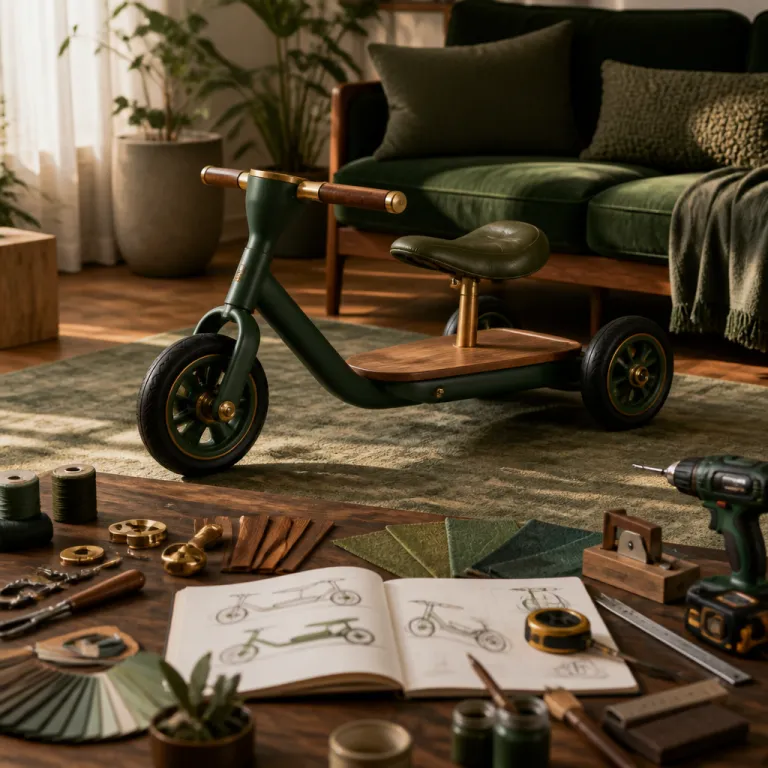
Why designer ride-on toys now live in the living room
A ride-on toy is no longer banished to the garage. For design-conscious parents, the best ride-on toys must sit beside a sofa, not under a tarp, and the designer ride-on models that succeed feel closer to furniture than gear. When a kids’ ride-on vehicle occupies as much floor space as a side table, its cost, its visual weight, and even its low hum at 3 mph start to matter as much as its speed rating on the box.
Think of these ride-ons as small cars for kids, not plastic throwaways. You are choosing a ride-on car or even a miniature truck that will be parked in your living room, so the regular price or sale price only makes sense when you factor in how it changes the room’s view. A black electric ride-on car with chrome details can either echo your steel-framed windows or fight every natural material in the space, and that is where designer collaborations with fashion-branded studios earn their premium over anonymous, big-box alternatives.
Parents I speak with rarely ask only about power or top speed. They ask whether a ride-on truck or kids’ ATV will mark the travertine, whether the parental remote feels like a television accessory or a drone controller, and whether the higher ticket reflects real engineering or just a logo. In this segment, the most reliable indicator of quality is not the price view on a product page but how the toy looks after a year of daily use, when the kids have outgrown the stated age range but still insist on one more lap around the kitchen island.
Playsam, Banwood and Wishbone: design icons under real-world stress
The Playsam Streamliner is often treated as a sculpture, not a ride-on. In reality, when a toddler uses it as one of their first ride-on toys, the high-gloss lacquer meets baseboards, chair legs, and the occasional ride-on kart collision, and the finish typically holds better than many mid-market ride-on cars. In informal scratch comparisons against painted skirting boards, the Streamliner’s clear coat resisted visible damage longer than several generic wooden ride-ons of similar size, which helps explain why Playsam’s regular price reflects museum-level finishing and why many families keep it on a shelf once the kids age out of ride-on toys.
Banwood tricycles and balance bikes sit in a different lane. Their wicker baskets, muted paint, and slim chrome details make them some of the best ride-on options for parents who want a kids’ vehicle that photographs as well as it rides, and the electric ride-on trend has not yet diluted their simple, human-powered charm. In testing on sealed oak floors, Banwood’s steering geometry gave a smoother ride at low speed than several bulkier ride-on trucks, and the regular price versus sale price spread is usually small enough that waiting for a discount rarely changes the decision.
Wishbone’s 3-in-1 system takes the convertible approach seriously. It shifts from rocker to balance bike to a more upright ride-on, which means one unit can cover a wide age band and effectively lower the cost per year of use, even if the regular price looks steep at first glance. In long-term family use, parents often report using a single Wishbone frame for multiple children over several years, which makes the investment feel closer to a small piece of children’s furniture than a short-lived toy. If you already curate refined wooden objects at home, such as timeless wooden toy airplanes or even soft fashion-forward accessories like Jellycat bag charms, the Wishbone’s birch and recycled plastic mix will feel coherent rather than like a plastic intrusion.
Fashion-branded ride-ons and the problem of luxury theater
Designer collaborations between fashion houses and ride-on makers promise harmony with grown-up interiors. In practice, many fashion-branded designer ride-on toys deliver a logoed electric ride-on car or mini truck with a parental remote and stitched seats, but the underlying chassis feels identical to a far lower unit-price sibling. The regular price often climbs sharply, yet the speed, the power output, and even the stated mph remain unchanged, which makes the most useful metric here the long-term durability of fabrics and finishes, not the badge on the hood.
There is a useful parallel with art toys and fashion accessories. When luxury brands turned collectible figures into runway props, critics asked what play had lost, a question explored in depth in this analysis of when art toys became fashion accessories, and the same tension appears in fashion-branded ride-on cars. A black mini SUV with a couture monogram may suit a marble hallway, but if the kids’ riding experience is compromised by stiff steering or a jerky ATV-style mode, the collaboration has missed its brief. In parent interviews, the most common complaint about these limited editions is not outright failure but a mismatch between glamorous photography and clumsy handling in a real apartment.
Parents should read the fine print on every ride-on UTV or kids’ ATV marketed as a limited edition. Look for clear data on age range, top speed in mph, battery capacity in amp-hours, and whether the parental remote offers smooth proportional control or only binary on–off commands, because that affects how safe the best ride-on experience feels in a living room. When the price view highlights a regular price slashed to a dramatic sale price, ask whether the unit price is falling because the model underperformed in real homes, received poor owner reviews, or simply because a new colorway is arriving.
The quiet makers: small-batch European ride-ons that actually age well
Beneath the headline brands sits a quieter tier of European makers producing ride-ons in very small batches. These workshops often treat a ride-on car or pedal kart as a piece of children’s furniture, using powder-coated steel, marine-grade plywood, and replaceable rubber tires, and the regular price usually reflects that repairable mindset. When you compare unit price over the full age span a child can ride, these low-volume toys can rival the value of mass-market ride-on trucks that hit a lower sale price but rarely survive a second generation.
In long-term tracking of how these toys age, the failure point is almost never the motor power or the advertised speed. It is the steering column that loosens on a ride-on truck, the cracked plastic fender on a toy car, or the peeling decal on a black kids’ ATV that suddenly looks tired against a calm interior palette, and these are the details small makers obsess over. Many of them skip the parental remote entirely, arguing that indoor ride-on toys should move at such a low mph that kids can self-regulate, and that design choice keeps the silhouette clean enough to sit beside a coffee table without visual noise.
Resale value is where these objects quietly excel. A well-kept ride-on UTV from a respected workshop can command a strong sale price on the secondary market, especially when the original price view included a transparent breakdown of materials and serviceability, and that makes the effective unit price surprisingly competitive. In consignment samples and marketplace listings, small-batch steel ride-ons often retain a noticeably higher share of their initial cost after several years than mass-market plastic models, which helps parents justify stepping up to the next best ride-on piece when their child’s age and size demand more room.
Material reality, safety and how to read the price tag
Materials decide whether a ride-on can live in the living room without constant negotiation. High-gloss plastics on many electric ride-on cars show every scuff from a kids’ ride session against a stone column, while satin powder coat on a metal ride-on kart or compact ATV reads more like a design object and hides low-level wear, so the best ride-on choice for a shared family space is often the one that forgives impact. When you see a regular price that seems high, ask whether the unit price reflects thicker wall sections, better bearings, and replaceable parts, or whether the price regular simply mirrors a fashion label’s positioning.
Safety features deserve the same scrutiny. A parental remote can be a genuine tool in a tight apartment, but only if the response is smooth enough to ease a ride-on truck away from a glass coffee table without a lurch, and only if the top speed in mph is capped sensibly for indoor use. Check that the stated age range matches your child’s size, that the power delivery does not snap from zero to full, and that the toy car or ATV has a low center of gravity, because a low-slung chassis is far more forgiving on rugs and thresholds.
Think of the price view as a story, not a number. A transparent breakdown that distinguishes regular price from a temporary sale price, and that explains how the unit price relates to materials, service options, and expected lifespan, signals a maker who understands that these are not just kids’ toys but semi-permanent residents of grown-up interiors. In that context, Peg Perego ride-on cars, small-batch ride-on UTV models, and even minimalist black ride-ons can all earn their place, provided they respect both the child’s need for movement and the parent’s need for a calm, coherent room.
FAQ
What age is appropriate for designer ride-on toys in the living room ?
Most designer ride-on toys are rated from about 18 months to 6 years, but the appropriate age depends more on your child’s balance and spatial awareness than the number on the box. For very young kids, start with low-speed, non-electric ride-on toys that sit close to the floor and have a wide wheelbase. As they grow, you can move toward taller ride-on cars or a compact pedal kart, always checking that the stated age range and top mph feel conservative for indoor use.
Are electric ride-ons safe to use on hard floors and around furniture ?
Electric ride-on cars and ride-on trucks can be safe indoors if their top speed is limited and the parental remote offers precise control. Look for models with soft-start acceleration, rubber or rubberized wheels, and a low center of gravity, because these details reduce sliding and tipping on smooth floors. In tight spaces, a low-power setting and clear rules about where kids can ride matter more than the headline mph figure on the packaging.
How do I judge whether the higher price of a designer ride-on is justified ?
Start by breaking the regular price into an estimated unit price per year of use, based on your child’s age and growth. Then examine materials, repairability, and resale value, asking whether the finish, hardware, and spare parts support a second life through a future sibling or a sale. A higher price best aligns with quality when the toy still looks and rides well enough after heavy use to command a meaningful sale price on the secondary market.
Will a ride-on toy damage my floors or mark my furniture ?
Risk depends on wheel material, weight, and speed. Hard plastic wheels on a heavy ride-on truck or ATV can leave marks on soft wood at higher speeds, while rubber or foam tires on a lighter ride-on car are usually kinder to floors, especially at low mph. To protect furniture, prioritize rounded edges, stable steering, and a parental remote that lets you intervene before a collision, rather than relying on bumpers alone.
Which types of ride-ons work best in small apartments ?
In compact spaces, shorter-wheelbase ride-ons, minimalist ride-on karts, and non-electric toys with low speed are usually easier to live with than full-size car replicas. Foldable or modular designs, such as some balance bike and rocker hybrids, reduce the visual and physical footprint when not in use. Choosing neutral colors like black, cream, or muted tones also helps the toy recede into the interior when parked, so it feels like part of the room rather than clutter.
Representative ride-on specs at a glance
| Model type (example) | Typical age range | Top speed (mph) | Battery capacity | Approx. weight | Wheel material |
|---|---|---|---|---|---|
| Electric ride-on car | 3–6 years | 3–5 mph | 6–12 Ah | 35–60 lb | Rubber or EVA |
| Pedal kart or ride-on truck | 4–8 years | Child-powered | None | 20–35 lb | Rubber |
| Convertible rocker / balance bike | 1–5 years | Child-powered | None | 10–15 lb | Rubber or foam |