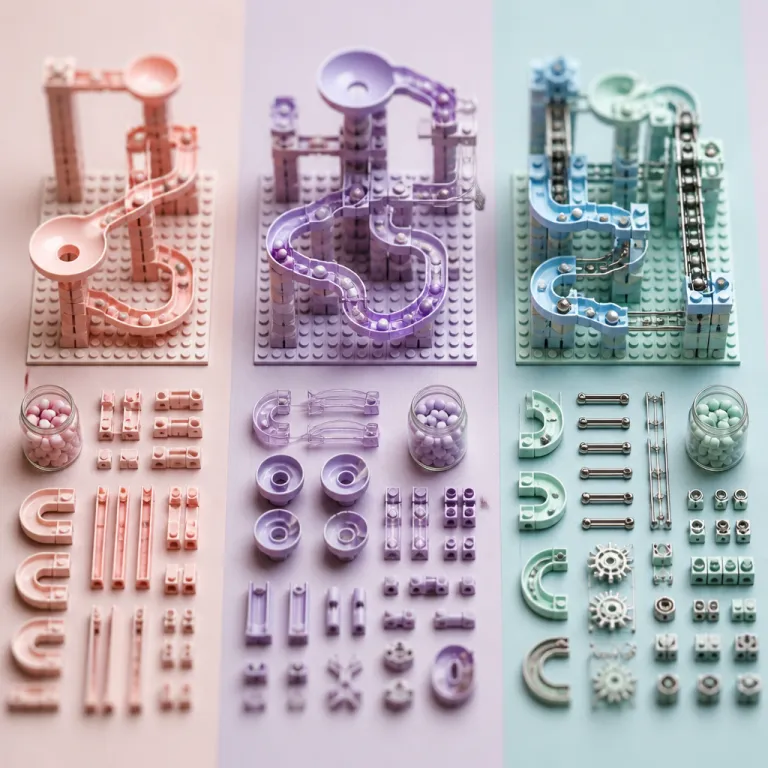
Why premium marble runs hold a child’s attention for years
For many families, the best premium marble run for children becomes the rare toy that survives decluttering. A well engineered marble building system quietly outperforms flashier toys because it invites kids to build, test, fail, and rebuild, turning simple marbles and gravity into a long running engineering game. When you choose carefully, you buy not just toys but a building set that can grow with your child for years.
At its core, a marble run is a network of tracks, blocks, and runs that guide each marble from top to bottom. The best marble systems for kids balance precision with forgiveness, so a child can play freely without every tiny misalignment causing a derailment or jam. That balance is where the difference between entry level toys and premium wooden toys becomes obvious in daily play.
Parents often ask when a child is ready for a marble set, and the answer depends on both temperament and supervision. Around three to four years, guided play with larger wooden blocks and enclosed tracks can be safe, especially when you choose developmental toys clearly rated for specific months and years. Independent building usually emerges closer to five or six years, when kids can manage smaller marbles and more complex marble runs without constant adult intervention.
Premium systems also respect the sensory experience of play, which matters more than many marketing claims. A well sanded wooden marble track feels warm in the hand, and the sound of marbles on solid beech or maple is softer and more satisfying than on thin plastic. Over time, that tactile and acoustic quality helps a child return to the same toys wooden structures instead of abandoning them for noisier electronic games.
Luxury here is not about gold plated marbles or oversized gift cards tucked into the box. It is about engineering tolerances, the stability of building blocks, and whether the track connections still hold after hundreds of rebuilds by small, determined hands. When you evaluate marble runs through that lens, price becomes a proxy for design decisions rather than just a status signal.
Entry level marble runs: what budget buys (and where it fails)
At the entry tier, you will find bright plastic marble runs sold as starter sets for kids from three years and up. These sets usually include a modest number of tracks, a handful of marbles, and a few gimmick pieces such as funnels or small games elements that spin or rattle. They can be the best marble introduction for a cautious child, but their engineering limits show quickly.
Most budget marble toys rely on snap fit track joints with generous tolerances, which makes them easy to assemble but prone to wobble. When a child builds higher runs, the weight of the marbles and the force of play often cause the track to twist, sending marbles flying off course. That repeated failure at the joints is exactly where many children abandon the activity and return to more predictable toys or screens.
Material quality is another constraint at this level, especially for families used to wooden toys. Thin plastic tracks flex under load, and the connection points can crack within months or years of regular use, particularly when siblings compete to build the tallest structure. Outdoor toys in this price band often fare even worse, as ultraviolet light and temperature swings accelerate brittleness and warping.
For very young children, some entry level systems marketed as baby toys or toys for baby focus more on chunky shapes than on true marble building. These may use oversized balls instead of small marbles, with enclosed tracks that prevent choking hazards and suit the earliest months and years. They are fine as developmental toys, but they rarely transition into the kind of open ended building set that keeps older kids engaged.
If you choose this tier, treat it as a test of interest rather than a long term investment. Pair a simple marble set with other stem toys, such as basic building blocks or a small outdoor climber, to see whether your child gravitates toward construction play. When enthusiasm persists, it is usually worth stepping up to a mid market or premium system with better track engineering and more stable building options, as outlined in guides to choosing a premium children’s outdoor climber for unforgettable playtime.
Mid market systems: where wooden blocks meet modular engineering
The mid market is where many families first encounter a truly satisfying wooden marble run, often from European brands such as Haba. A typical Haba starter set combines solid beech wooden blocks with precision cut tracks, allowing kids to build towers, bridges, and simple runs that feel substantial in the hand. These sets usually sit at a price point that feels premium compared with plastic toys, yet they deliver clear value in durability and play depth.
In this tier, the best premium marble run for children usually offers a hybrid of free building and guided designs. Instruction cards show a child how to build specific tracks, but the blocks and tracks are open ended enough to encourage experimentation with height, spacing, and marble speed. That mix of structure and freedom is ideal for kids between four and eight years, who are ready to think about cause and effect but still enjoy pretend play around the structures they build.
Haba marble runs, especially when you invest in more than one set Haba offers, stand out for their consistent dimensions and tight but forgiving fit. A wooden marble track from one box will align cleanly with tracks from another, so families can expand from a basic building set into elaborate marble runs over several years without compatibility headaches. This modularity is where mid market systems begin to feel like heirloom wooden toys rather than disposable plastic sets.
Many of these systems also integrate magnetic or special effect pieces, such as bells, see saws, or short magnetic track segments that change the marble’s path. Used sparingly, these elements enrich the building experience without turning the toy into a single solution puzzle that must be built exactly as shown. The goal remains open ended play, where kids can build, test, and rebuild until the best marble path emerges through trial and error.
Families who already value dolls, pretend play, and narrative games often find that a mid market marble set becomes part of a larger play world. A tower of wooden blocks might become a castle for dolls, while marbles stand in as treasure or magic stones rolling through hidden tracks. For those building a broader collection of luxury kids toys, pairing a robust marble building system with an heirloom piece such as a wooden Victorian dollhouse as a centrepiece for imaginative play creates a rich, interconnected play environment.
Premium engineering: when higher prices genuinely change the build
At the top tier, the best premium marble run for children is defined less by brand prestige and more by engineering discipline. High end systems use dense hardwoods, reinforced connectors, or carefully machined plastic to ensure that every track segment aligns with minimal play at the joints. The result is a marble run where even tall, complex structures remain stable under the enthusiastic handling of kids and visiting cousins.
In this category, you will see advanced building sets that combine wooden blocks, transparent tracks, and sometimes magnetic elements to create multi level runs. Some premium systems introduce switch tracks, crossovers, and spiral lifts that allow continuous marble games rather than single drop runs, which keeps older kids engaged far beyond the usual attention span. These features matter most from about seven years onward, when children start to think like engineers and want to optimize speed, timing, and reliability.
Material feel is where premium wooden marble systems quietly justify their cost for many families. Blocks are usually cut from solid beech or maple, edges are eased but not rounded away, and the finish is smooth enough for small hands without feeling slippery. Over months and years of use, these wooden toys develop a gentle patina rather than cracks, while cheaper plastic tracks often show stress whitening or broken clips.
Some high end brands also offer specialized marble sets focused on stem toys learning, with transparent track sections that let kids see changes in speed and trajectory. These sets often include printed guides that explain basic physics concepts in child friendly language, turning free play into an informal science lab. When combined with other developmental toys, such as complex building blocks or advanced outdoor toys, they create a coherent ecosystem of hands on learning tools.
For gift givers, premium marble runs can feel as significant as fine dolls or elaborate pretend play sets, especially for milestone birthdays. A substantial building set, sometimes accompanied by gift cards for future expansion, signals confidence in the child’s curiosity and persistence rather than in fleeting trends. The real luxury is not the unboxing moment but the quiet satisfaction of a child who returns to the same track system month after month, refining designs until the best marble route finally works every time.
Age, safety, and long term play: matching the run to the child
Choosing the best premium marble run for children starts with an honest look at age, temperament, and household dynamics. For babies and toddlers in the earliest months and years, true marble runs with small marbles are not appropriate, so focus instead on baby toys that mimic the cause and effect of rolling without loose parts. Chunky ramps, enclosed ball runs, and large wooden blocks can still introduce gravity and motion while respecting safety.
From about three to four years, a supervised child can begin using larger marbles in a carefully chosen starter set with stable tracks. At this stage, look for wooden toys or robust plastic sets with wide bases, simple track layouts, and clear age ratings that reflect realistic motor skills rather than marketing optimism. Avoid overly tall structures or narrow magnetic track pieces that could detach, and treat every new configuration as a chance to talk about stability and balance.
By five to six years, many kids are ready for more complex marble building challenges, including multi level tracks and branching runs. This is the sweet spot for mid market systems such as Haba marble runs, where a child can build independently but still appreciates occasional adult help with ambitious designs. It is also the age when stem toys begin to resonate, as kids notice how small changes in track height or angle affect marble speed and path.
Older children, especially from seven years onward, often treat marble runs as engineering games rather than simple toys. They may design timed races, synchronized drops, or elaborate Rube Goldberg style sequences that integrate dolls, pretend play props, and even elements from other building sets. For these kids, premium systems with reliable tracks, modular expansion sets, and optional magnetic or mechanical add ons provide the creative headroom they crave.
In multi child households, consider how a marble set will coexist with other luxury toys, such as high quality dolls paired with animal friends that encourage nurturing play. A robust marble run can sit alongside these softer narratives, offering a counterpoint of logic and structure without competing for the same emotional space. When chosen well, it becomes part of a balanced play diet that respects both imagination and analysis, and it is often the toy that still works perfectly on the fifth birthday it survives.
FAQ
What makes a marble run truly “premium” for children?
A premium marble run for children is defined by precise track connections, durable materials, and modular expansion rather than by price alone. Look for solid wooden blocks or reinforced plastic, tracks that stay aligned after repeated rebuilding, and compatibility between different sets from the same maker. Systems that maintain stability in tall builds and still run marbles smoothly after years of use justify their premium status.
At what age can my child safely start using a marble run?
Most children are ready for supervised marble run play around three to four years, but only with larger balls or enclosed tracks that eliminate choking risks. Traditional small marbles are generally better reserved for children five years and older who no longer mouth objects and can follow safety rules. Always check manufacturer age ratings and observe how your specific child handles small parts before introducing more complex sets.
Are wooden marble runs better than plastic ones?
Wooden marble runs typically offer a warmer tactile feel, quieter sound, and better long term durability than thin plastic systems. High quality wooden blocks resist cracking and warping over years, while plastic clips and joints are more prone to breakage under stress. However, some premium plastic or mixed material systems provide advanced features such as transparent tracks or mechanical lifts, so the best choice depends on your priorities.
How many pieces should a first marble run set include?
For a first marble run, a compact starter set with 30 to 60 pieces is usually ideal. This size allows a child to build meaningful structures without feeling overwhelmed by too many options or complex instructions. You can then add expansion sets over time once you see sustained interest and a desire for taller or more intricate runs.
Can marble runs support STEM learning in a meaningful way?
Well designed marble runs are powerful stem toys because they make abstract physics concepts visible and tangible. Children experiment with gravity, momentum, and friction every time they adjust track height, angle, or surface, then observe how the marbles respond. When paired with open ended building challenges and occasional adult questions, these toys can nurture genuine engineering thinking rather than rote problem solving.