Grapat grimms spielgaben comparison for parents who care how toys age
Most parents arrive at a grapat grimms spielgaben comparison after seeing the same rainbow arches and tiny wooden people on every curated playroom feed. You are not just buying a toy set on sale ; you are choosing a material language for how your child will play, learn, and grow over more than one year of childhood. The question is simple yet sharp ; which system still feels alive after the hundredth day of playing, not just the first unboxing.
Grimm's, made in Germany from lime wood with water based stains, leans into saturated rainbow color and a Waldorf view of childhood that treats play as a form of living art. Grapat, turned in Spain from beech wood with natural waxes, offers small loose parts that invite children to arrange, sort, and tell stories in a way that quietly echoes Reggio Emilia school ateliers and their respect for the child's voice. Spielgaben, designed between Korea and Australia from beech and maple, arrives as a structured set of "gifts" and "occupations" that channel Friedrich Fröbel's early learning philosophy into a complete curriculum for home or classroom.
Parents I have worked with often asked whether to start with one brand or mix all three, and the answer depends less on budget and more on how your family views structure, mess, and autonomy in play. If you love watching a baby mouth a single smooth ring, then later see that same piece become a wheel, a soup bowl, and a planet, you are already aligned with open ended loose parts. This showdown nobody asked for matters because these systems shape how your child handles balls, cards, blocks, and even their first wooden letter long after the marketing campaign has ended.
Philosophy of play: waldorf color, reggio invitations, and fröbel structure
When you look closely at any grapat grimms spielgaben comparison, you are really comparing three philosophies of play that sit behind the wood. Grimm's follows Waldorf ideas, using the rainbow not as decoration but as a way to echo seasonal rhythms and emotional tones in everyday playing. Grapat leans into Reggio Emilia thinking, where adults set up an invitation to play and then step back, letting small wooden figures, bowls, and rings become the language children use to express what they cannot yet put into a written letter.
Spielgaben is different ; it arrives as a complete set in a wooden cabinet, each drawer holding numbered "gifts" that move from soft balls and yarn to precise geometric solids, sticks, and points. The system is explicitly tied to early school readiness and structured learning, with guidebooks that show parents how to move from free play to more formal activities over year after year. For families who love a clear path, that structure can feel reassuring rather than restrictive, especially when compared with the more open, natural chaos of a basket of Grapat mandala pieces or a Grimm's rainbow stack.
In my own testing, the most telling moment came when a parent asked their child to "skip content" from the guide and just play freely with a Spielgaben set, and the child immediately started building letters, houses, and abstract art from the same pieces. That is the quiet power of a well designed system ; it supports both school aligned learning and deep, self directed play without forcing a choice. If you are already exploring other structured wooden systems, such as the long term durability review of the Tegu magnetic block system, you will recognize the same tension between guidance and freedom here.
Material and color: lime versus beech versus mixed hardwoods
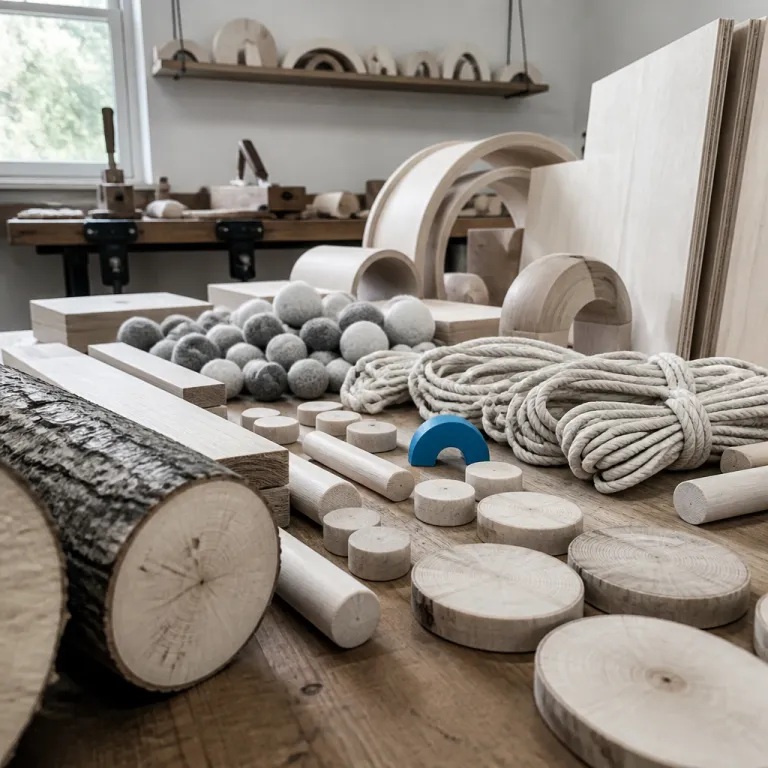
A serious grapat grimms spielgaben comparison has to start with the wood itself, because material is not a footnote in luxury kids toys. Grimm's uses lime wood, which is light in the hand, slightly soft under a fingernail, and perfect for those iconic rainbow arches that need to flex a little without cracking. Grapat and Spielgaben both rely heavily on beech, a denser hardwood with a tighter grain that feels cool and smooth when a baby first grasps a peg doll or rolls a handful of balls across the floor.
Spielgaben adds maple into the mix, especially for pieces that need sharper edges and long term dimensional stability, and that blend of hardwoods matters if you expect the set to survive more than one child. If you care about the ethics behind the sale as much as the aesthetics, all three brands use FSC certified or otherwise responsibly sourced wood with non toxic finishes, which aligns with what many high end parents now expect as a natural baseline. For a deeper dive into how maple, beech, and birch behave under real family use, the analysis of which wood species Montessori brands choose and why is worth reading alongside this piece.
Color is where the emotional tone of play shifts most dramatically between these brands, and it is often what children love or reject first. Grimm's rainbow spectrum photographs beautifully and signals a kind of joyful abundance, while Grapat's earthier palette feels closer to land, stone, and seasonal tables that many Waldorf and Reggio inspired families build at home. Spielgaben stays closer to a primary school palette, with clear reds, blues, and yellows that support early learning tasks like color sorting cards, pattern building, and even simple art exercises that quietly echo first geometry lessons.
System depth, interoperability, and how sets age over years
The most useful grapat grimms spielgaben comparison looks beyond the first purchase and asks how each system expands, overlaps, and ages as your child grows. Grimm's offers a wide catalog of arches, tunnels, balls, stacking towers, and small world pieces, but there is a point where another rainbow or another wave stack feels more like décor than play. Grapat, by contrast, deepens through variations in small parts ; mandala pieces, Nins, rings, and coins that layer into increasingly complex patterns and story worlds without shouting for attention on a shelf.
Spielgaben is intentionally finite ; you buy one large set, and the depth comes from how you use it over year after year, not from constant additions. The curriculum guides move from baby safe sensory play with soft balls and rings to advanced school age explorations of symmetry, fractions, and even early engineering, all with the same core materials. For parents who prefer to start with one investment and then focus on learning rather than chasing every new sale, that closed ecosystem can feel like a relief.
In mixed playrooms, I have seen Grimm's arches become dramatic backdrops while Grapat small parts handle the fine grained storytelling, and Spielgaben elements step in when a child wants to build something that actually measures 30 cm across or matches a specific letter shape from school. The systems do not clash ; they converse, especially when children are allowed to skip content from adult plans and follow their own curiosity. Long term, the toys that stay in rotation are the ones that still ask interesting questions, not the ones that ended up as untouched art objects on a high shelf.
Which brand for which child, which parent, which aesthetic
By the time you reach this point in any grapat grimms spielgaben comparison, you are no longer asking which brand is best in the abstract. You are asking which philosophy of play, color, and structure fits your actual child, your actual home, and your tolerance for visual noise. Grimm's suits families who love bold rainbow statements, do not mind a bit of visual chaos, and see play as a kind of kinetic art installation that shifts from day to day.
Grapat tends to resonate with parents who prefer a quieter palette and who enjoy watching small, precise hands arrange tiny pieces into mandalas, markets, and villages that might stay on a tray for a week. If you love the idea of a child led atelier at home, where a baby eventually grows into a school age child who still reaches for the same bowl of small parts, Grapat's natural tones and tactile shapes will likely feel right. Spielgaben is the choice for families who want one comprehensive set that can support both free play and explicit learning, from early letters and numbers to more advanced school concepts, without constantly adding new boxes.
In practice, many high end playrooms end up with a hybrid ; a Grimm's rainbow or two for sculptural presence, a deep Grapat collection for narrative playing, and a single Spielgaben cabinet for structured learning sessions that do not feel like school homework. The key is to start with what your child already loves rather than what social media celebrates, and then let the toys earn their place over year after year of real use. Luxury in children's toys is not the price tag or the limited edition sale ; it is the object that still matters when the birthday photos have faded and the fifth year of hard play has quietly begun.
FAQ
Is it better to buy Grimm's, Grapat, or Spielgaben first ?
If you want an immediate visual impact and big body scale play, starting with a Grimm's rainbow or large tunnel makes sense. For children who are already drawn to small objects, Grapat is usually the better first investment. If your priority is a single set that supports both play and structured learning over many years, Spielgaben is the strongest starting point.
Do Grimm's, Grapat, and Spielgaben mix well in the same playroom ?
Yes, these systems generally complement each other rather than compete. Grimm's provides large sculptural forms, Grapat fills in with small narrative pieces, and Spielgaben adds precise elements for building and early school concepts. The only real risk is visual clutter, so keep some pieces stored and rotate them rather than displaying every set at once.
Which brand is best for a baby under 18 months ?
For very young children, focus on larger, easy to grasp pieces and safe finishes. Grimm's simple blocks, balls, and single arches work well, as do Grapat's larger cups and Nins when supervised. Spielgaben can be introduced early using the soft balls and larger solids, but the smallest parts should wait until your baby no longer mouths everything.
How do these toys support school learning without feeling like homework ?
Loose parts naturally encourage counting, sorting, patterning, and spatial reasoning, which are all foundations for later school success. Grimm's and Grapat do this through open ended play, where children invent their own games and stories. Spielgaben adds explicit learning sequences, but when used playfully, the activities feel like building challenges rather than worksheets.
Are these luxury wooden toys worth the higher price ?
The value comes from how long the toys stay in active rotation and how many ways they can be used. A well chosen Grimm's, Grapat, or Spielgaben set can span several developmental stages and even multiple children. If a toy is still being used creatively after several years, the cost per year of meaningful play is often lower than cheaper items that end up ignored or broken.