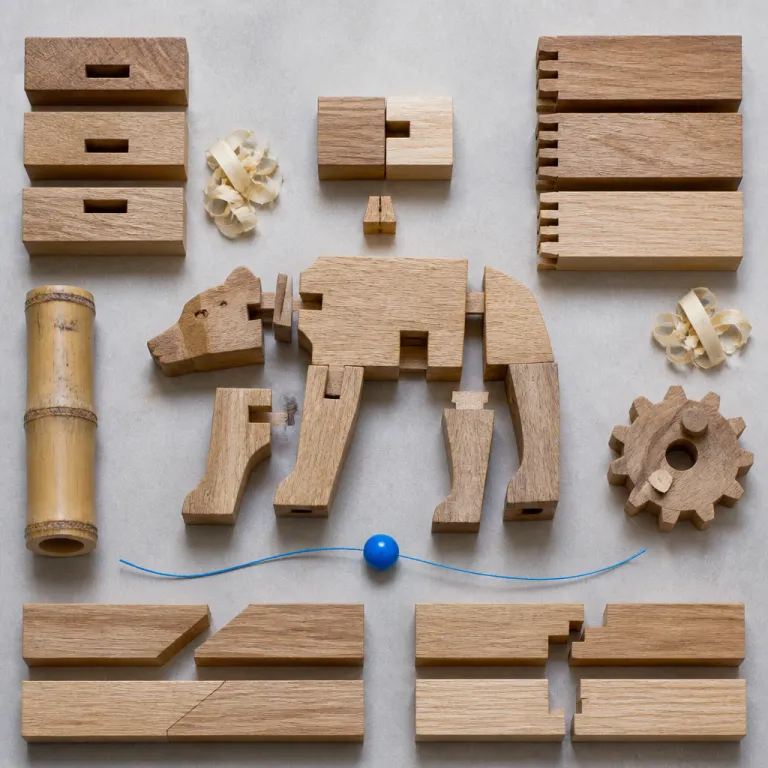
Why Japanese wooden toys feel different in a child’s hand
Japanese wooden toys and their finely tuned joinery begin with how the wood meets the child’s palm. In small workshops across Japan, from long-running family studios in Asahikawa such as Mokuomo and Oak Village to newer makers in Shizuoka and Gifu, artisans treat each toy as a study in balance, weight, and grain, so the first grasp teaches children that good objects feel calm rather than flashy. When you compare these handmade wooden pieces with mass-market plastic toys or MDF composites, the difference in how the items move, sound, and age becomes impossible to ignore.
Most Japanese wooden toys rely on traditional woodworking techniques where the joint is the hero, not the hidden hardware. Mortise-and-tenon, dovetail, and finger joints are scaled down so that a toy train, a stacking arch, or a set of wooden animals shows exactly how the parts hold together, which gives children a quiet book of engineering in three dimensions. Parents who view toys as long-term companions rather than seasonal décor quickly see that this approach to structural design changes how often pieces break, how safely they fail, and how many years of play they will tolerate.
In Japanese craft culture, the joint is part of the story that children read with their hands. A child who turns a small car from Japan over and over will notice the clean intersection of wood surfaces, the absence of glue squeeze-out, and the way the grain runs through the body like a sentence in a language Japanese artisans have spoken for centuries. That same child, offered a glued composite toy, often senses the difference without words, because the tactile feedback, the weight distribution, and even the muted sound on the floor all tell a different story about care.

Inside the joinery: how Japanese workshops build without screws
At the heart of Japanese wooden toys and their joinery is a refusal to let metal fasteners or synthetic adhesives do the structural work. Many Japanese makers use dry-fitted joints that rely on precise woodworking and patient hand finishing, so the toy can flex slightly under stress instead of cracking at a brittle glue line. For parents, this means fewer sharp failures when children inevitably throw, chew, or stand on their favorite toy, a pattern echoed in durability notes from brands like Kiko+ & gg* and Tsumiki block sets.
Scaled-down mortise-and-tenon joints appear in simple wooden toys such as push cars, pull-along animals, and modular blocks, where each tenon is tuned so it will hold firmly yet still be repairable if a part loosens after years. Finger joints and half laps show up in more complex items like miniature garages or doll furniture, and the visible details become a quiet lesson in structure for children who like to take things apart to understand how they work. When you look closely, these toys Japanese makers produce function almost like three-dimensional books, where each joint is a page about compression, tension, and the way wood moves with humidity.
European brands such as Grimm’s, Ostheimer, Grapat, and Bajo take a different path, often prioritizing sculptural forms and layered color over exposed joinery. Their wooden toys usually rely on high-quality glues and dowels, which can be very good when properly executed and tested under EN 71 or ASTM standards, but the structural story is hidden from view and children mainly see the silhouette and finish. If you are already drawn to refined wooden construction toys, it is worth reading a deeper guide on why wooden castle blocks represent quiet luxury in imaginative play, then asking how the unseen joints in those blocks compare with the visible joinery in Japanese works.

Durability, safety, and the way fitted joints age over years
Parents buying at the top of the market are not paying for a prettier unboxing; they are paying for how a toy behaves in year three. Japanese wooden toys with carefully fitted joints shift the cost from surface finish to structural integrity, so the toy will usually age with a patina rather than a failure. A fitted joint in solid wood compresses and relaxes with seasonal changes, which means the toy often survives drops, bites, and sibling tug-of-war that would shear a glued seam, a difference you can see in long-term reviews and resale listings for heirloom sets.
From a safety perspective, fewer metal screws and less synthetic adhesive mean fewer potential points of chemical exposure for children who still mouth their toys. When a joint is purely mechanical, made through careful woodworking techniques, any eventual failure tends to be slow and visible, giving parents time to retire or repair the toy before it becomes hazardous. This is where Japanese makers quietly excel, because they design for maintenance, not disposability, and some even include small printed books in Japanese and English explaining how the joints can be tightened or re-wedged.
European workshops that focus on sculpted forms often compensate with thicker finishes and more robust glues, which can look pristine for a while but may chip or delaminate under concentrated stress. A Japanese block set with exposed joinery might show dents and softened edges, yet the core structure holds, making it an ideal candidate for hand-me-down status in families that value refined wooden construction toys built for decades. For a deeper perspective on how structural choices outlast surface treatments, it is worth reading about why refined wooden construction toys belong in a modern playroom and then applying that lens to the joinery in both Japanese and European pieces.

Philosophy in the grain: what children learn from visible joints
Japanese wooden toys and their visible joinery are not only about engineering; they are also about pedagogy. When a child can trace a finger along a cleanly fitted joint, they are reading a quiet book handmade in wood about how separate pieces become one. That tactile literacy matters, because it shapes how children view objects, care, and repair long before they can read printed books or product manuals.
In many workshops across Japan, artisans talk about toys as the first architecture that children hold, and they design each toy so that the works reveal structure rather than hide it. A small bridge, a stacking tower, or a jointed animal becomes a lesson in cause and effect, where children see that if one part moves, another must support it, and this awareness often leads to more careful play over time. Parents who value Montessori or Reggio Emilia principles usually recognize this alignment quickly, because the toys Japanese makers produce echo those philosophies without needing logos or slogans.
There is also an aesthetic ethic at play, where the joint is treated as a top-level design element rather than a flaw to be concealed. Children raised around such items learn that beauty can come from honest structure, not only from paint or gloss, and that a handmade wooden toy with visible pins and tenons can be as refined as any lacquered object. When those children later encounter repairable furniture, mechanical watches, or even well-bound books, they already understand, at a bodily level, that good works show their details instead of hiding them.

How to buy: reading product pages like a seasoned collector
For parents and collectors, Japanese wooden toys and their joinery become a practical buying filter once you know what to read and what to ignore. Start with the materials section and look for solid wood species such as beech, maple, Japanese zelkova, or hinoki, then scan for explicit mentions of mortise-and-tenon, finger joints, or other woodworking techniques instead of vague claims about being handmade. If a brand only talks about paint colors, fast shipping, and gift wrapping, you are probably paying for presentation rather than structure.
Next, study the product photos as if you were examining auction catalog items, zooming in on corners, edges, and transitions where different wooden parts meet. You want to see clean intersections, grain continuity, and visible join lines that look intentional, because these details signal that the toy will age gracefully and can be repaired if needed. When a maker offers a behind-the-scenes view of their process, or even a short book handmade in Japanese and English about their joinery, that transparency usually correlates with higher structural integrity and more honest product specs.
Finally, align your values on sustainability and safety with the certifications and testing a workshop shares. Serious Japanese and European makers working at this level often reference FSC wood sourcing, EN 71 or ASTM testing, and textile standards such as GOTS or OEKO-TEX when fabrics enter the design, and you can find a clear guide to these eco luxe certifications in this dedicated resource on reading the eco luxe certifications that matter. When you combine that lens with a focus on joinery, you end up buying fewer toys, but each toy becomes part of a long narrative in your family, measured not by the unboxing, but by the fifth birthday it survives.
- Check for solid wood species and visible joinery in close-up photos.
- Look for explicit mentions of mortise-and-tenon, finger joints, or similar techniques.
- Confirm EN 71 or ASTM testing and, where relevant, FSC and textile standards.
- Read product specs and maker notes for repair guidance and maintenance tips.
FAQ
Why do Japanese wooden toys often avoid screws and nails ?
Many Japanese toy makers draw from traditional carpentry, where fitted joints such as mortise-and-tenon or finger joints provide strength without metal hardware. This approach reduces the risk of loose screws, improves repairability, and lets the wood move naturally with humidity. For children, it also means fewer hard metal points and a more consistent tactile experience, especially in toys designed for open-ended play.
Are Japanese joinery based toys safer for toddlers who still mouth objects ?
Toys that rely on mechanical joints rather than heavy glues or exposed screws generally reduce potential chemical and choking risks. When the structure is pure wood, any failure tends to be gradual and visible, giving caregivers time to intervene. Safety still depends on proper testing and finishes, so parents should look for EN 71 or ASTM compliance alongside good joinery and non-toxic surface treatments.
How do Japanese wooden toys compare with European brands like Grimm’s or Ostheimer ?
Japanese workshops often emphasize visible joinery and structural honesty, while many European brands focus on sculptural forms and color. Both can be excellent, but Japanese pieces usually reveal how they are built, which can support a child’s understanding of structure and repair. European toys may rely more on glue and dowels, which can be durable but hide the engineering from view, so families can choose based on whether they prioritize visible construction or bold color and form.
What should I look for when buying a handmade wooden toy online ?
Examine product photos for clear joints, continuous grain, and minimal filler or putty at intersections. Read descriptions for mentions of specific woodworking techniques, solid wood species, and safety testing standards rather than generic claims about being eco friendly. Transparent information about materials, finishes, and repair options is a strong sign of serious craftsmanship and long-term durability.
Will investing in joinery focused toys actually save money over time ?
High-quality joinery based toys usually cost more upfront but tend to last through multiple children and even generations. Because they can often be repaired or refinished, families replace fewer items and build a smaller, more resilient collection. For collectors, structural integrity also preserves long-term value far better than surface-level finishes, especially for limited runs and classic designs.